


Where to Stay
Discover Chongqing through its Hotels
The DNA of Chongqing
Where Mountain Megacity Meets Futuristic China
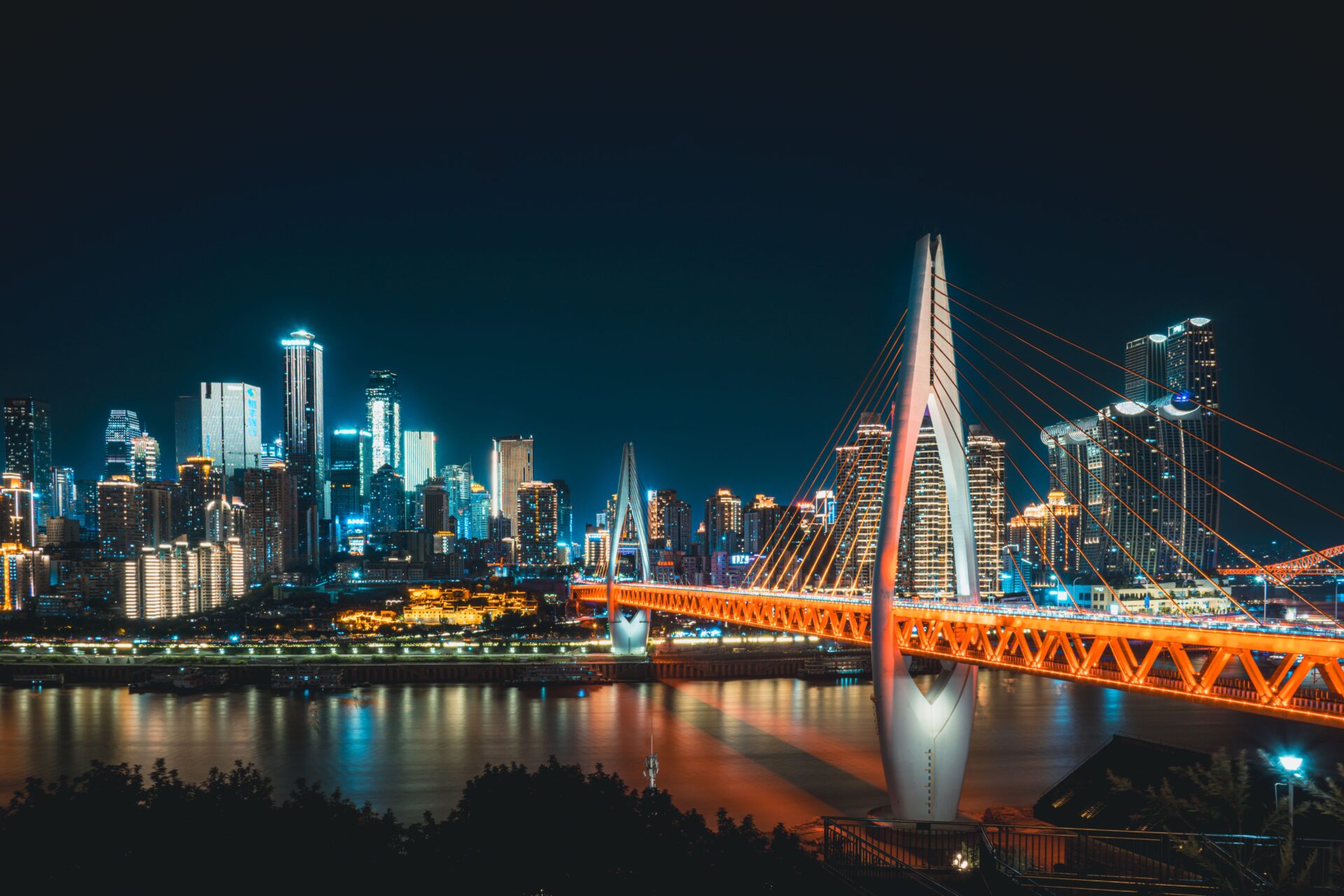
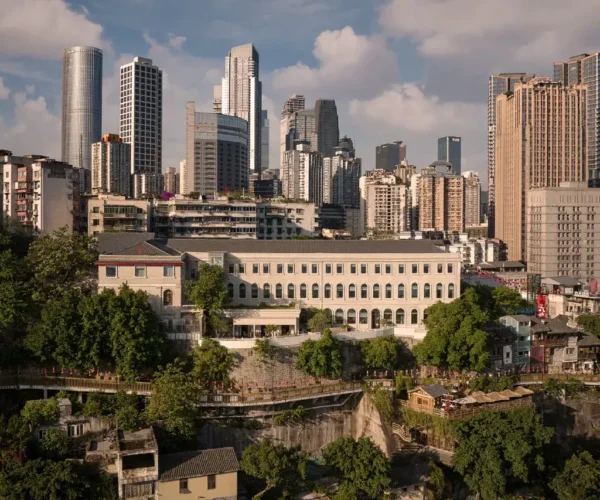
Chongqing is a city that seems to ignore conventional ideas about how cities should work. Built across steep hills where the Yangtze and Jialing rivers meet, its roads, bridges, towers, staircases and monorails overlap at seemingly impossible levels. Historic diaojiaolou stilt houses and remnants of old river neighbourhoods survive alongside dense high-rise districts, monumental infrastructure and some of China’s most adventurous contemporary architecture. At night, illuminated towers climbing the mountainsides have given Chongqing an almost cyberpunk reputation, but beneath the spectacle lies a city shaped fundamentally by its geography. Few urban destinations make architecture, infrastructure and landscape feel so inseparable.
Food is every bit as intense as the city itself. Chongqing is the home of famously fiery hotpot, where beef, offal, vegetables and noodles disappear into bubbling broth loaded with chillies and Sichuan peppercorns. Small noodle shops serve xiaomian, another local obsession, while street stalls, markets and neighbourhood restaurants reveal a cuisine built around bold flavours and communal eating. Restaurants spill across hillsides and riverbanks, and eating outdoors overlooking the illuminated city has become part of contemporary Chongqing culture. This is not a destination for timid palates—or necessarily white shirts.
Chongqing’s emerging hotel scene reflects the city’s growing architectural confidence. High-rise design hotels, adaptive-reuse projects and quieter retreats in the surrounding mountains provide very different ways of experiencing this enormous metropolis. At DNA Hotels, we curate the places that engage with Chongqing’s extraordinary vertical landscape, contemporary architecture and distinctive food culture—hotels that make sense of a city where your ground floor may quite reasonably turn out to be somebody else’s twenty-second.