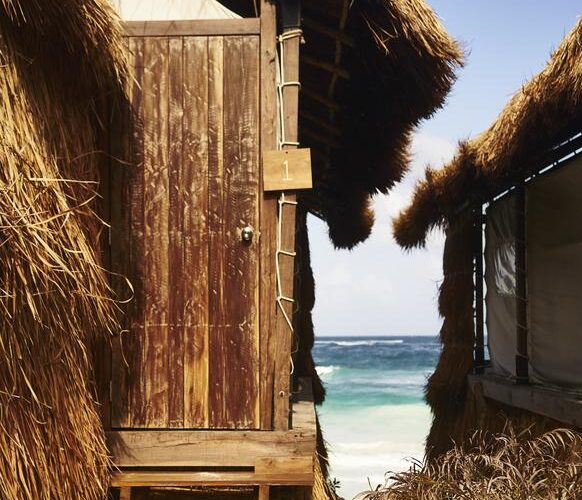
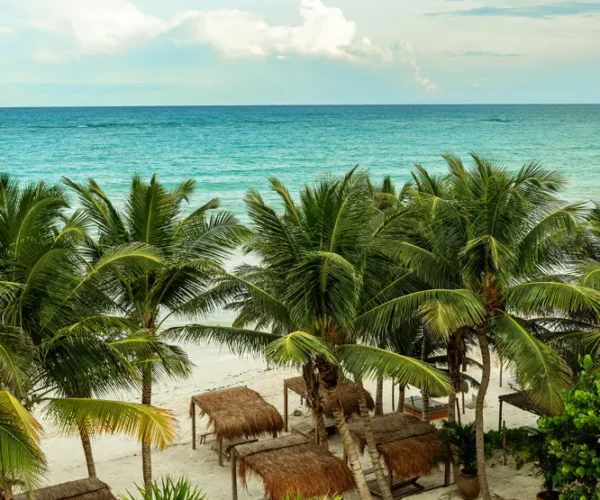
Tulum occupies an extraordinary stretch of the Yucatán Peninsula where dense jungle meets the turquoise Caribbean and the remains of a Maya city stand dramatically above the sea. For years, its contemporary identity was shaped by simple beach cabanas, barefoot living and a deliberately low-key alternative to the large resorts farther north. That simplicity eventually evolved into an influential architectural language of its own: local stone and timber, chukum plaster, palapa roofs, sculptural concrete and buildings designed around existing vegetation. The results range from genuinely thoughtful tropical architecture to considerably less subtle exercises in Instagram aesthetics. The best of Tulum still understands the difference.
Food has followed a similar trajectory. Traditional Yucatecan cooking—cochinita pibil, citrus, achiote, tortillas and dishes cooked over fire—sits alongside seafood from the Caribbean and a remarkably international restaurant scene. Open-fire kitchens, jungle restaurants, natural wines, mezcal and long dinners under the trees have become part of the Tulum experience. Beyond the fashionable addresses, local taquerías and regional cooking provide a useful reminder that this is Quintana Roo, not Brooklyn with palm trees.
Tulum’s most interesting hotels remain relatively small and closely connected to their surroundings. Beach houses, jungle retreats and architect-designed hideaways often blur the boundaries between indoors and outdoors, with hammocks, courtyards, private pools and rooms open to tropical air. At DNA Hotels, we look beyond the increasingly commercial version of Tulum for hotels that retain what made the place interesting in the first place: adventurous architecture, natural materials, good food and that seductive idea that, for a few days at least, shoes are entirely optional.