


An Arabesque fantasy on Luxor’s West Bank, where painted domes, antique-filled rooms and jasmine gardens create a world seemingly untouched by time.
Book now
Why DNA Hotels loves it
Conceived by Lebanese-Italian designer Zeina Aboukheir with Egyptian architect Olivier Sednaoui, Al Moudira was built using traditional materials and techniques to feel as though it had occupied this corner of the Nile Valley for generations.
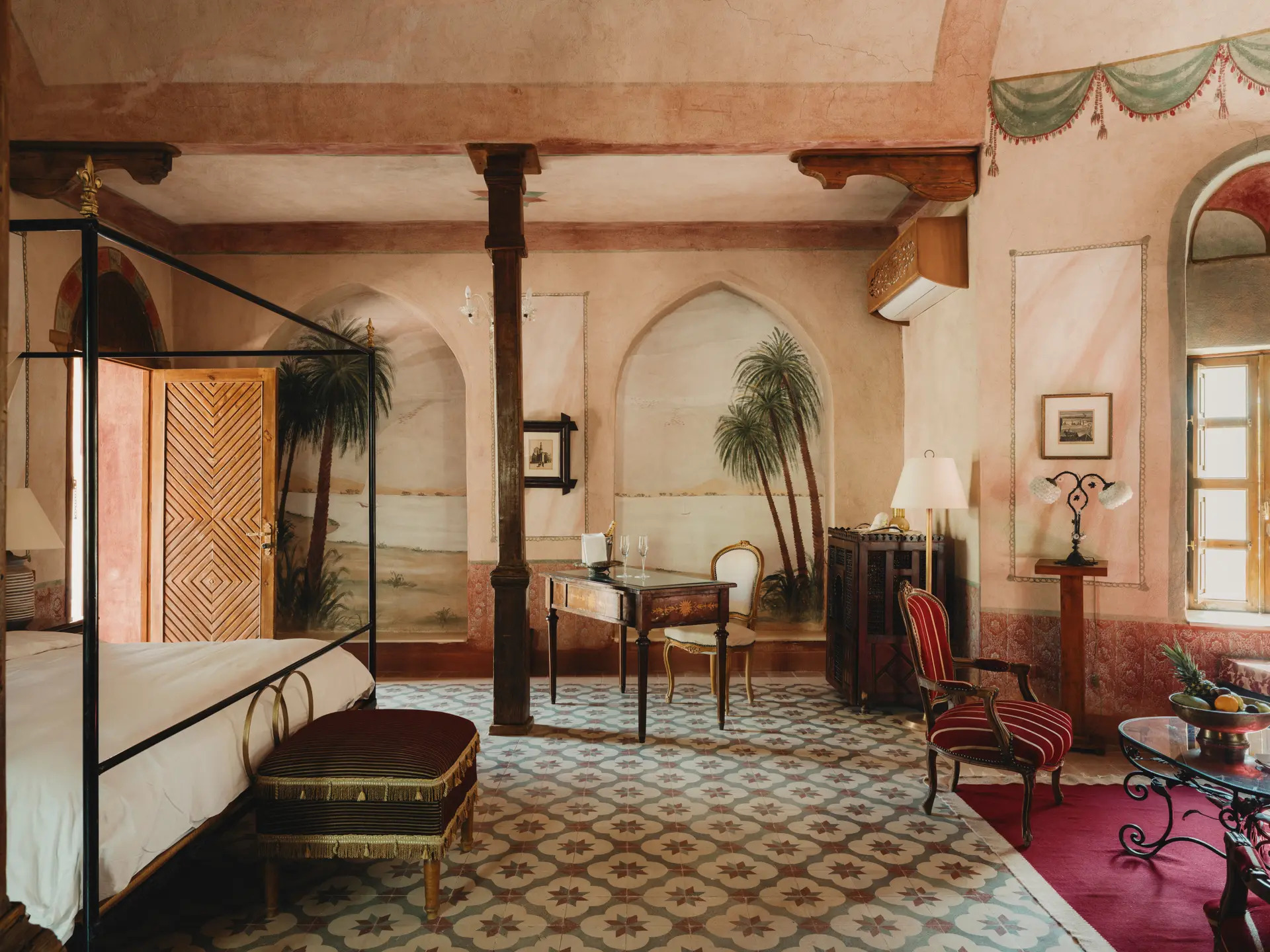
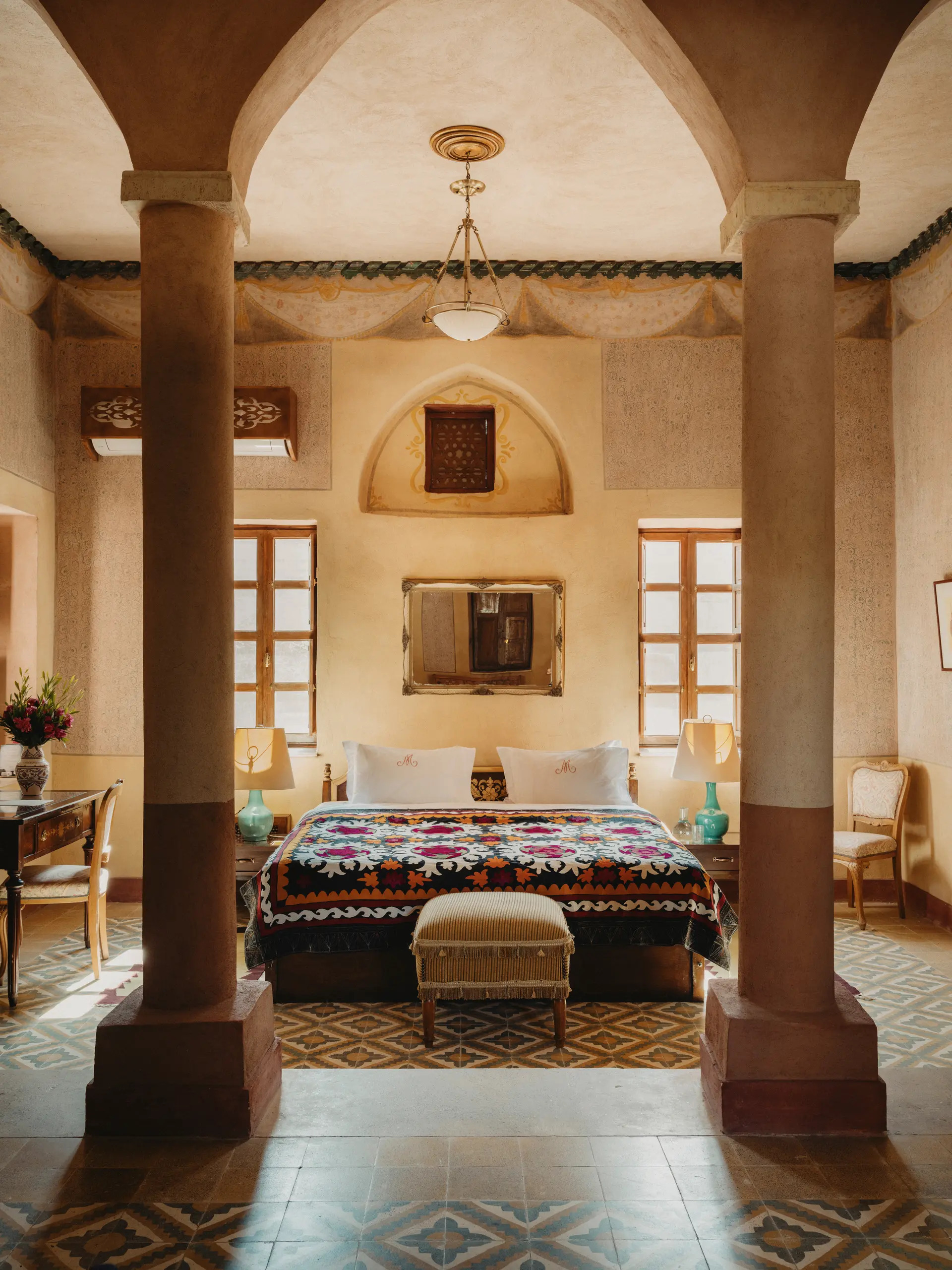
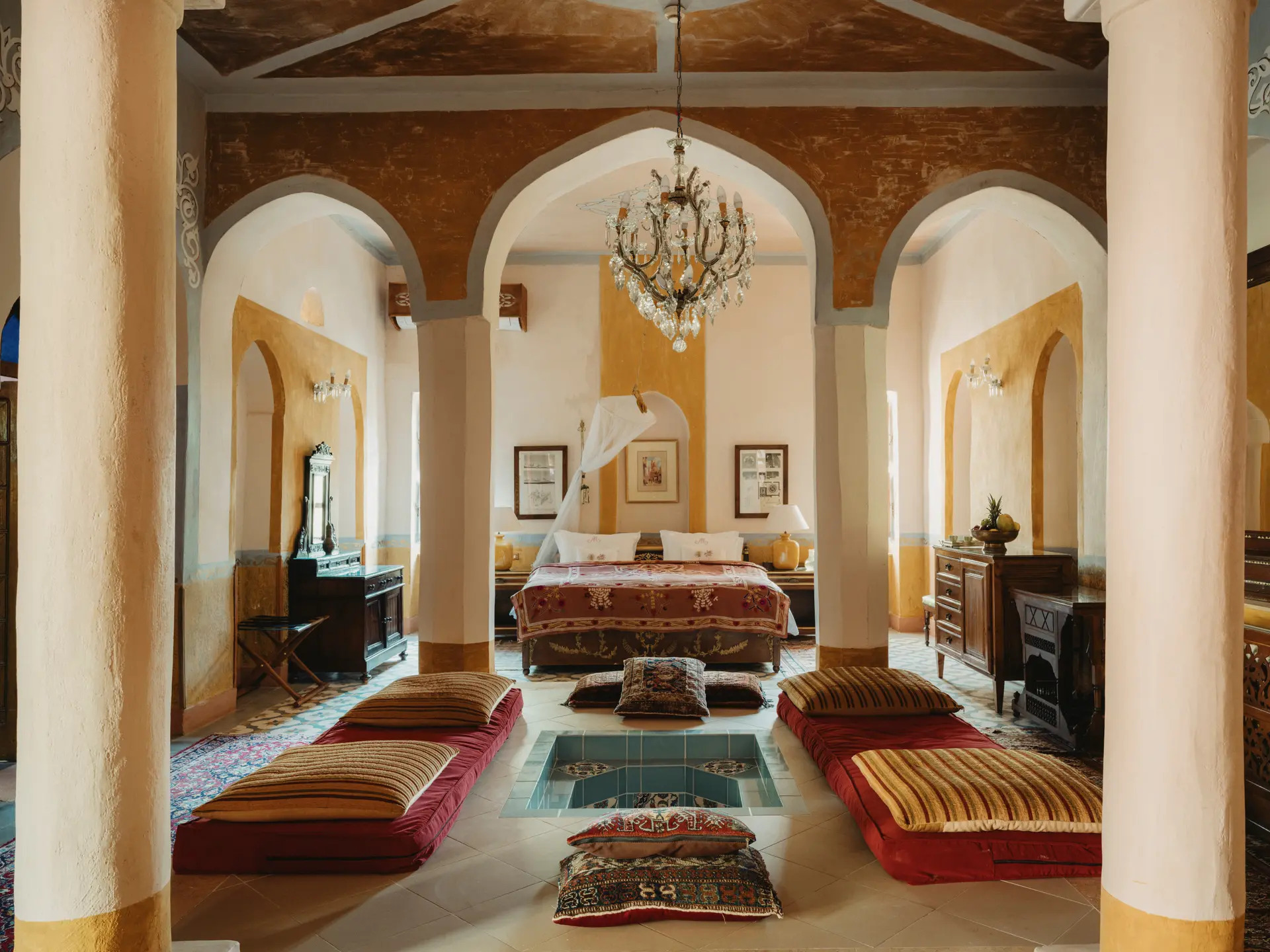
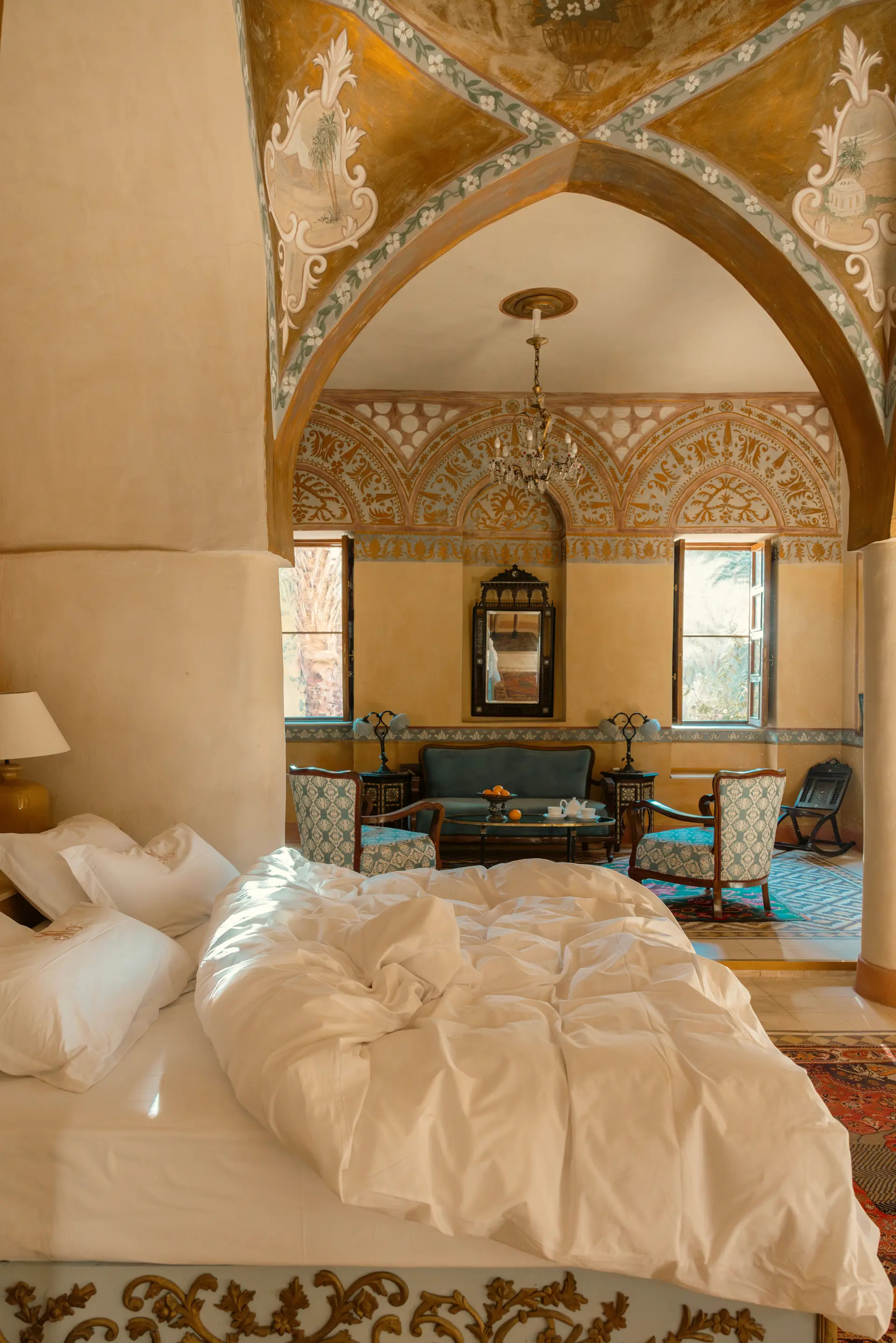
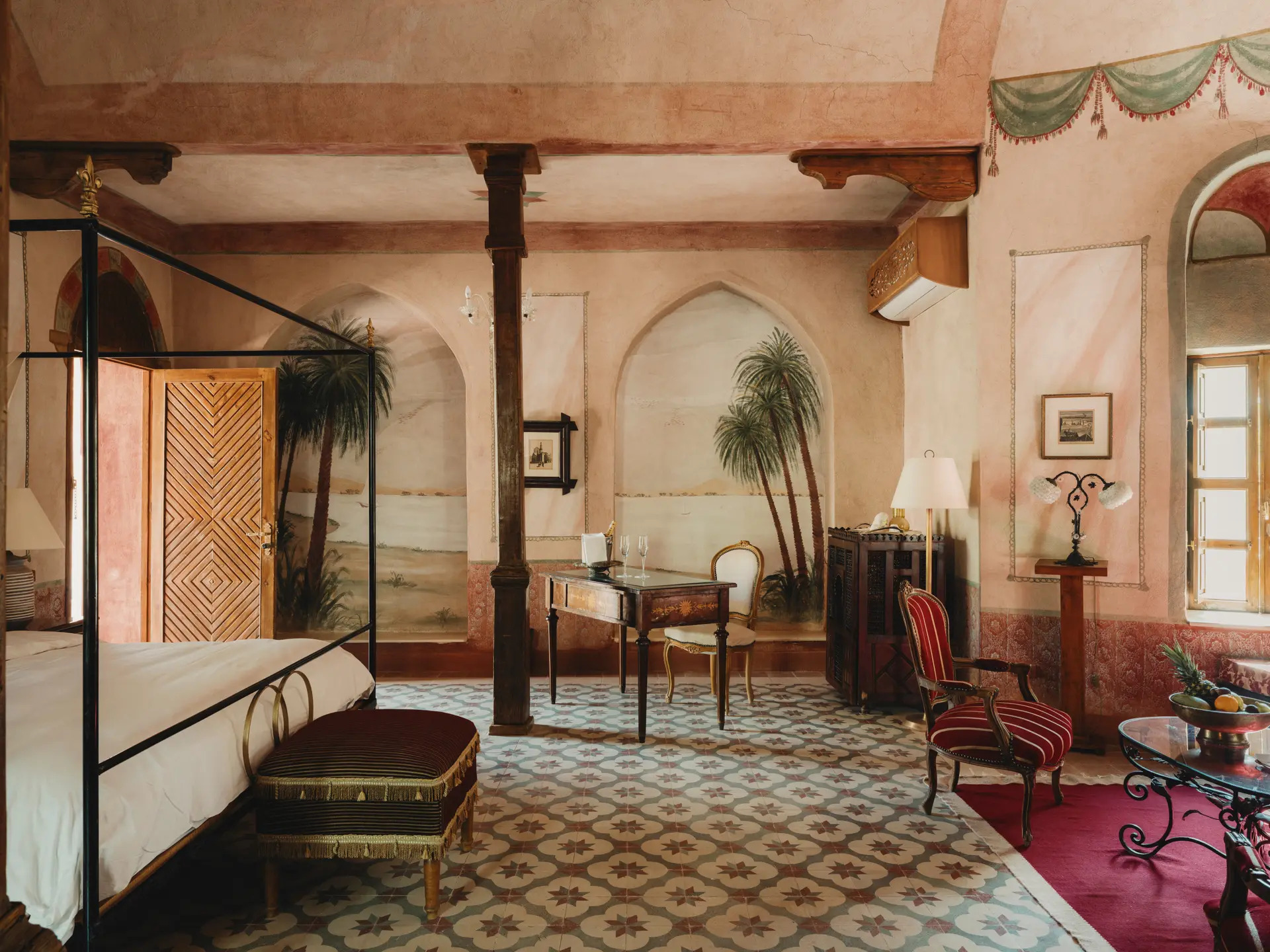
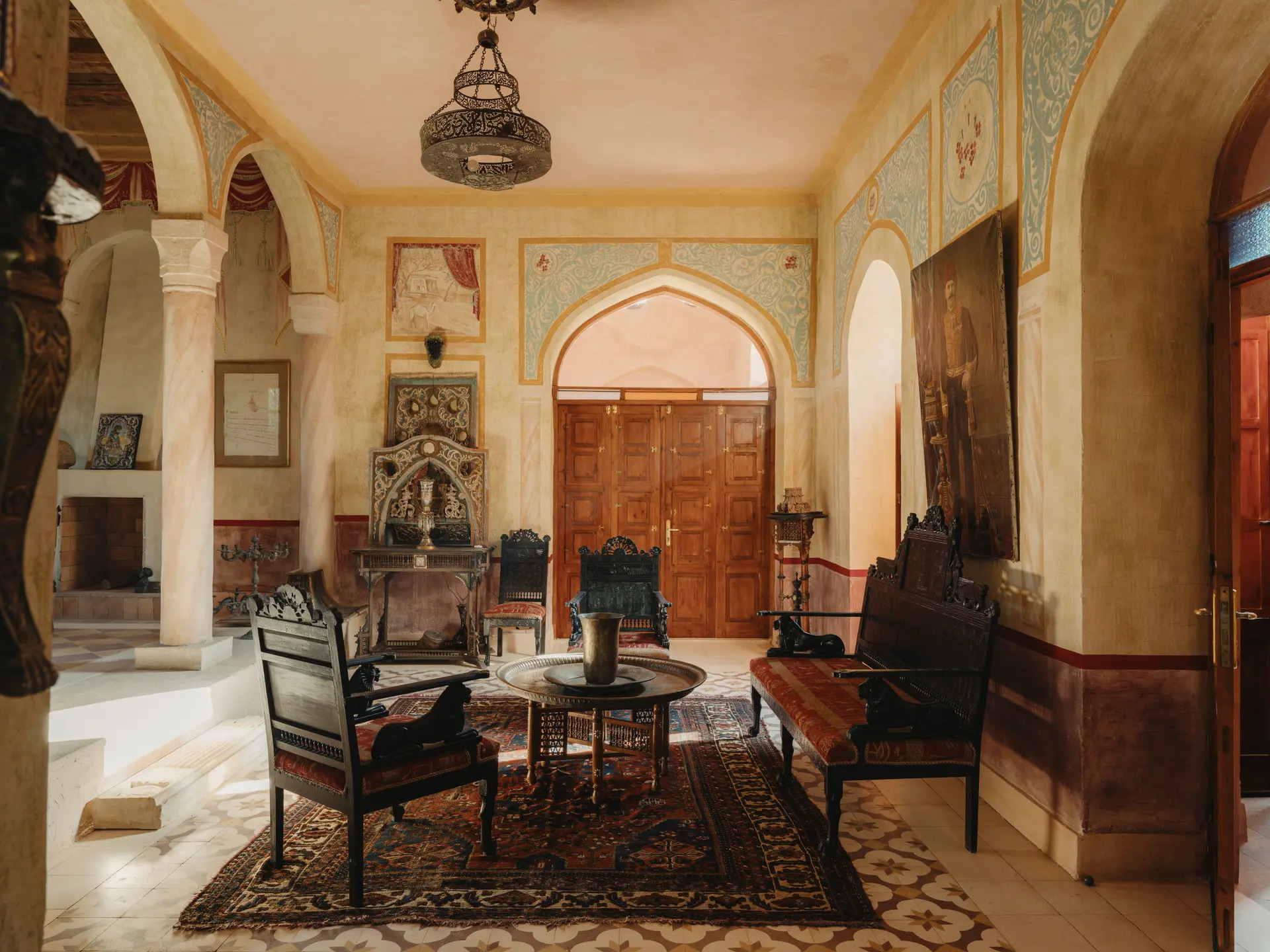
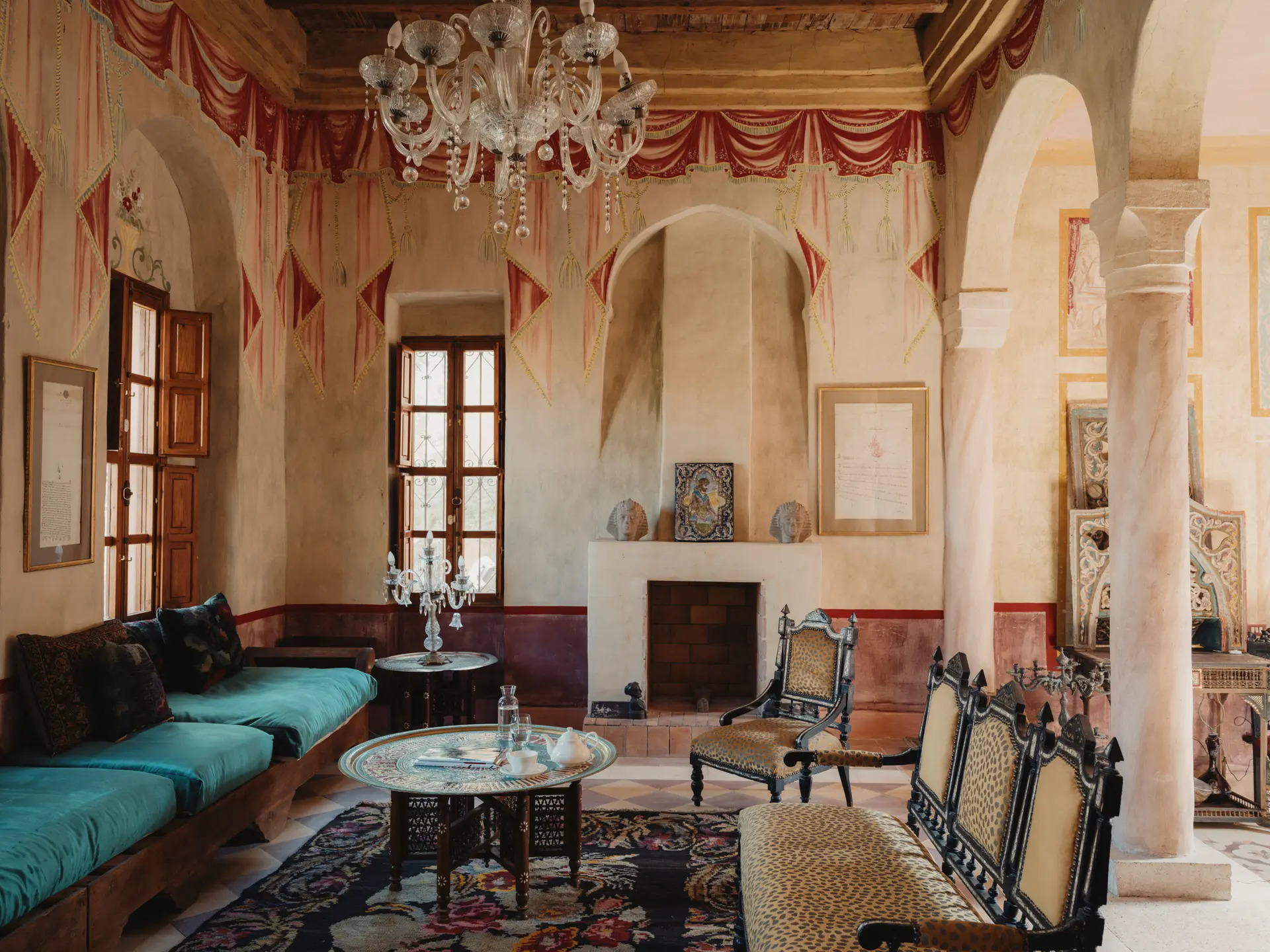
54 individually designed rooms and suites unfold around fountain-filled courtyards, combining hand-painted frescoes, stained glass, mashrabiya details and antiques gathered across Egypt, Africa and the Middle East.
Its secluded West Bank setting puts the temples and tombs of ancient Thebes close by, while gardens, an organic farm, private villas and deeply atmospheric restaurants make returning to the hotel every bit as seductive as exploring Luxor.
The Stay
Al Moudira – Luxor, Egypt
A Palace That Never Existed
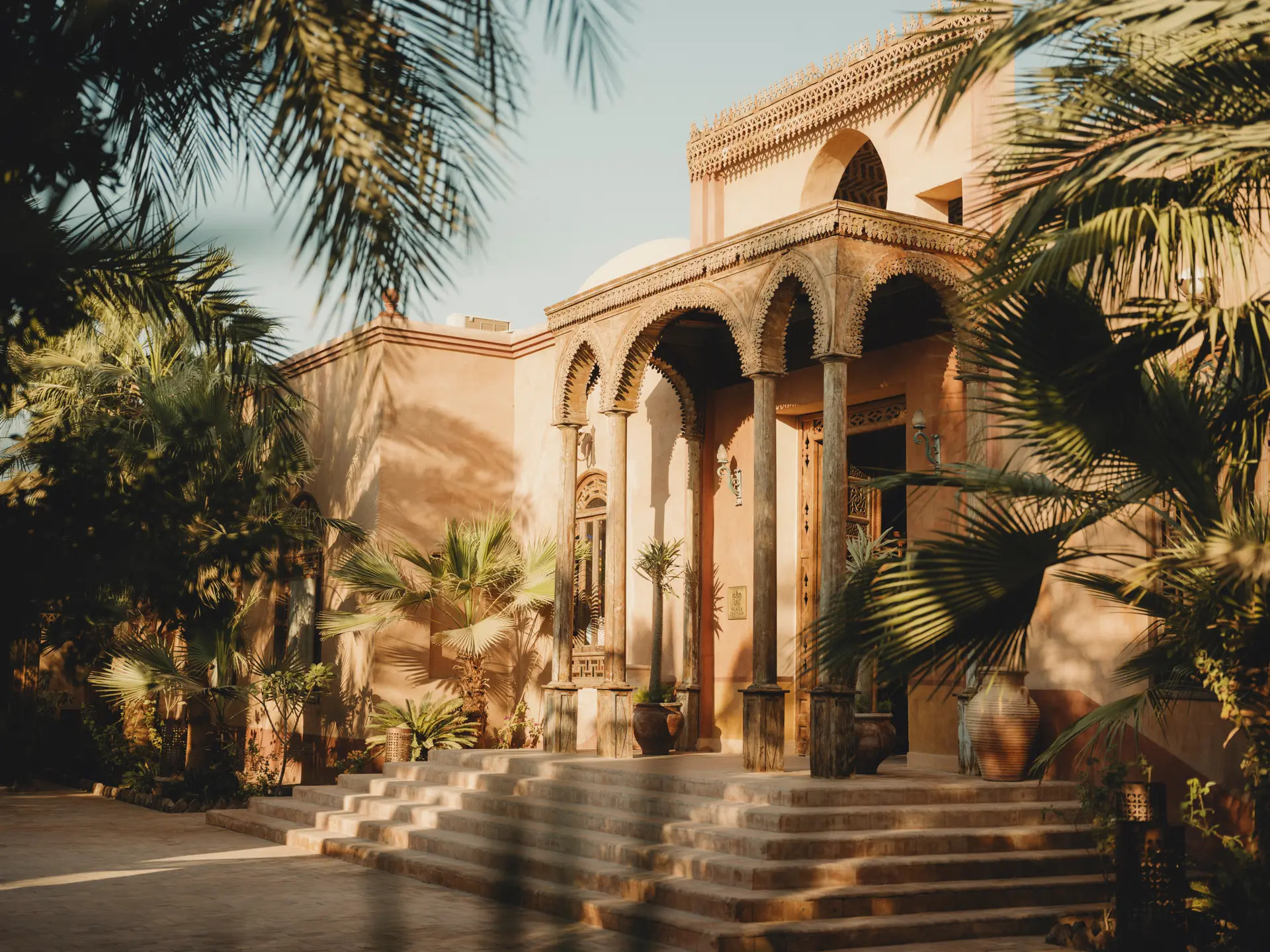
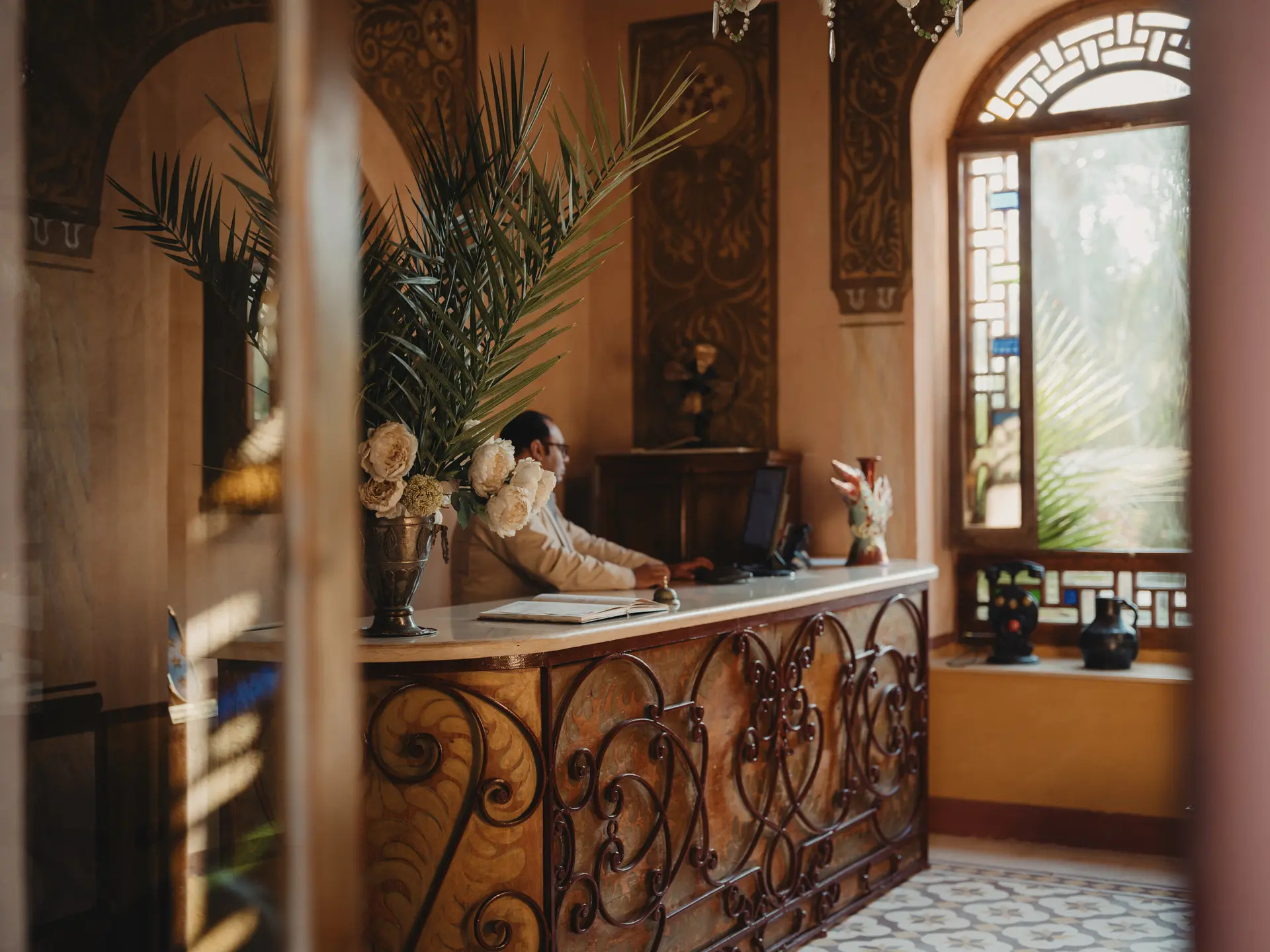
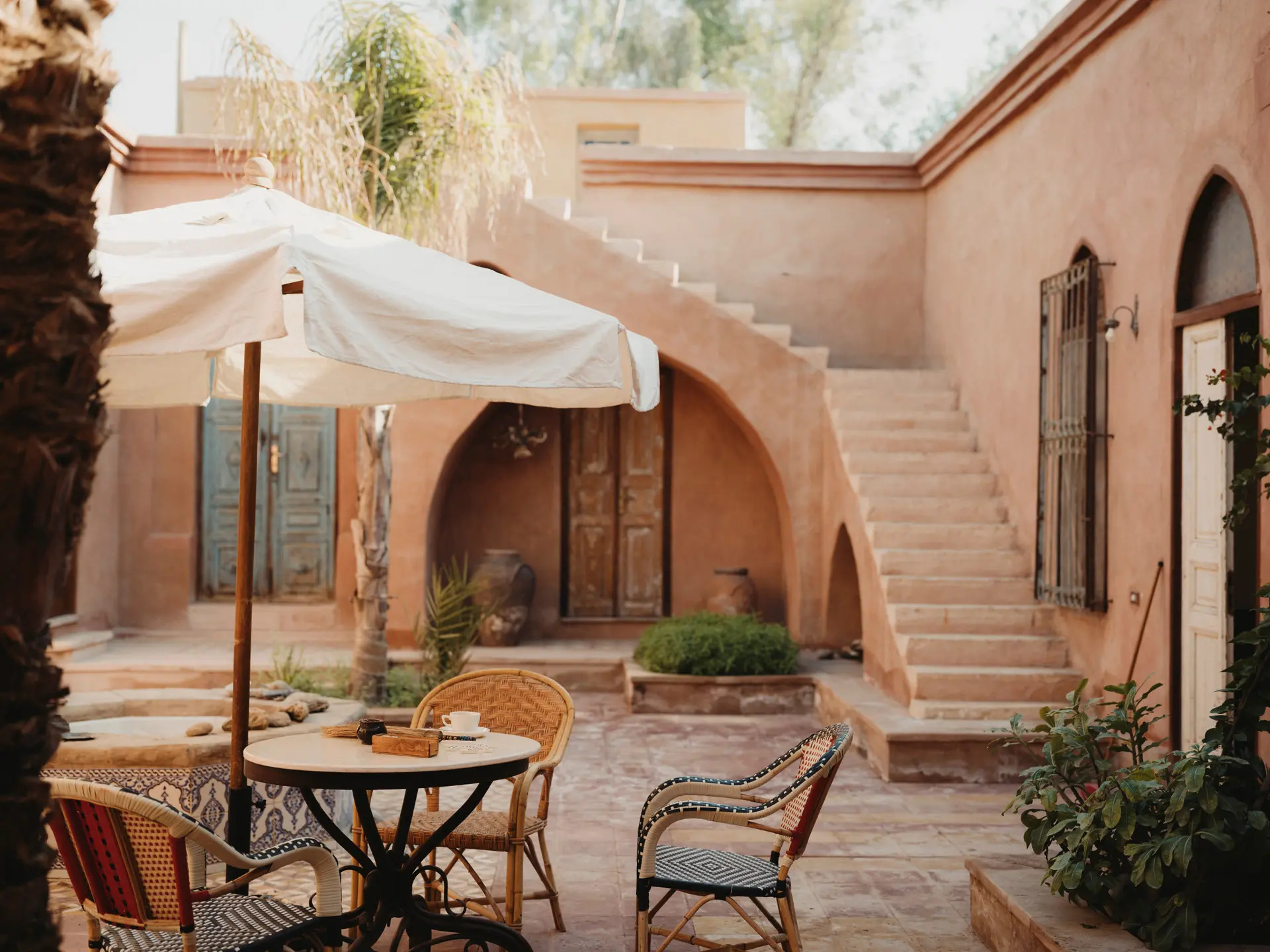
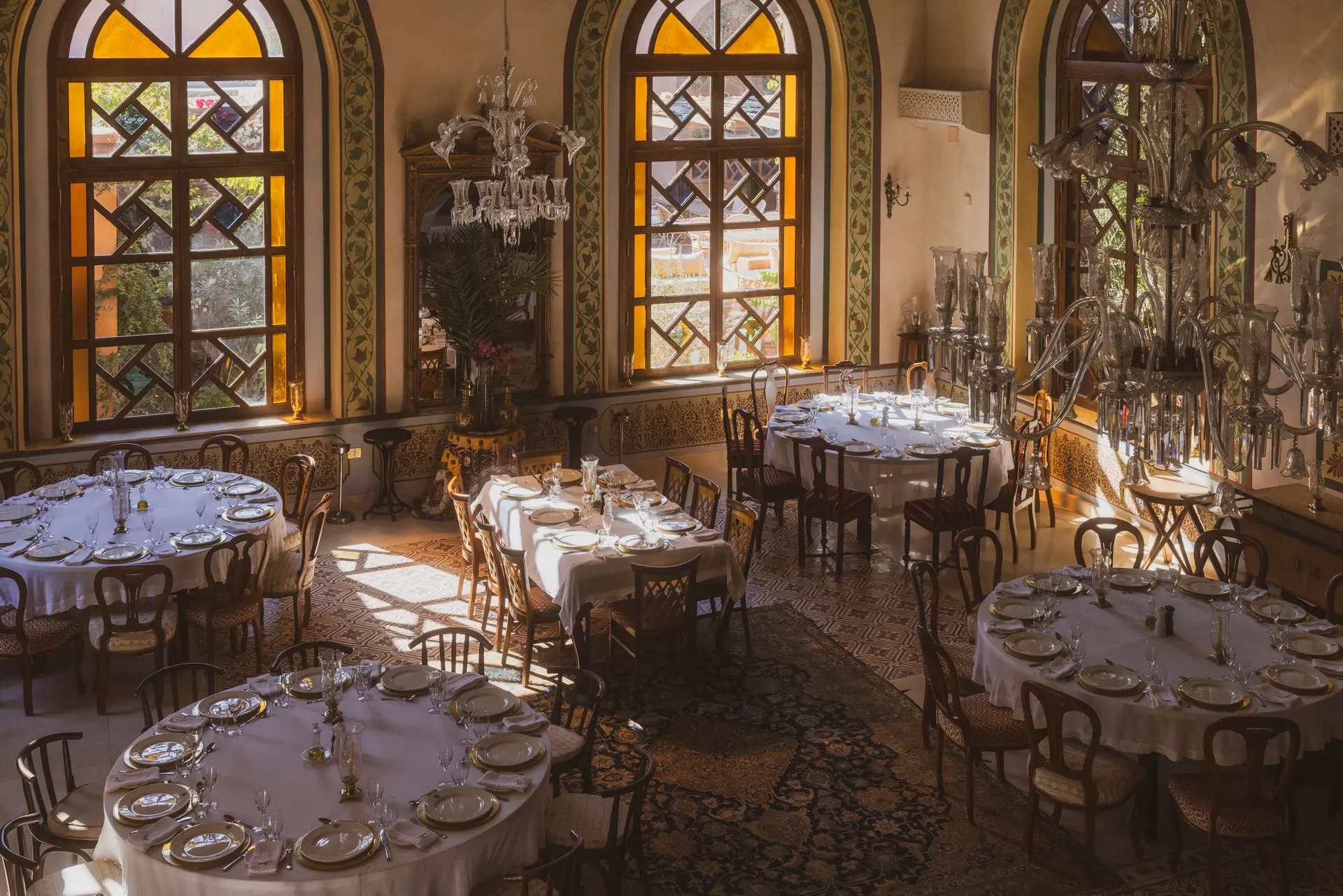
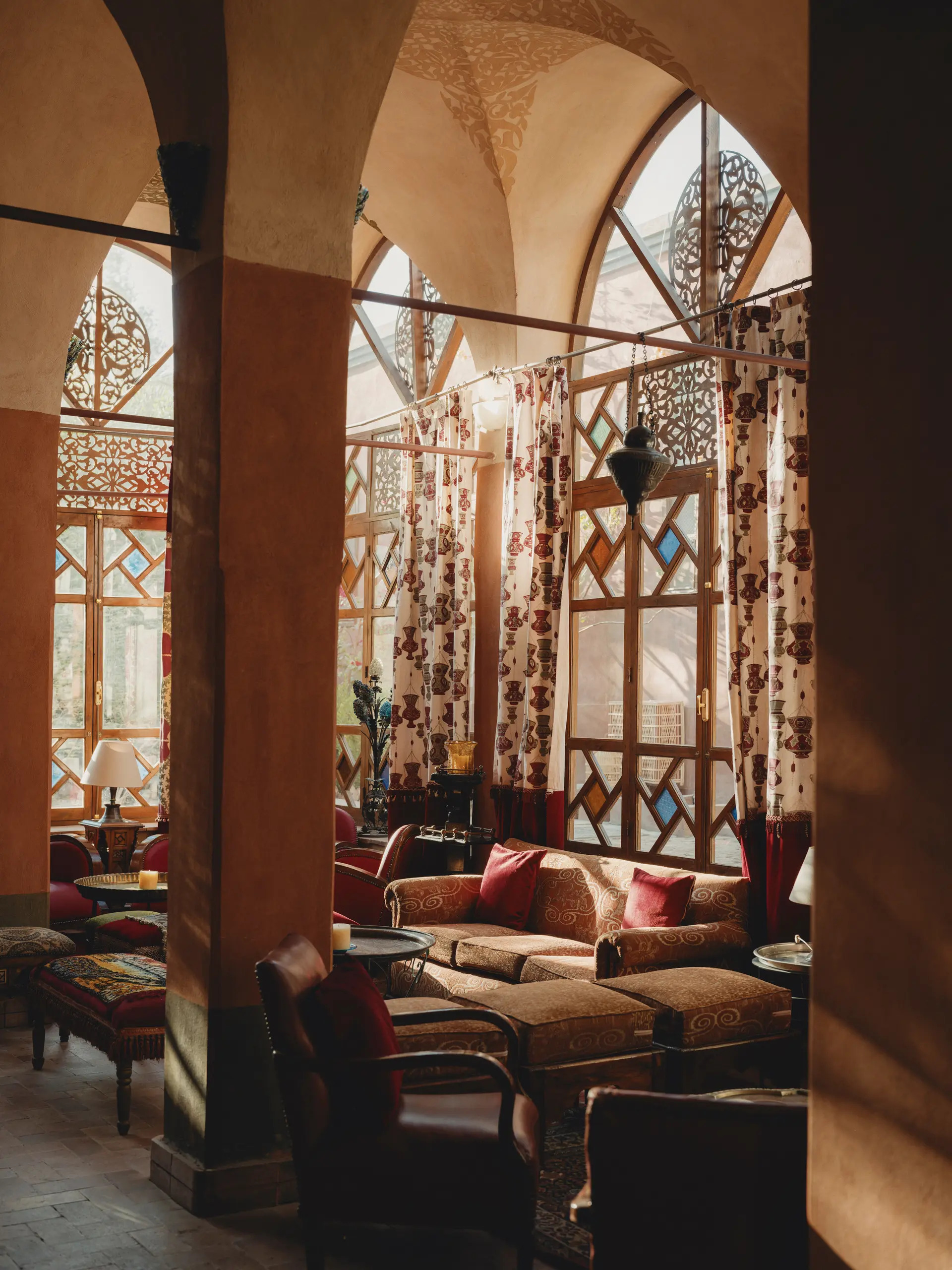
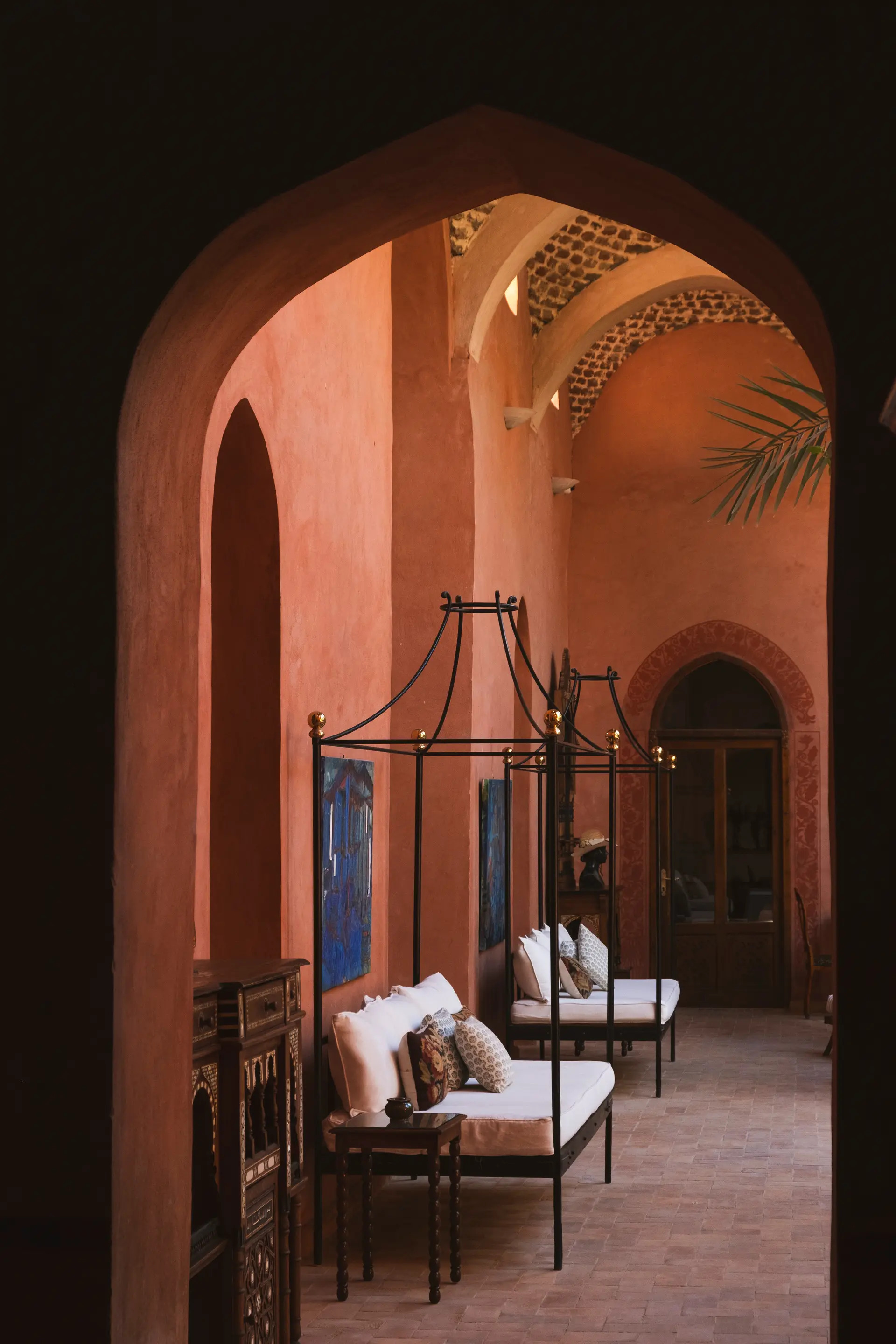
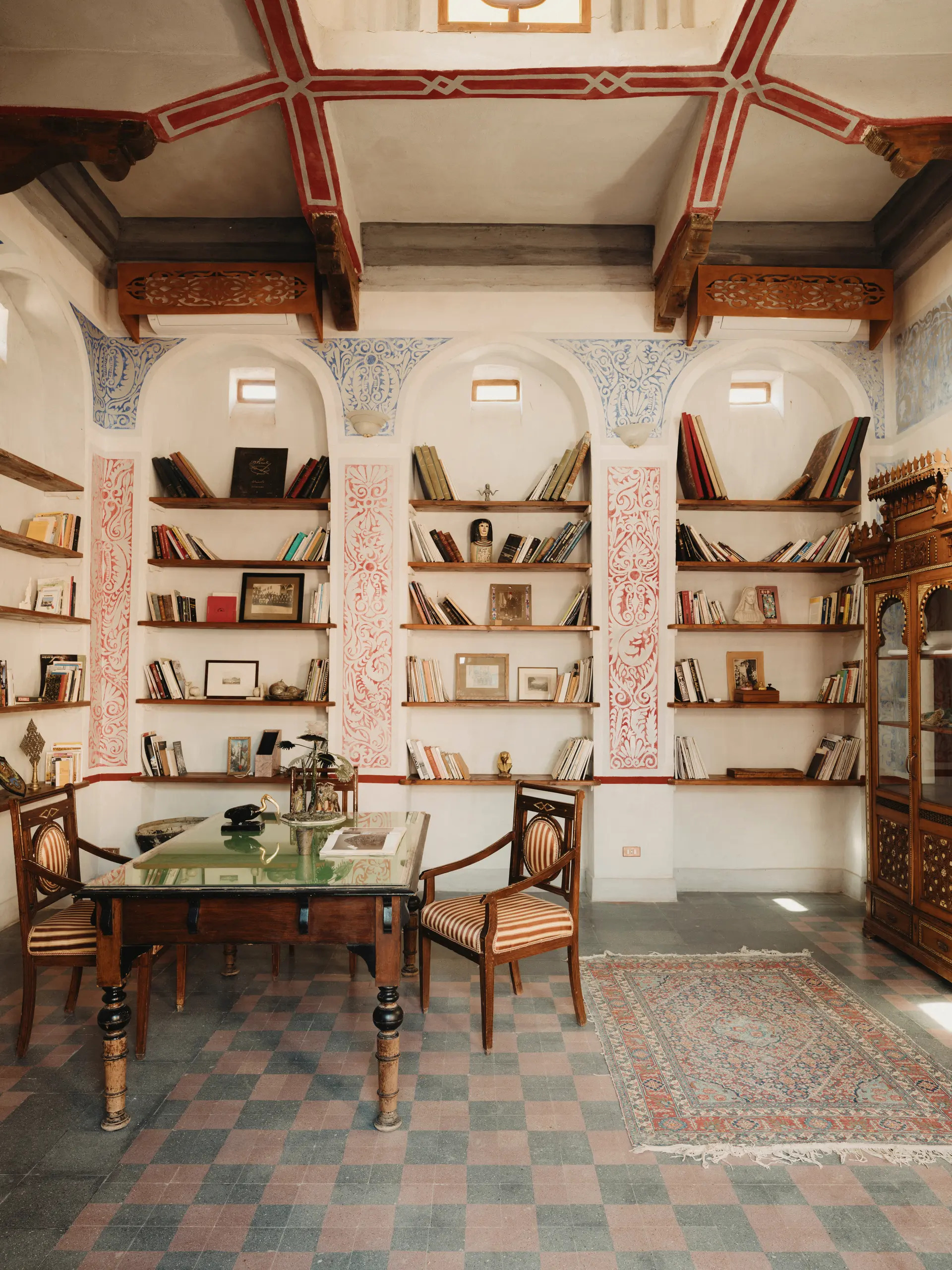
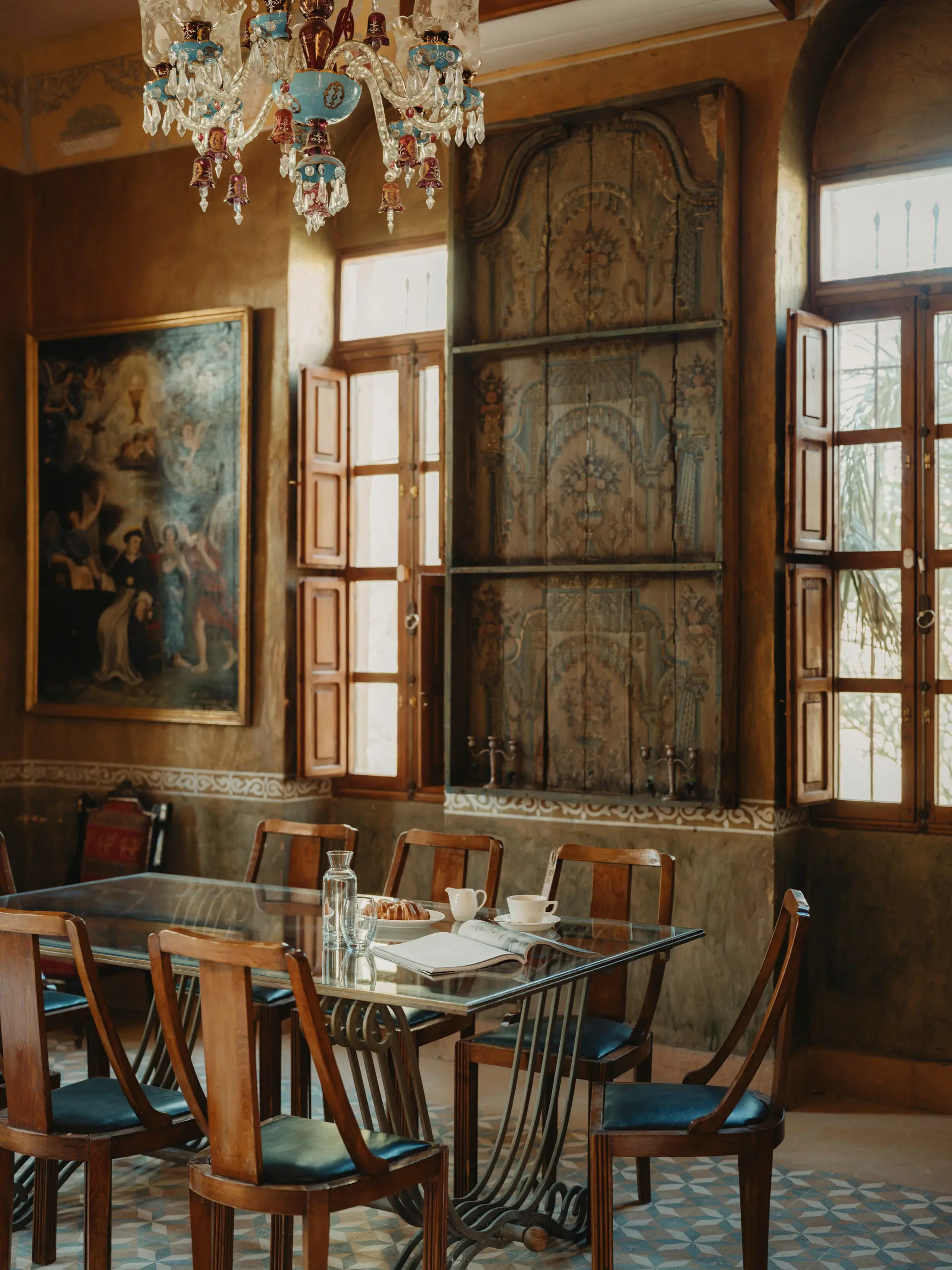
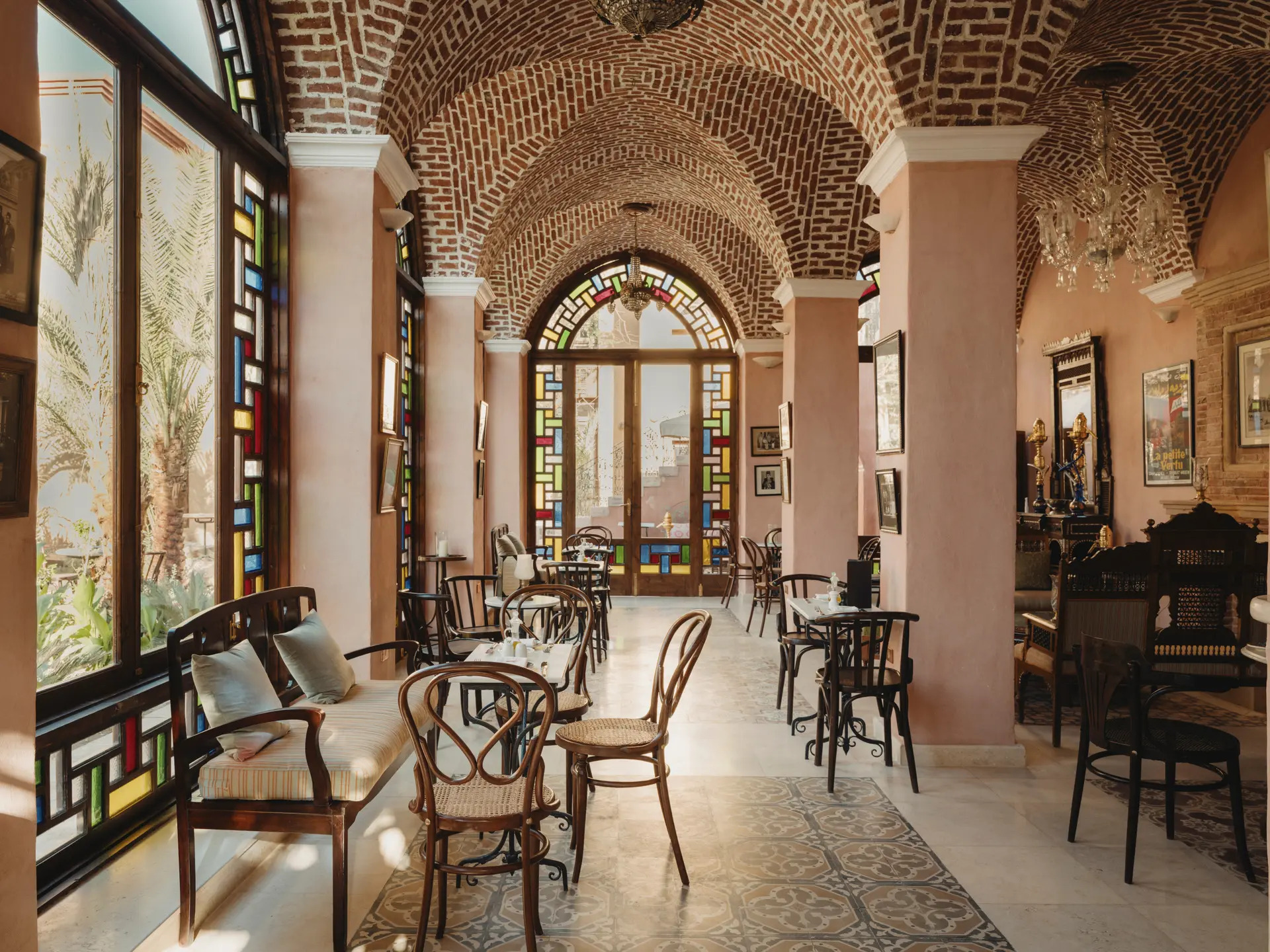
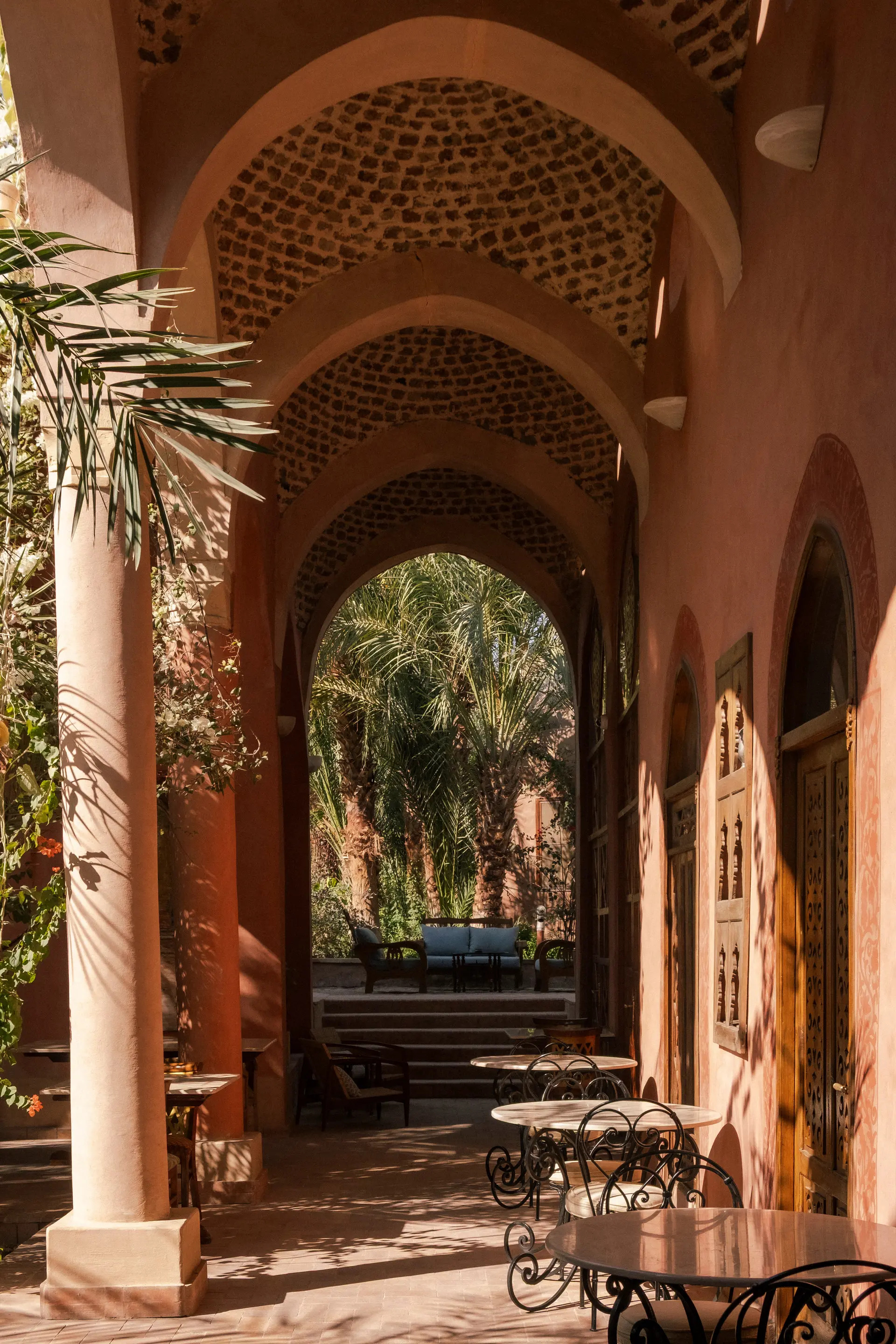
Al Moudira plays a wonderful trick on you. Arrive through its gardens and it seems inconceivable that this rambling collection of Moorish mansions, courtyards, domes and shaded arcades hasn’t been standing on Luxor’s West Bank for centuries. It hasn’t. When Zeina Aboukheir arrived here around 25 years ago, the land was largely barren. Working with architect Olivier Sednaoui and local craftspeople, she gradually created an imaginary palace — or perhaps a small village — using traditional Egyptian building techniques, terracotta plaster and materials sourced around Luxor. Then she gave it a past. Antique furniture, marble, carved wood and objects found in old houses and bazaars across Cairo, Alexandria, Africa and the Middle East filled the interiors. Artisans painted ceilings and walls by hand. Stained-glass windows coloured the desert light. Opened in 2001, Al Moudira somehow arrived looking already aged.
54 Rooms, 54 Stories
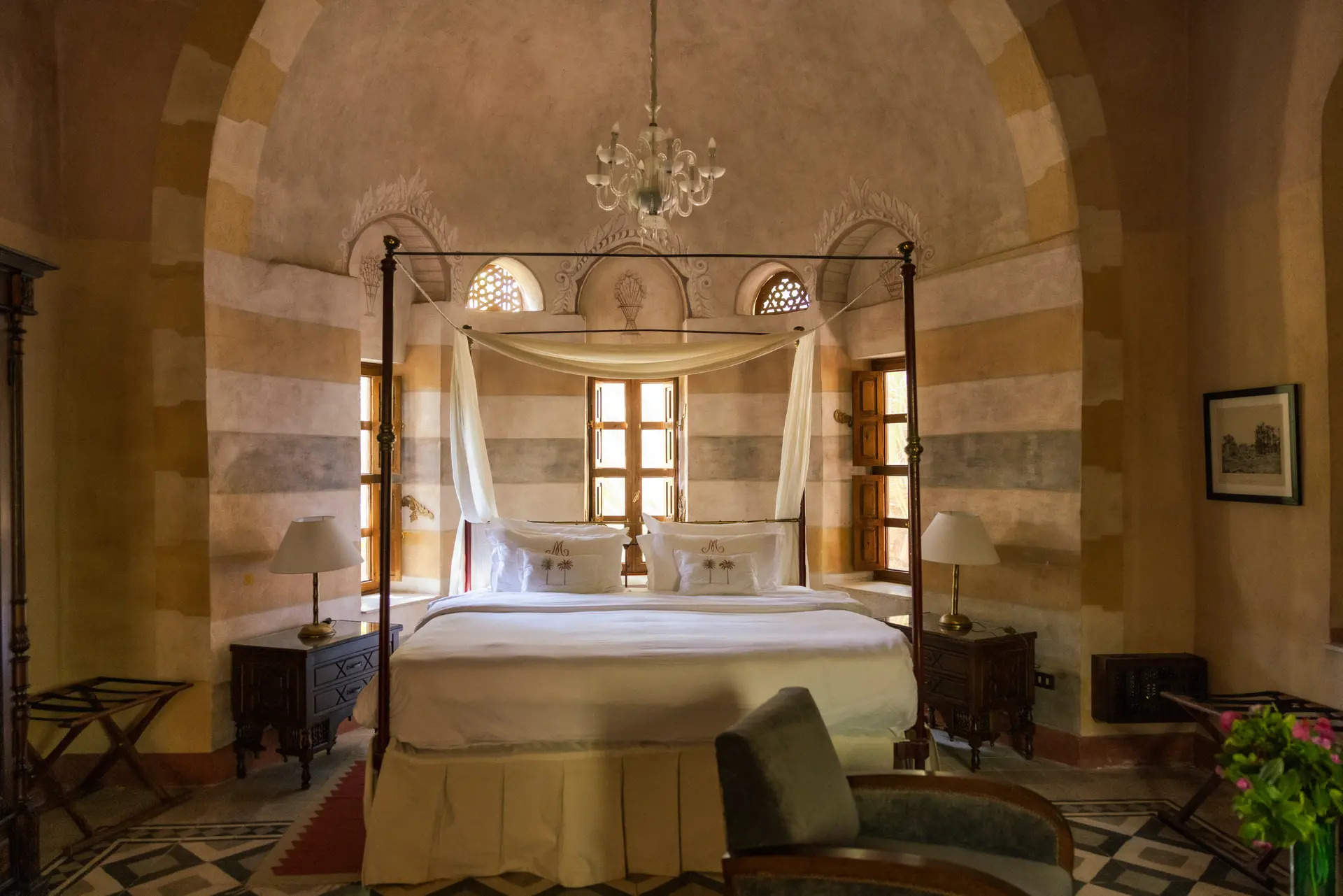
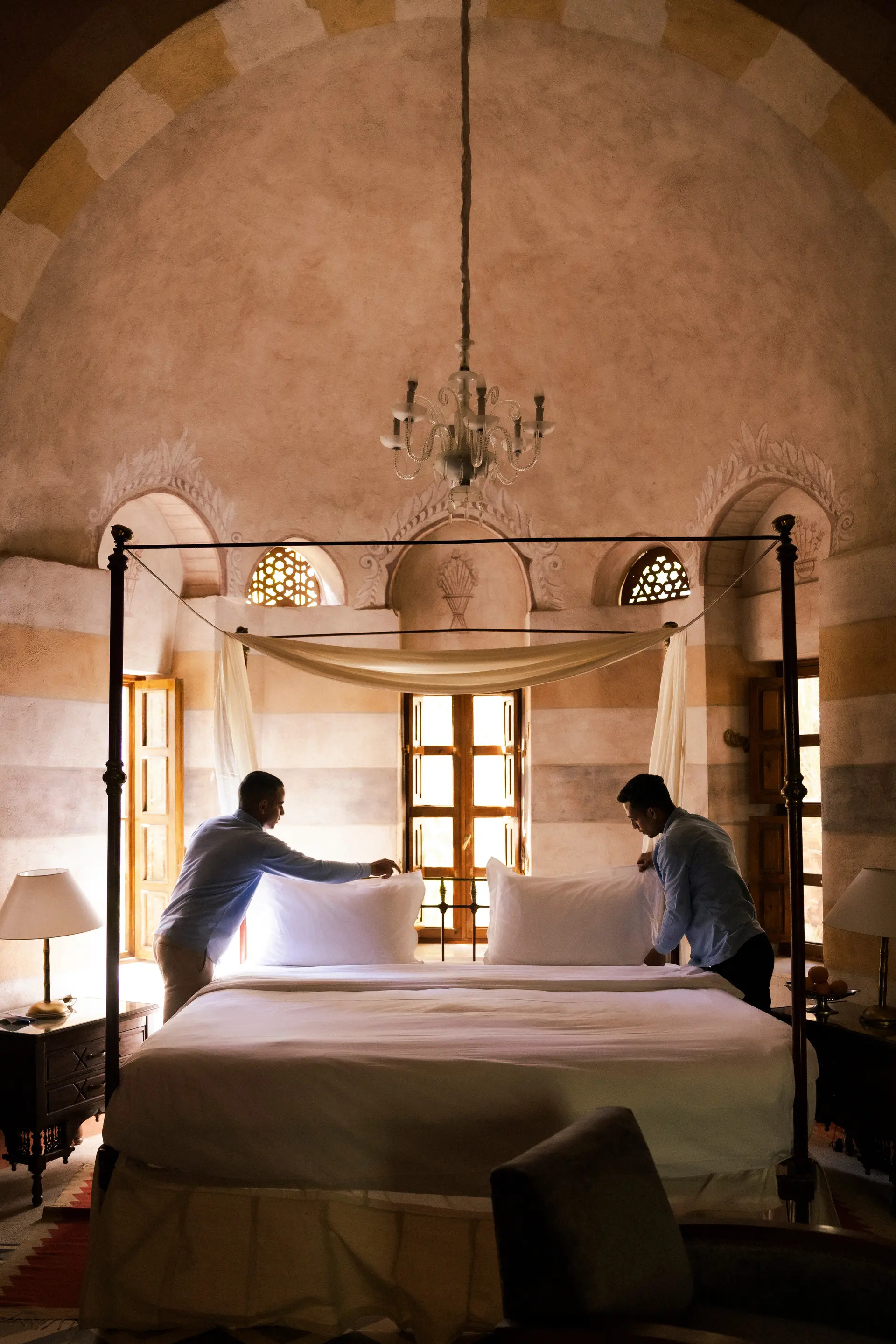
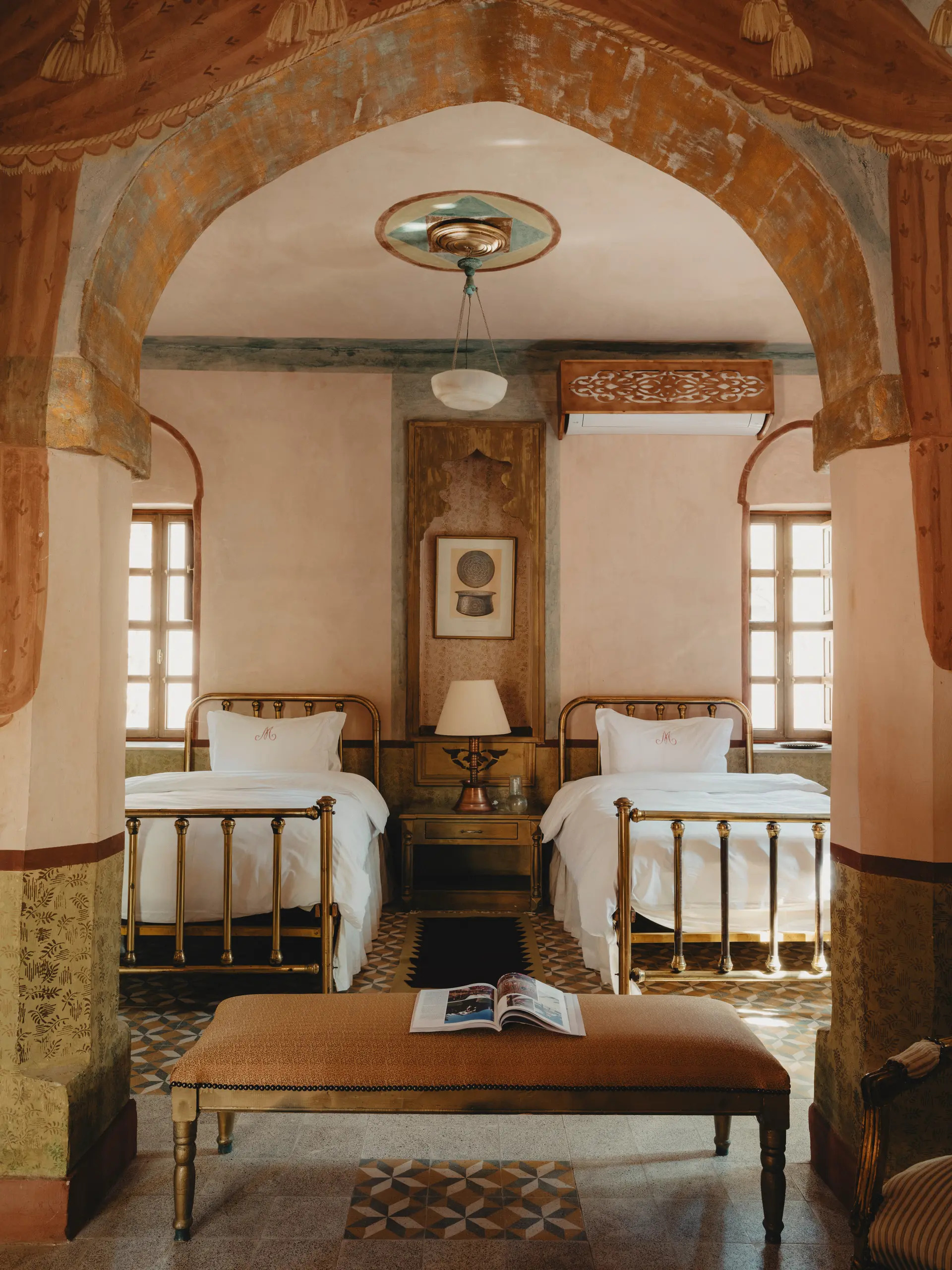
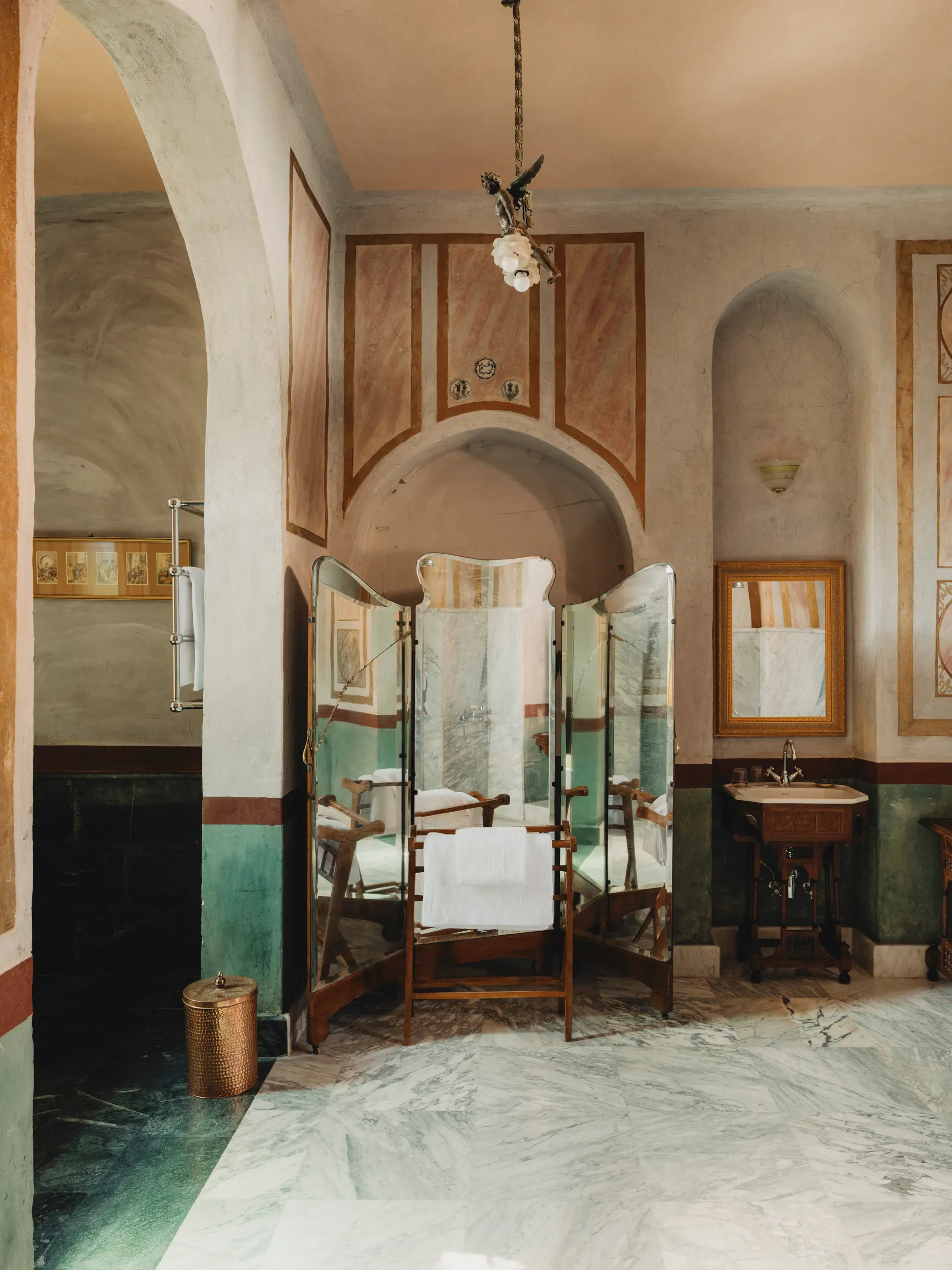
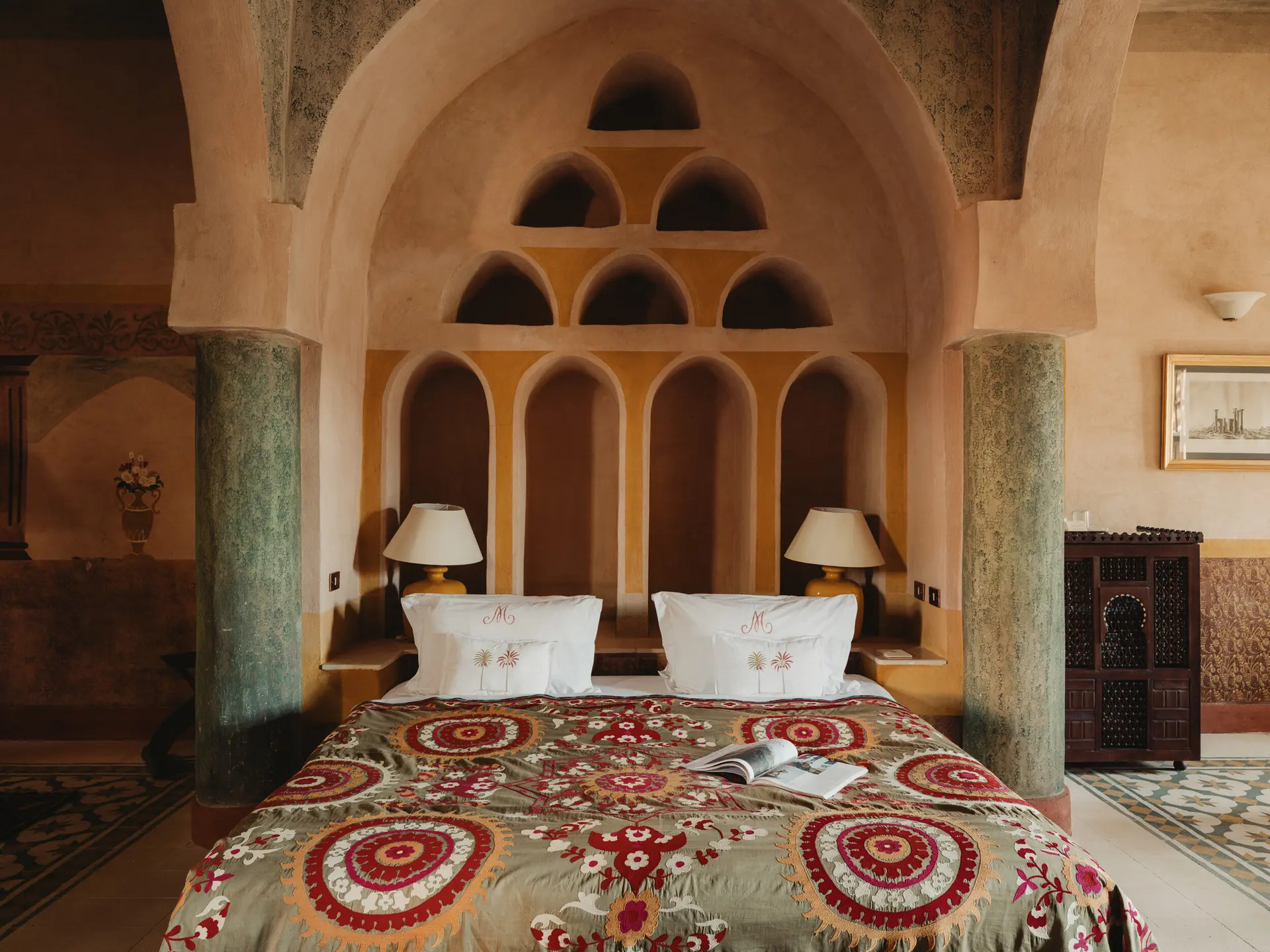
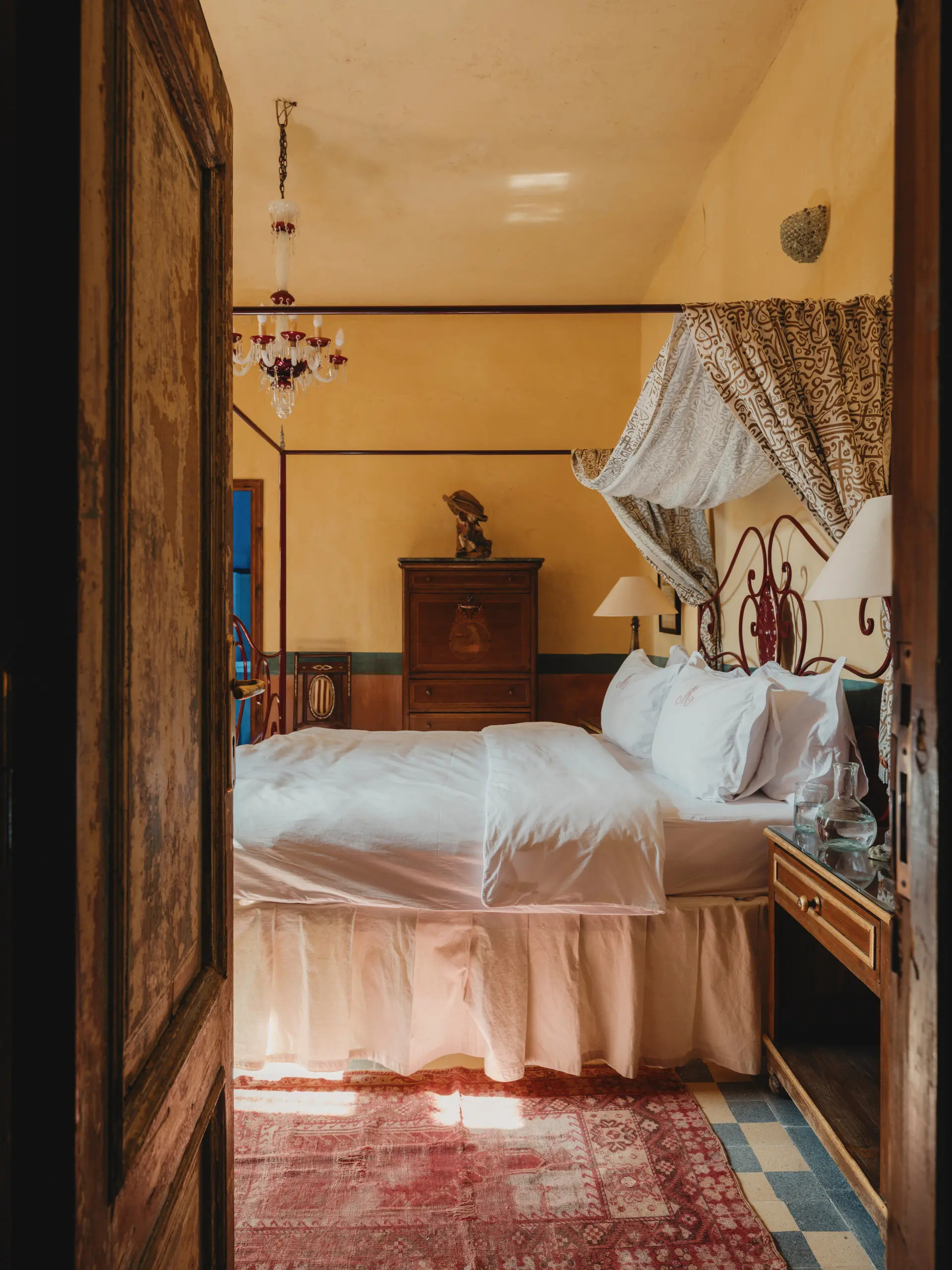
Uniformity would be completely beside the point here. The hotel’s 54 rooms and suites are scattered around courtyards overflowing with palms, roses, bougainvillea and jasmine. Behind each door is another variation on Aboukheir’s wonderfully theatrical vision. Domed ceilings are covered with flowers, hieroglyphic motifs and trompe-l’œil drapery. Kaleidoscopic tiles meet earthy plaster walls. Four-poster brass beds share space with Syrian inlaid furniture, Turkish enamelled tables, Murano glass lamps, embroidered fabrics and old photographs of Egypt. Sunlight through stained glass occasionally washes the whole composition in colour. Even the smallest rooms are generous, while hammam-like bathrooms continue the fantasy with marble, vintage fittings and deep baths. This isn’t minimalism. Thankfully.
A Garden Grown from the Desert
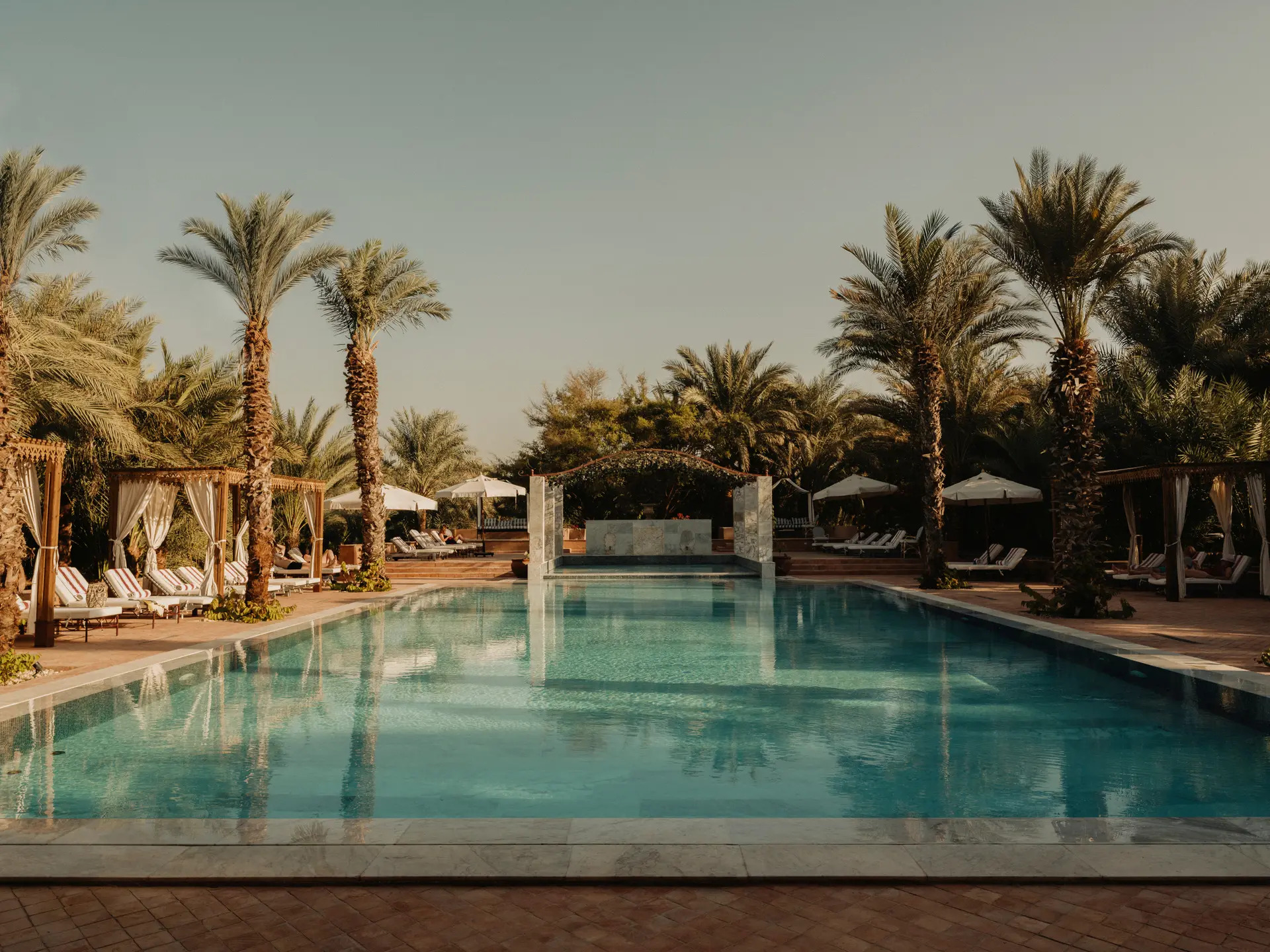
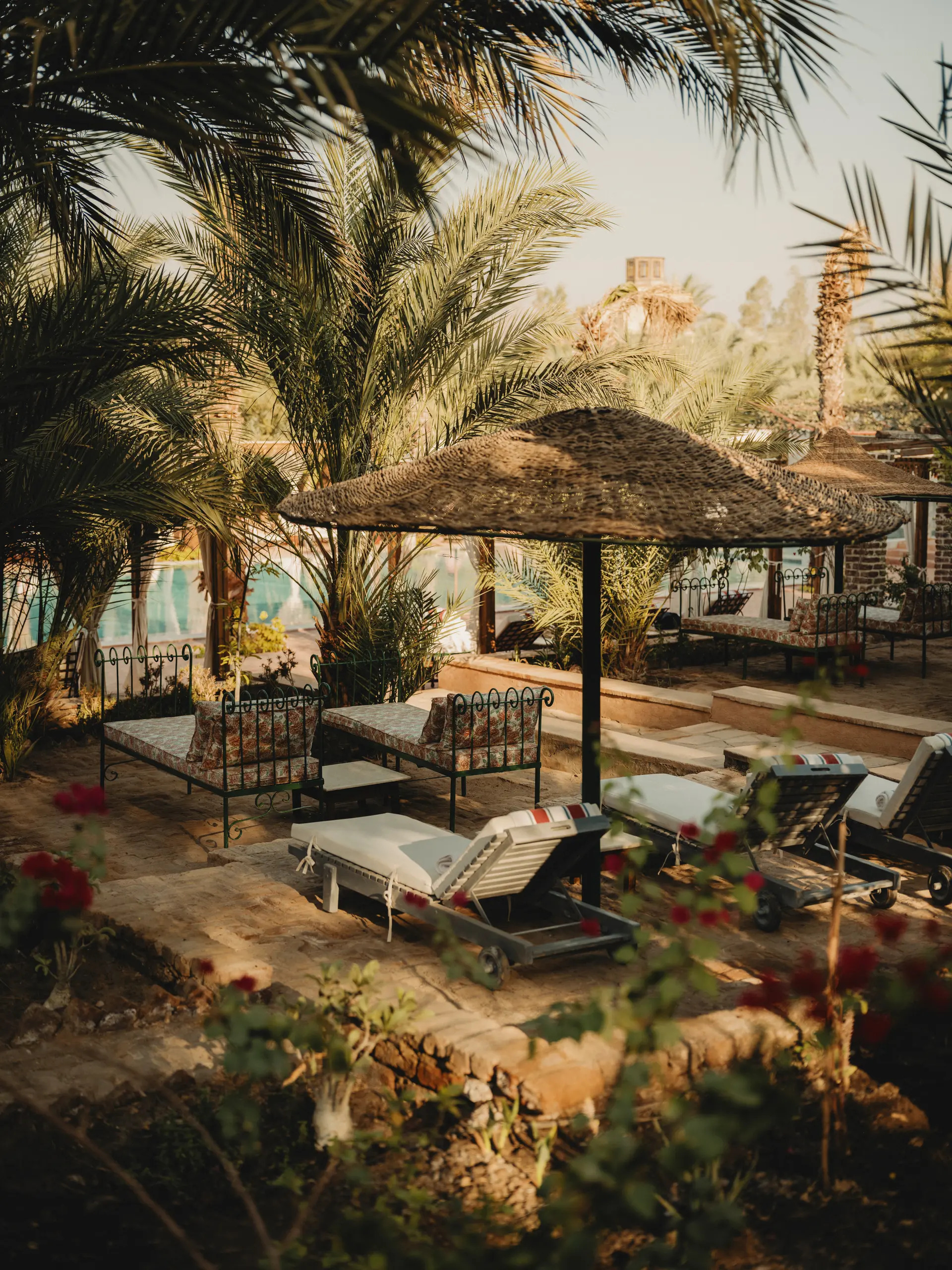
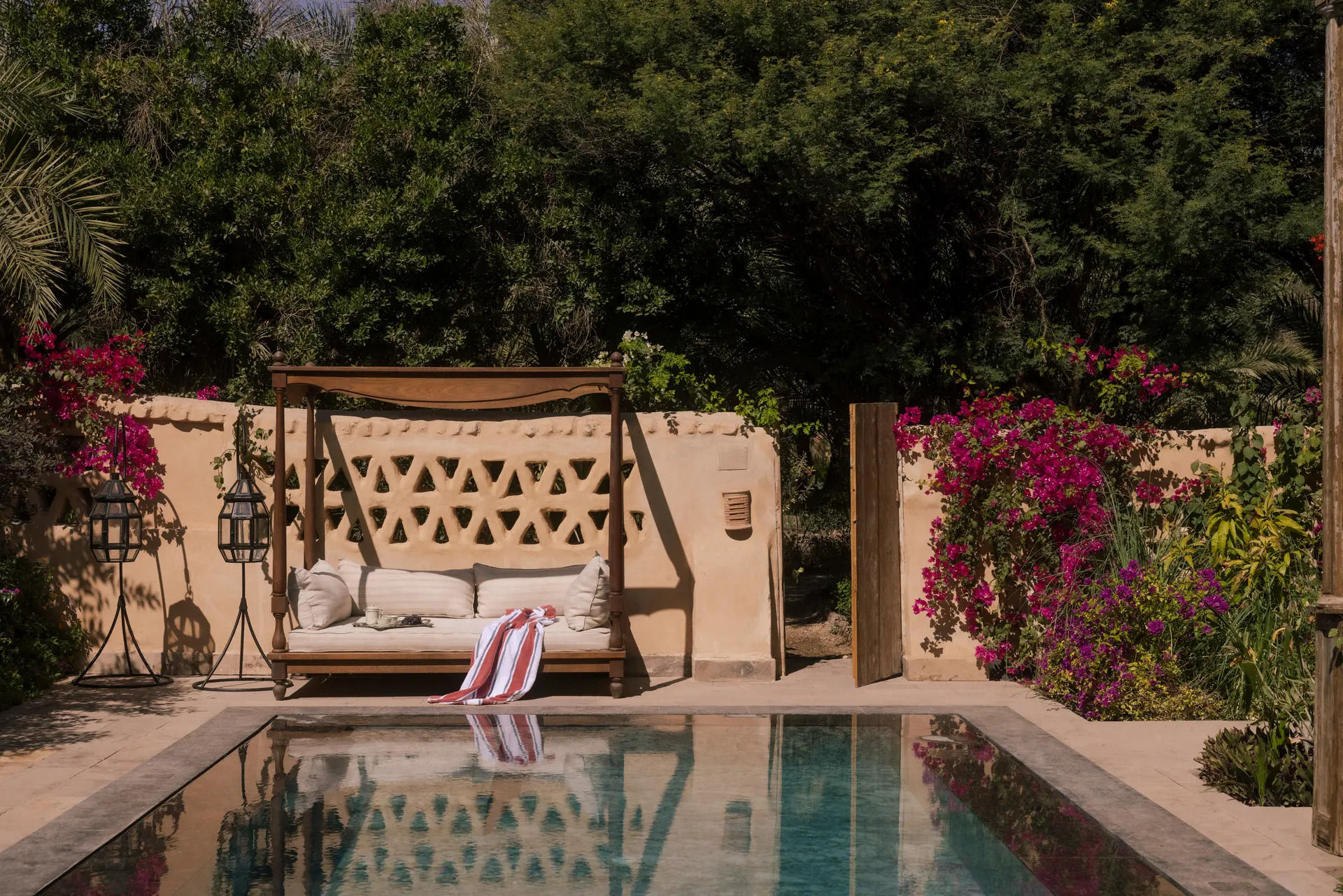
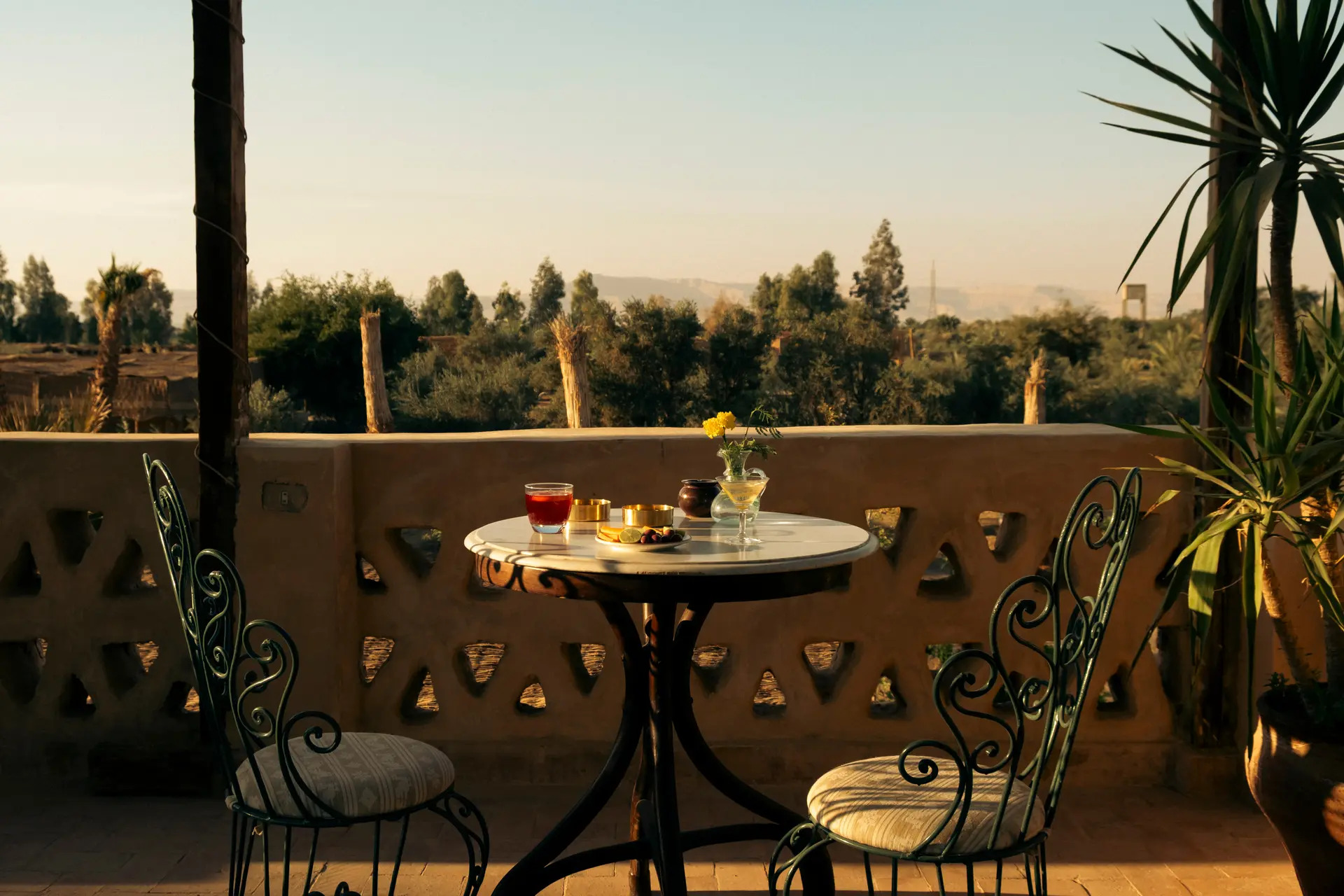
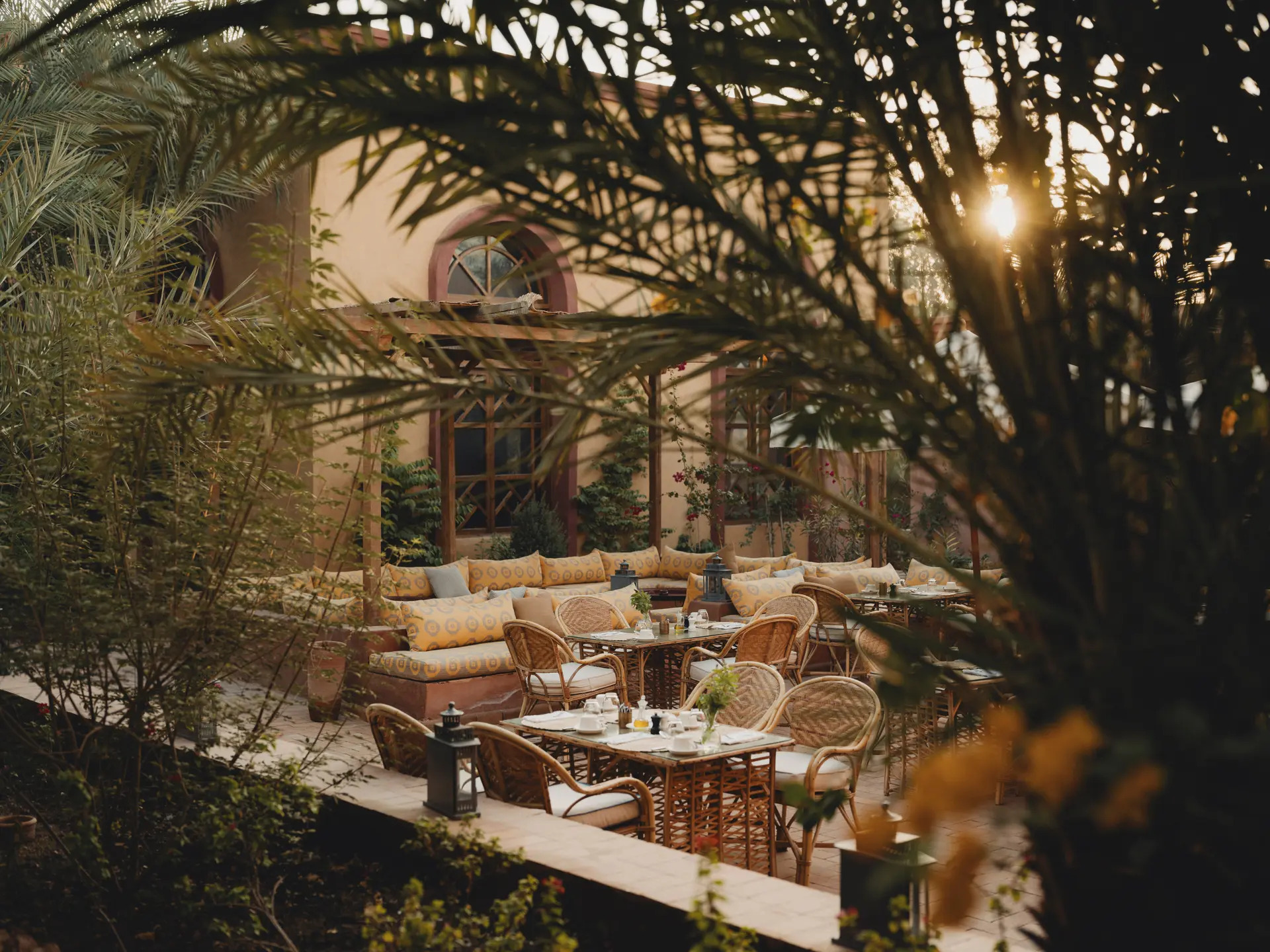
Architecture is only half the story. Over two decades, what began as empty land has become a remarkably lush oasis. Brick paths disappear beneath date palms. Fountains trickle through flower-filled courtyards. Jasmine climbs walls and bougainvillea tumbles over them. An octagonal library tower appears between the greenery; elsewhere there’s a turquoise swimming pool, hammam and garden pavilion overlooking farmland. Beyond the hotel’s walls are sugarcane fields, palms and the everyday rhythms of rural Upper Egypt. That contrast matters. Most visitors come to Luxor for monumental architecture. Al Moudira offers something altogether more intimate: shade, water, vegetation and silence.
The Other Side of Luxor
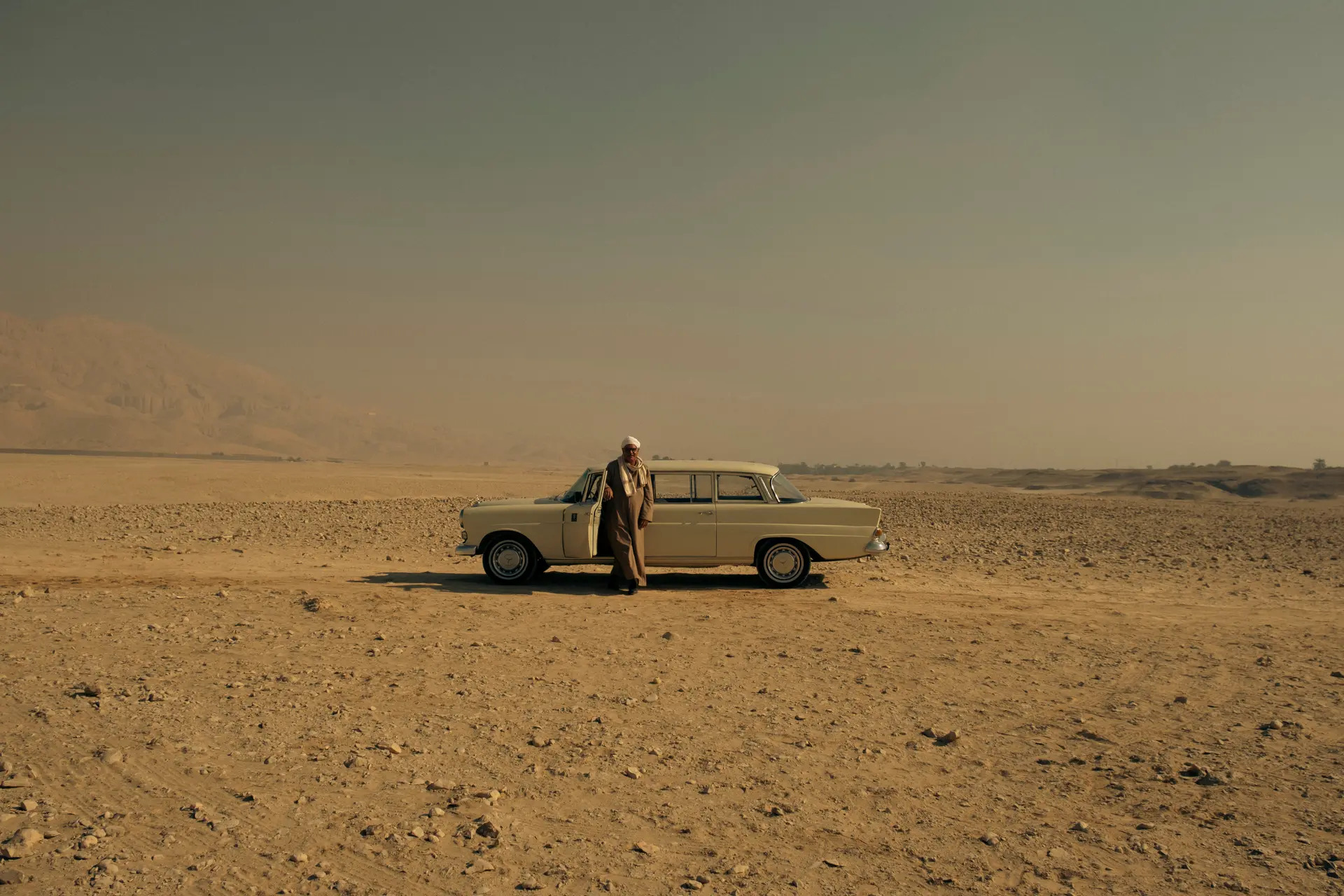
Location is one of Al Moudira’s great luxuries. While many of Luxor’s hotels congregate on the busier East Bank, Al Moudira sits among farmland on the West Bank of the Nile, away from the cruise ships and larger hotels. And this is the side of the river where ancient Thebes buried its dead. The Valley of the Kings, Valley of the Queens, Medinet Habu and Ramesseum are all within easy reach, making early starts wonderfully straightforward. The hotel can arrange guides, sunrise balloon flights and excursions in an eccentric fleet of vintage cars. After hours among tombs and temples, returning through Al Moudira’s gates feels less like going back to a hotel than entering another, rather more comfortable, archaeological fantasy.
From Farm to Courtyard
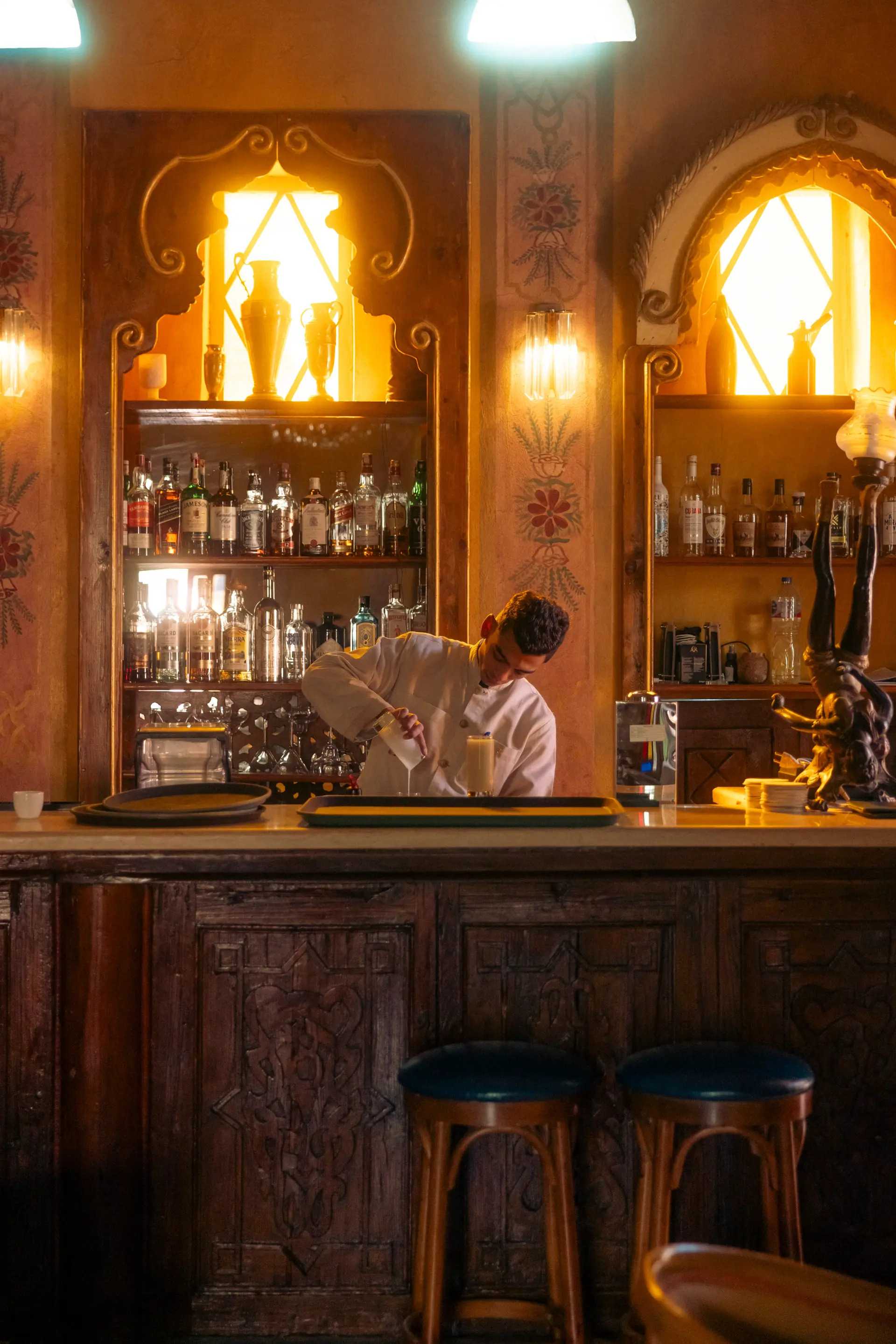
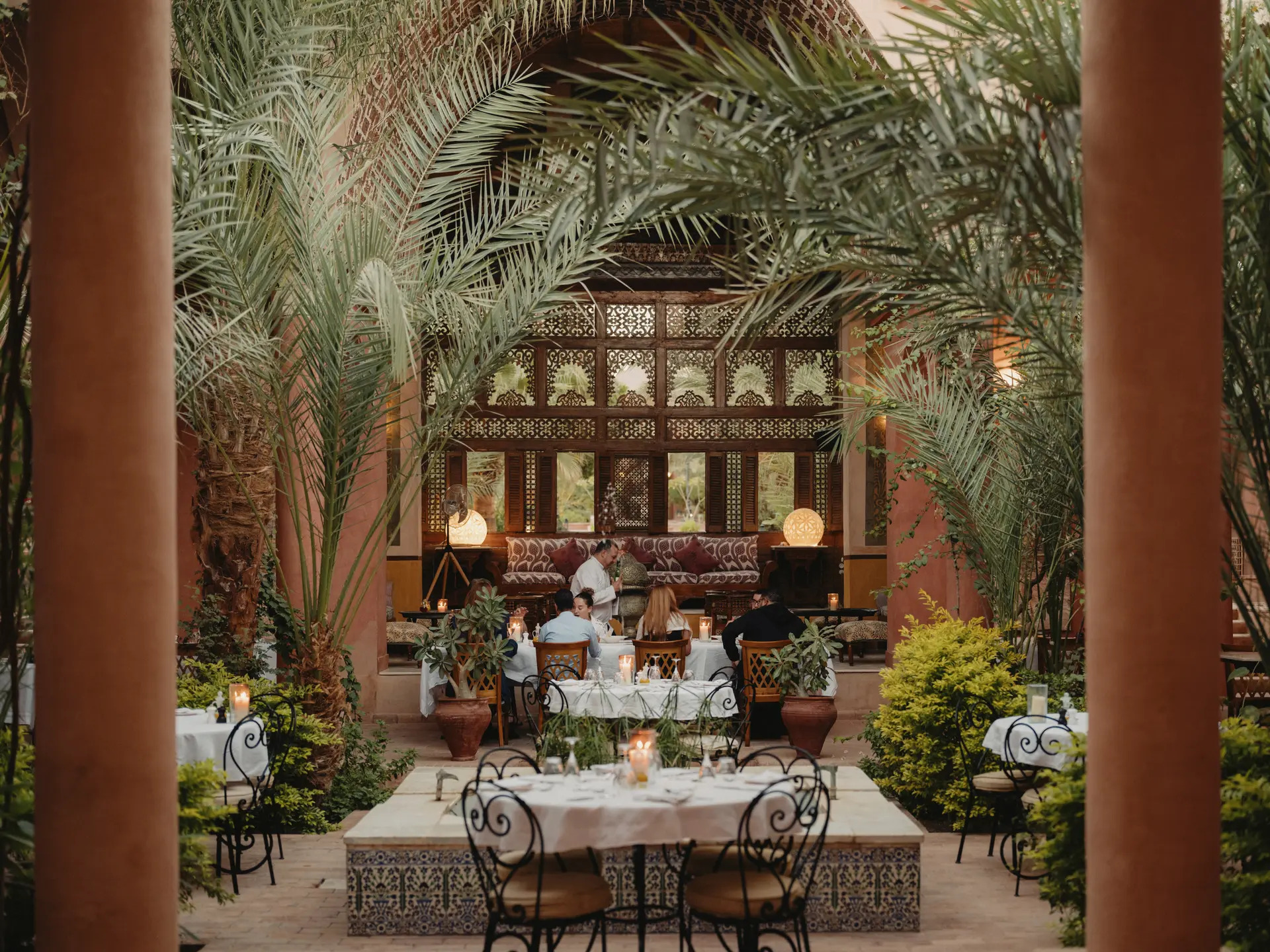
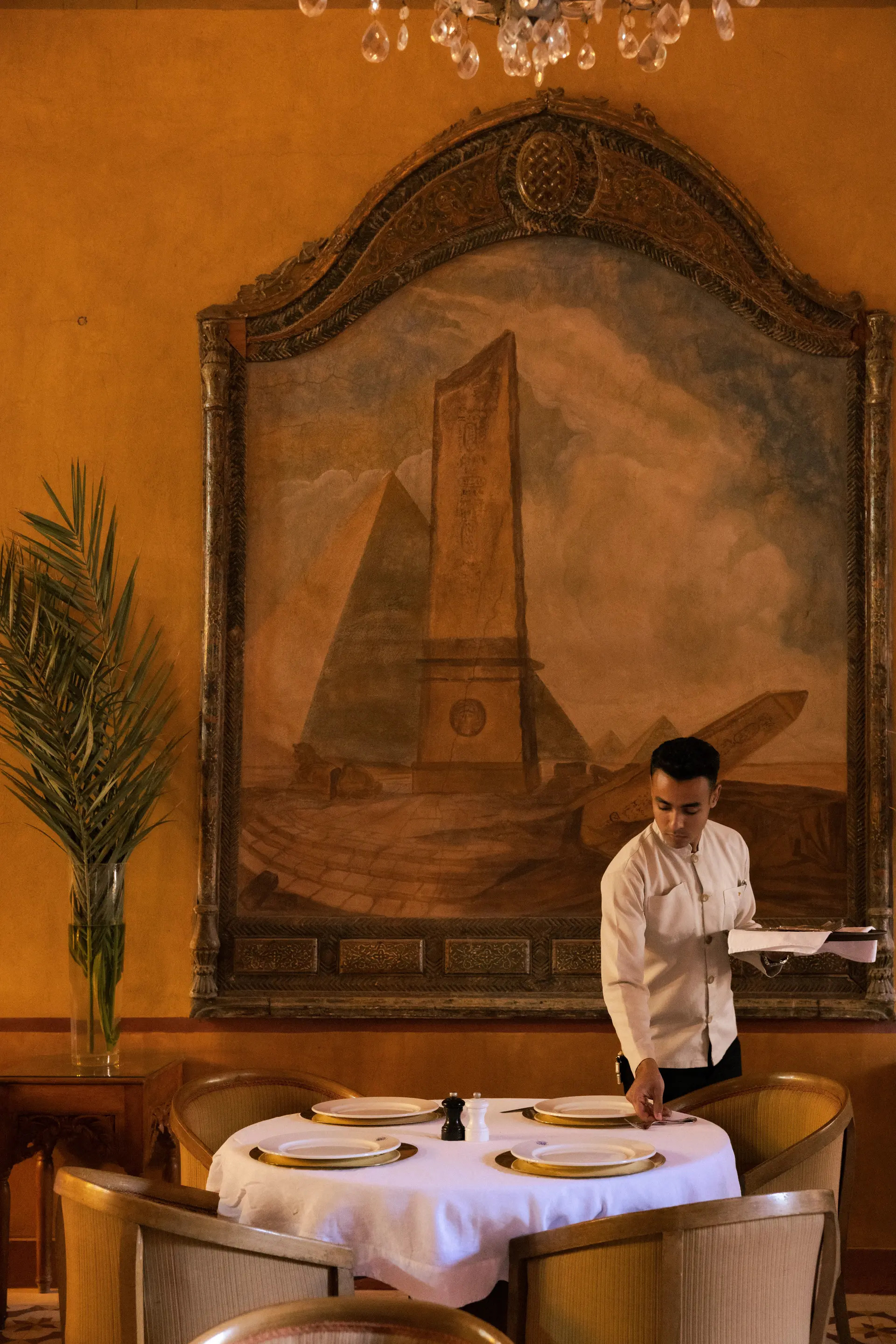
The hotel’s food has evolved considerably too. An adjoining regenerative organic farm now supplies much of the produce used across its restaurants — including eggs, poultry, cheese, butter, vegetables and herbs. Honey comes from a nearby monastery, while women from the neighbouring village bake traditional shamsi bread in the hotel’s domed oven. Breakfast might mean fuul, falafel and eggs alongside pastries and fruit. Lunch by the pool brings Lebanese mezze, salads and wood-fired pizzas. At Khan Al Moudira, a sunken courtyard gathered around an antique Ottoman fountain becomes the setting for Egyptian and Lebanese cooking: smoky mutabal, shanklish, grilled meats, molokhiya and fragrant rice. Then there is the grander Ottoman Hall, where painted interiors, chandeliers and the adjoining Eastern bar take Al Moudira back towards its theatrical roots.
A New Chapter
The hotel entered another era in 2022 when Cairo-based hotelier Florian Amereller took over its management, followed by membership of Relais & Châteaux in 2023. New villas have since appeared discreetly among the palms and gardens, some with lap pools and as many as five bedrooms. One is Villa Zeina, Aboukheir’s own Luxor home. Yet expansion hasn’t turned Al Moudira into a conventional resort. Its most valuable asset remains precisely what cannot easily be replicated: more than two decades of accumulated atmosphere. Even the sustainability story grows naturally from that sense of place. Local materials and craftspeople were fundamental to its construction, many employees come from surrounding communities, and the farm increasingly supplies its kitchens. Land has also been reserved for solar power as the hotel works towards renewable-energy operation.
Why It Works
Luxor has some of the most extraordinary buildings humans have ever made. Trying to compete with them would be foolish. Al Moudira does something more interesting. It creates its own mythology. There was no centuries-old palace here waiting to be restored. Zeina Aboukheir imagined one, Olivier Sednaoui helped build it, local artisans gave it texture and the gardens slowly gave it age. Twenty-five years later, separating invention from memory hardly seems important. Al Moudira isn’t ancient Egypt. It is a beautifully imagined Egypt that somehow feels as though you have remembered it.
Information
At a glance
Architecture
Olivier Sednaoui, Dina Abou Alia
Opened / Renovated
2001
Size matters
56 rooms & suites (50-100m2) (538-1,076 sq ft)
Interior design
owner designed
Bathroom Amenities
Ortigia
Featured in
Don't take our word for it


Handpicked worldwide
A carefully curated collection of exceptional boutique and design hotels across the globe.
Design with soul
Architecture, atmosphere and craftsmanship come together in stays with a clear identity.
Hidden, not hyped
Independent boutique hotels you rarely find on mainstream booking platforms.
Travel guidance
Personal recommendations and thoughtful support from people who actually know the places.