


Between Two Copenhagens
Raw Nørrebro meets refined Frederiksberg in a Copenhagen hotel that deliberately leaves the hygge clichés at the door.

Why DNA Hotels loves it
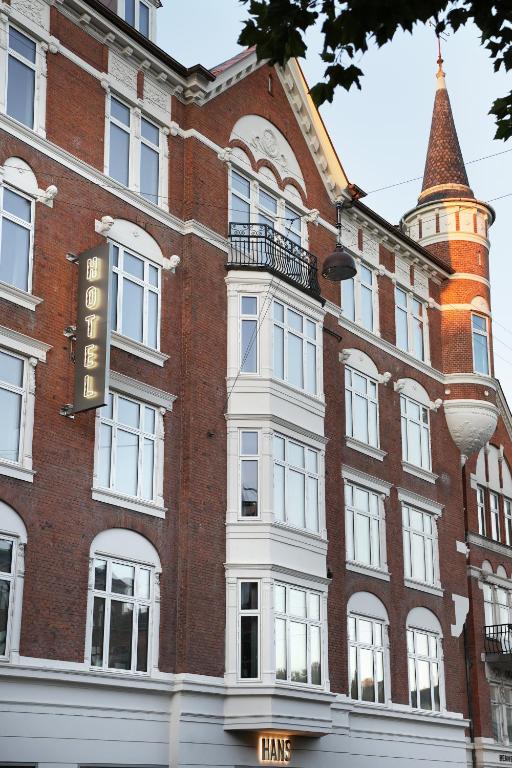
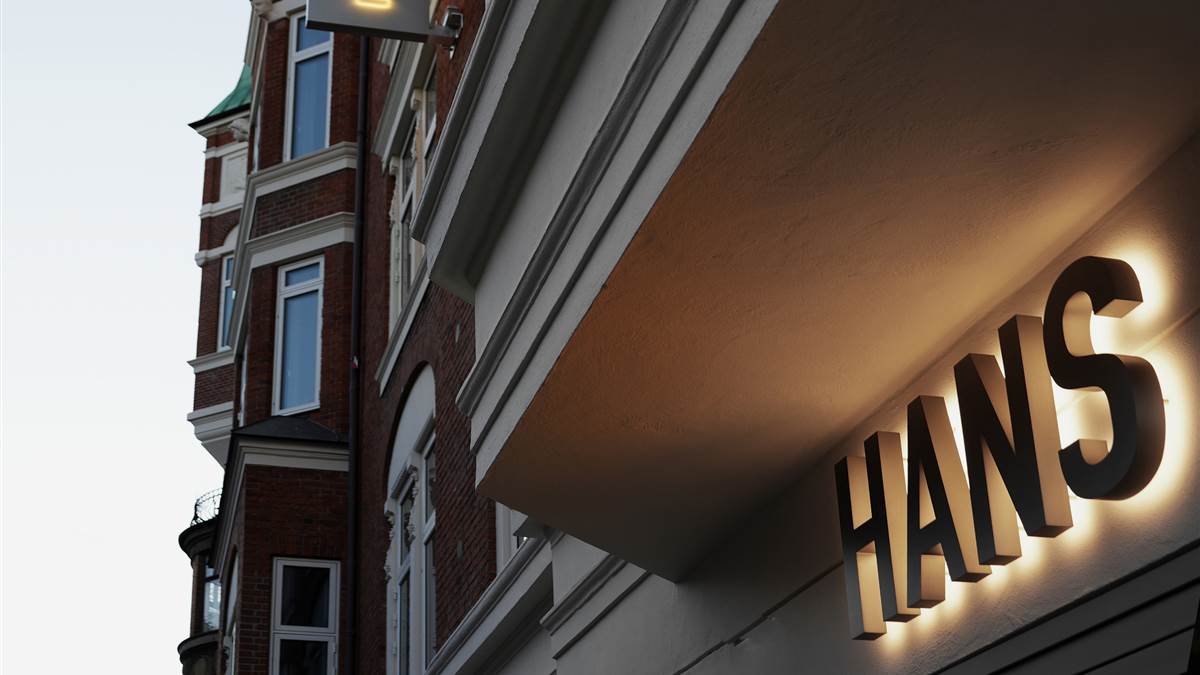
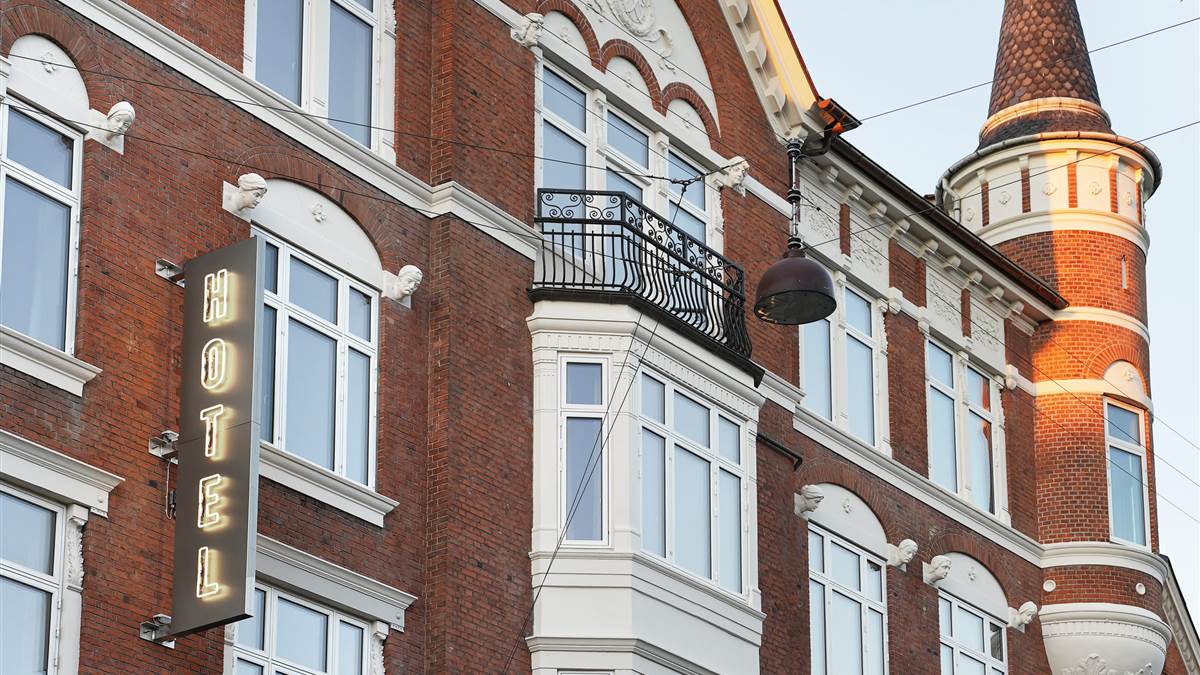
Norrøn Architects transformed an early 20th-century red-brick building by Emil Blichfeldt, opening the ground floor to the street with huge windows inspired by Edward Hopper’s Nighthawks.
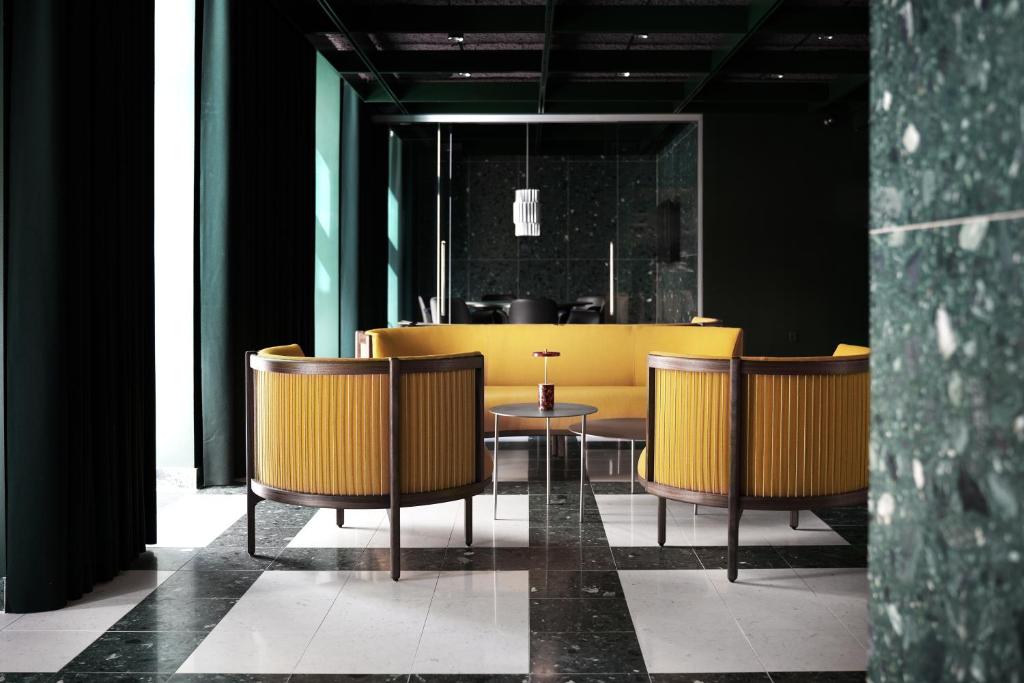
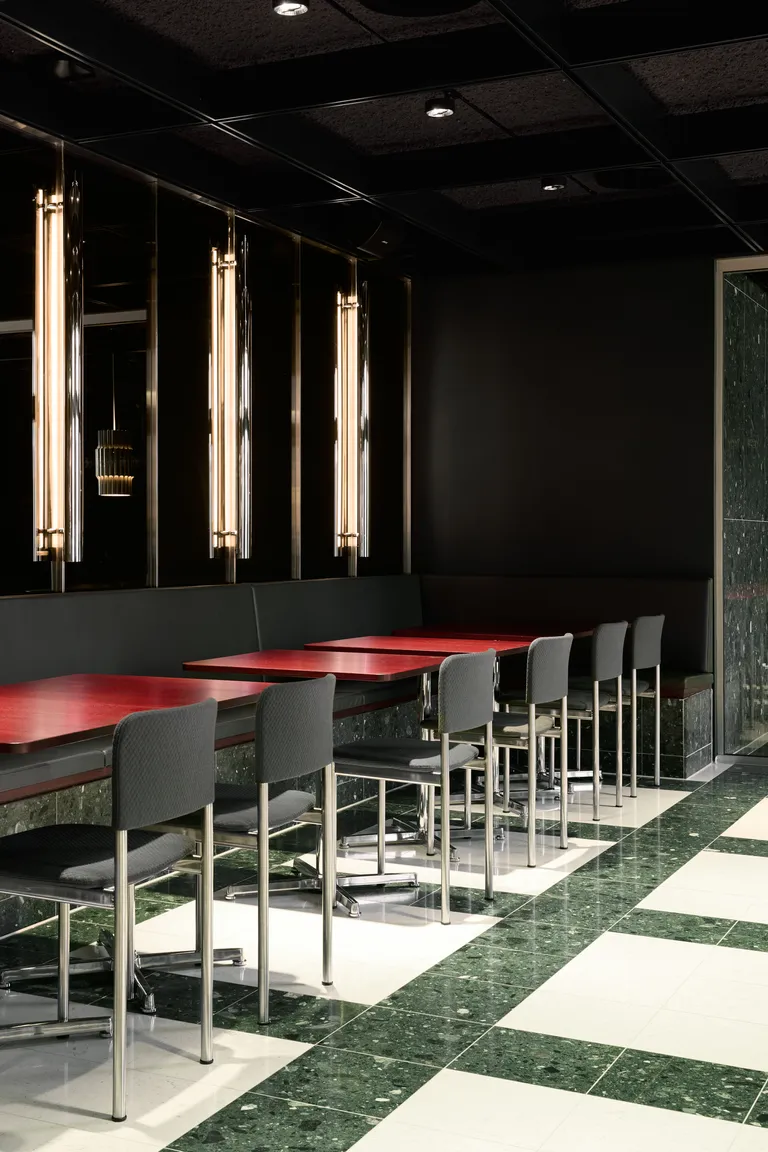
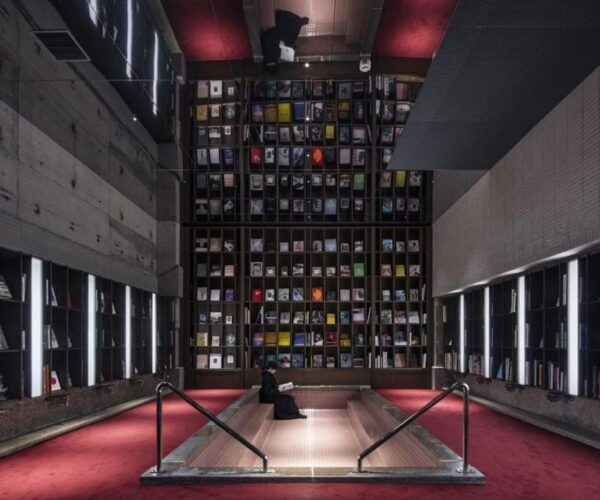
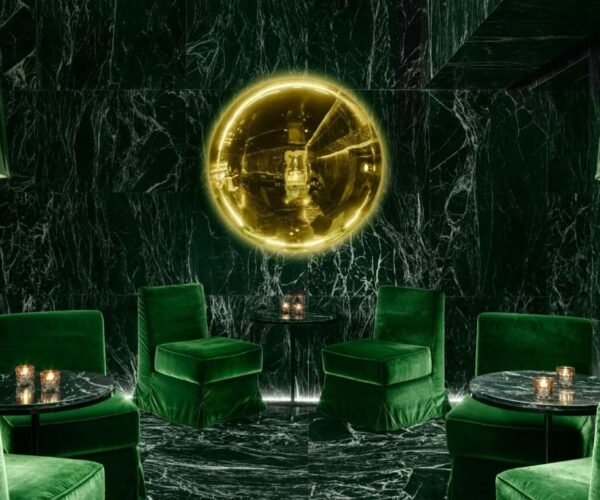
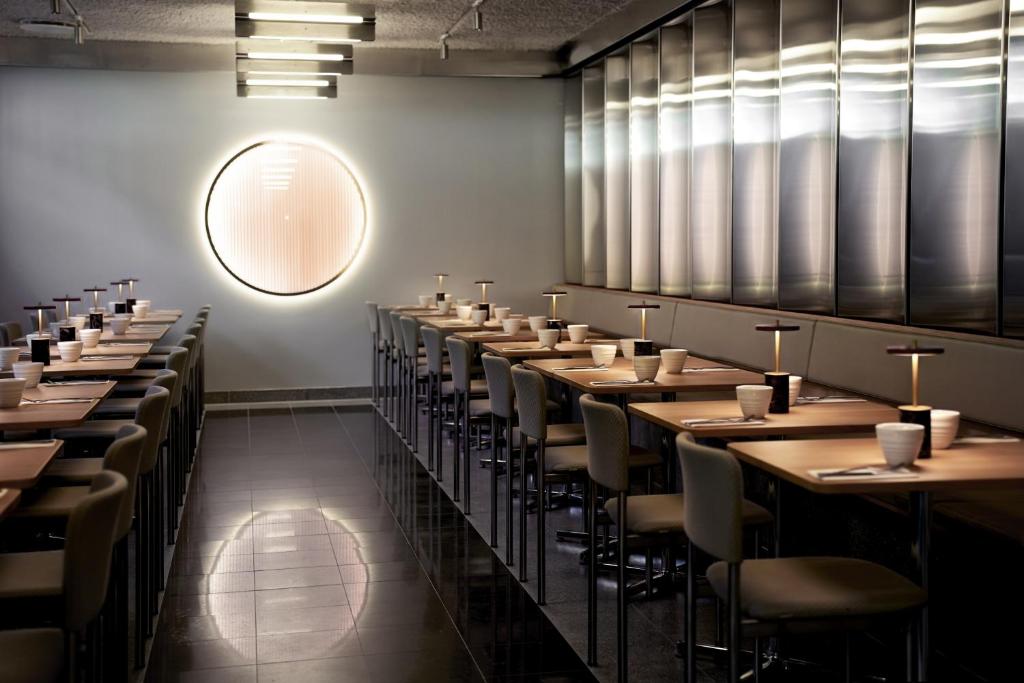
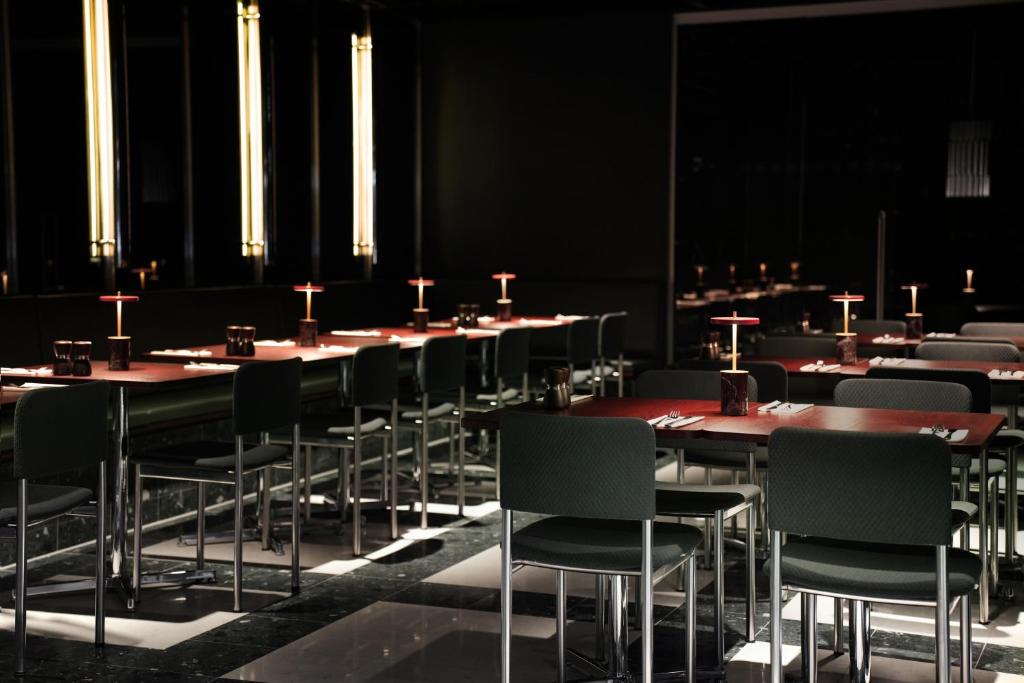
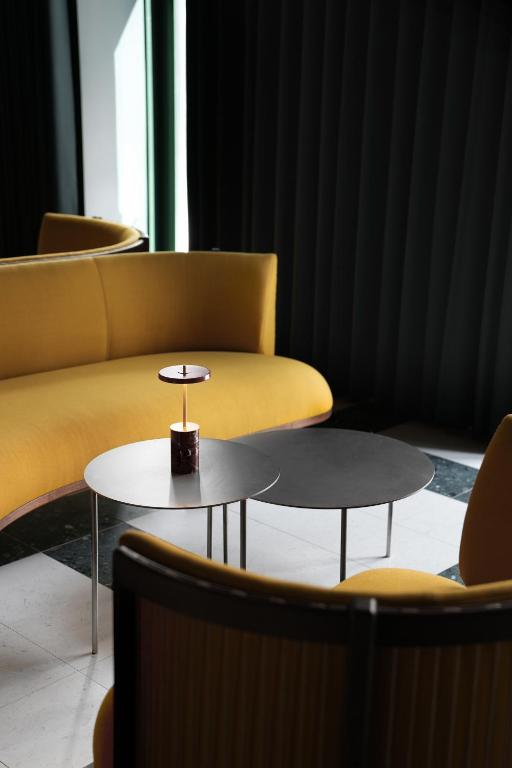
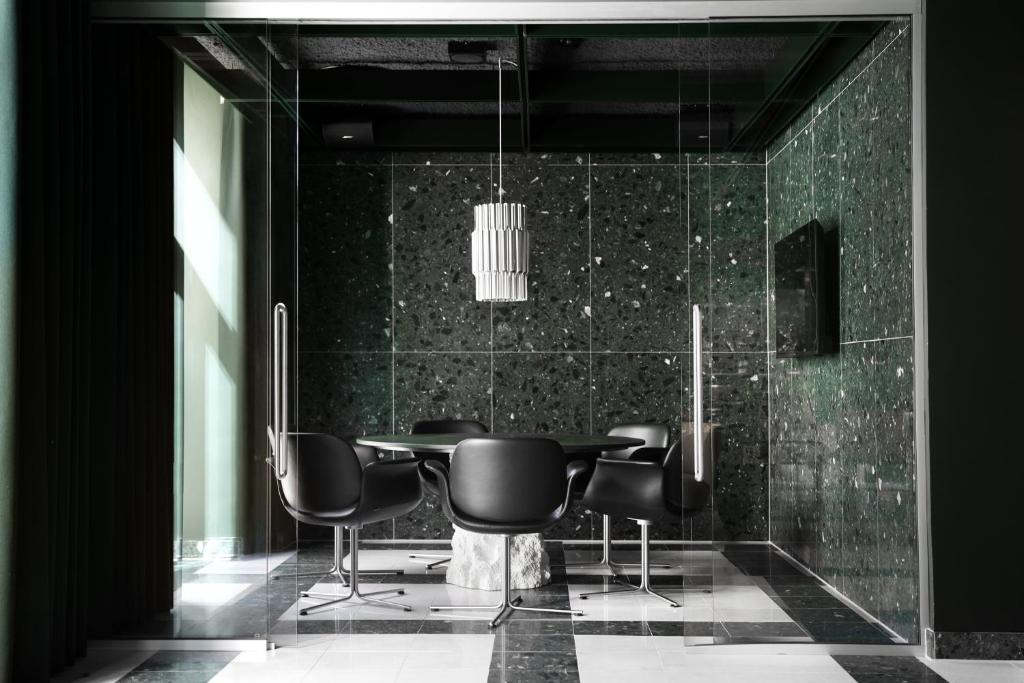
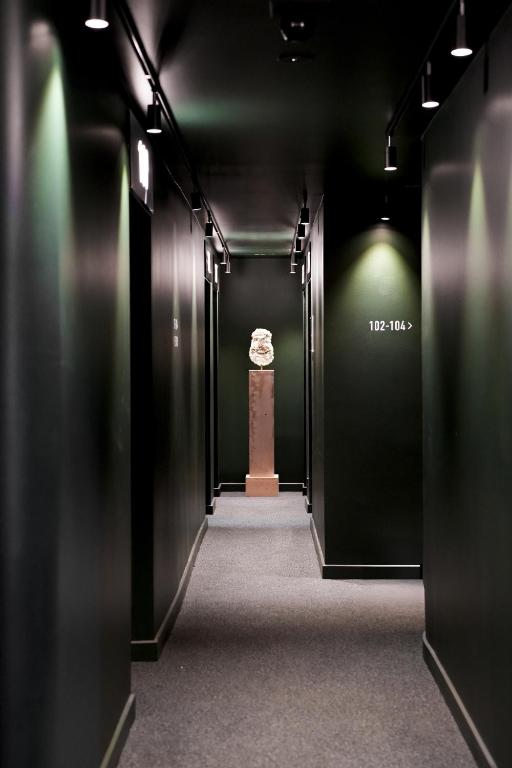
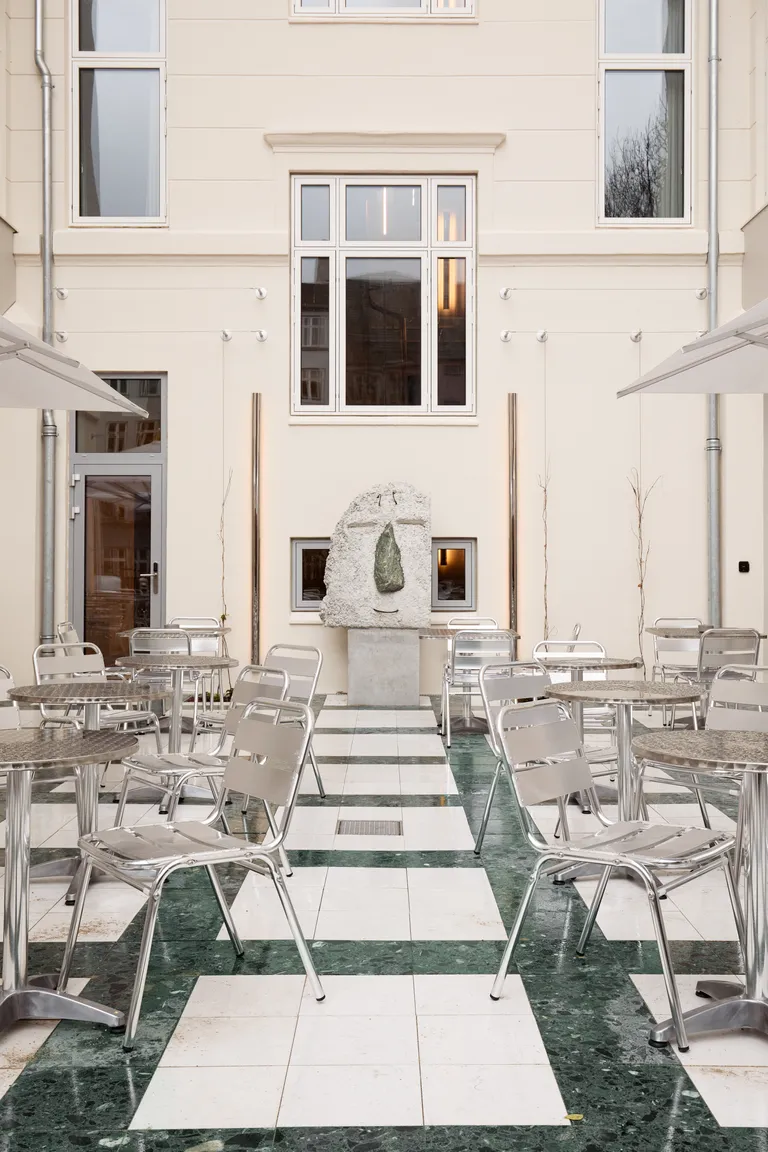
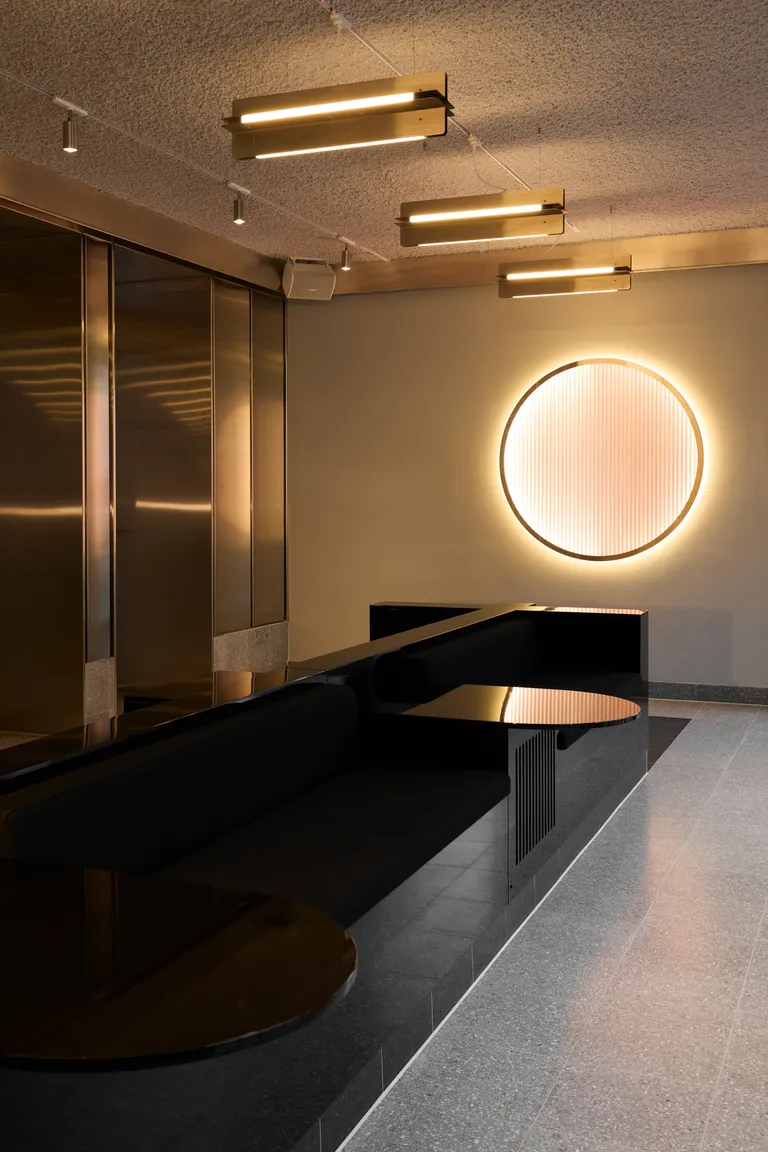
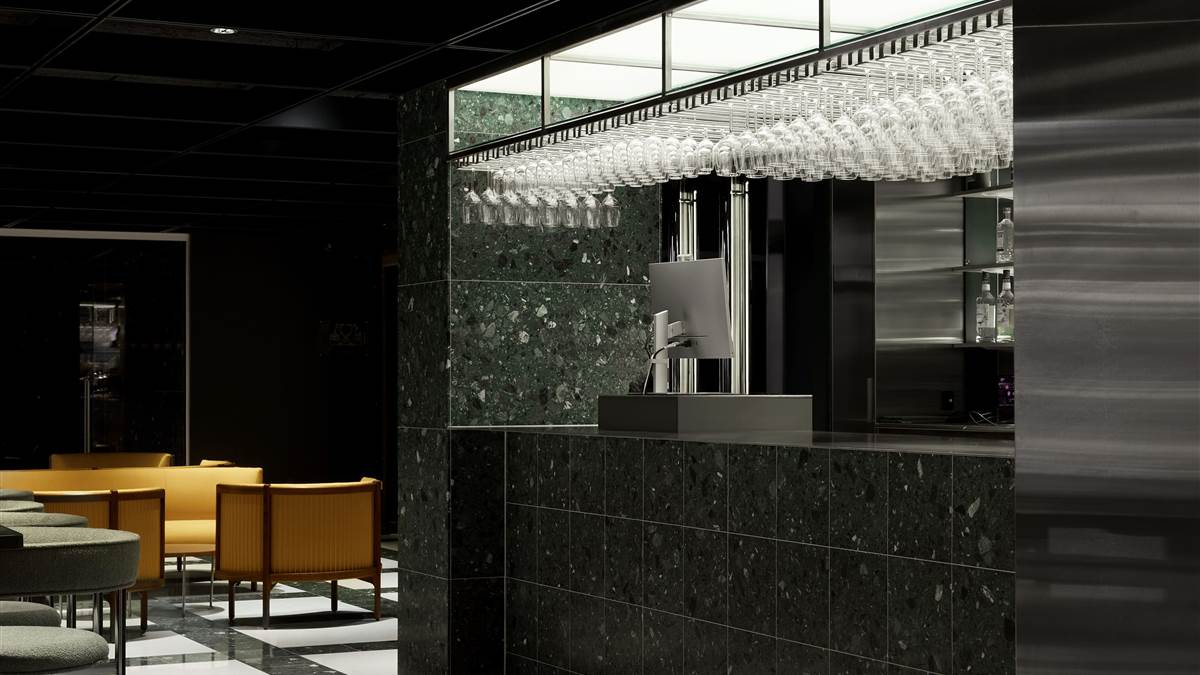
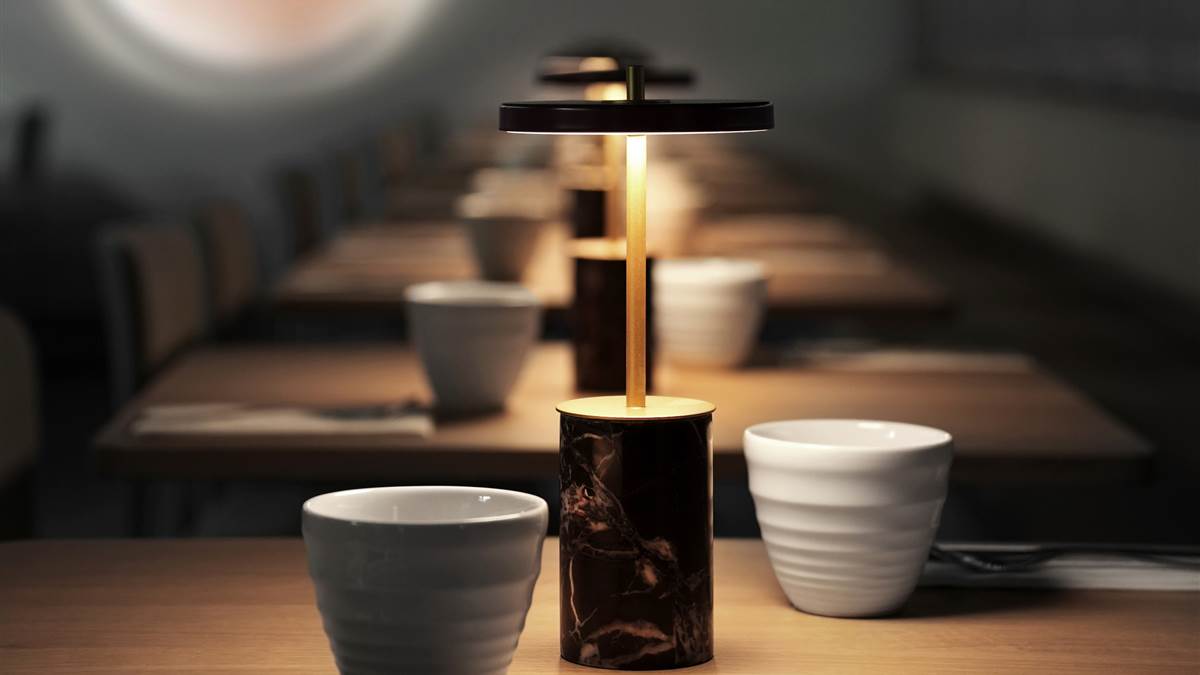
Concrete, grey terrazzo, steel and aluminium meet forest green, walnut, marble and flashes of yellow — a darker, more urban alternative to Copenhagen’s ubiquitous pale-wood Scandi aesthetic.
Its position between Nørrebro and Frederiksberg is embedded in the design itself, creating a hotel that feels connected to two very different sides of Copenhagen rather than simply decorated in Danish design classics.
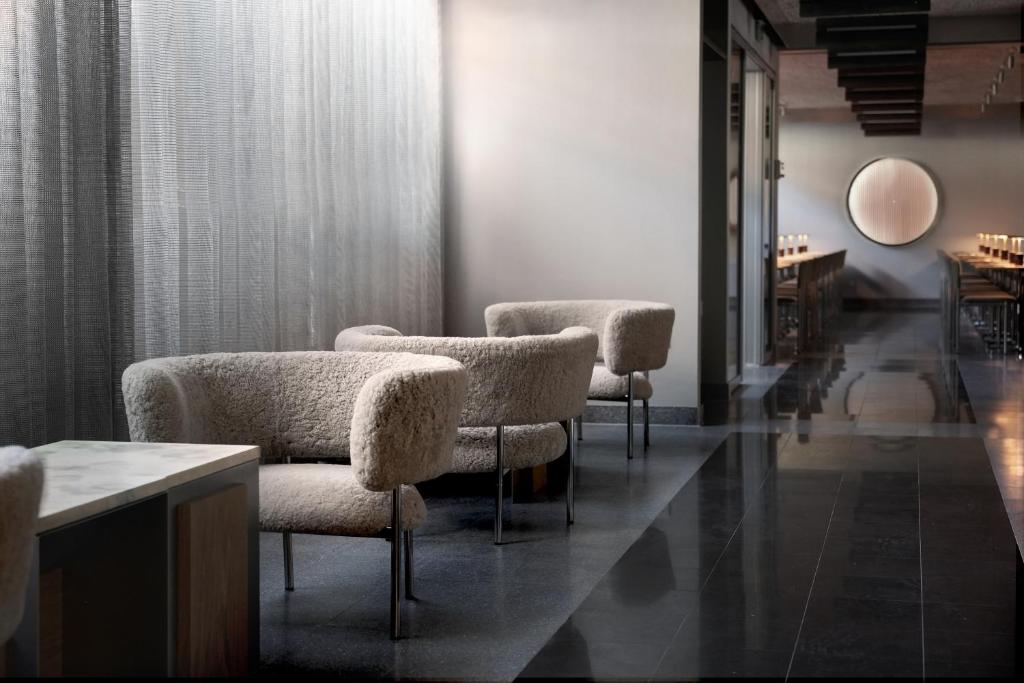
Hotel Hans sits exactly where Copenhagen changes character. On one side is Nørrebro: dense, multicultural, creative and full of independent restaurants, wine bars and shops. On the other, Frederiksberg brings leafy streets, elegant apartments and a distinctly more polished rhythm. Norrøn Architects has used that collision as the starting point for the interiors, combining industrial greys, concrete and metal with dark timber, green, marble and softer textiles. The result is Copenhagen, but not the pale oak, sheepskin and artfully placed candle version.
Nighthawks on Two Wheels
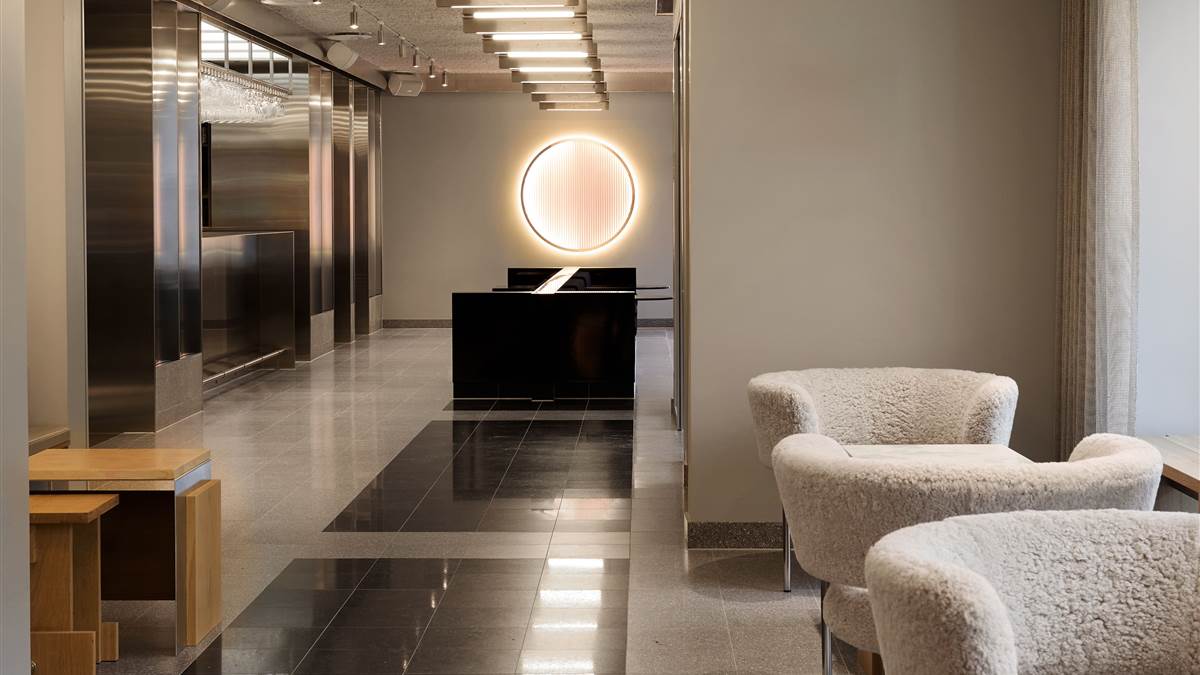
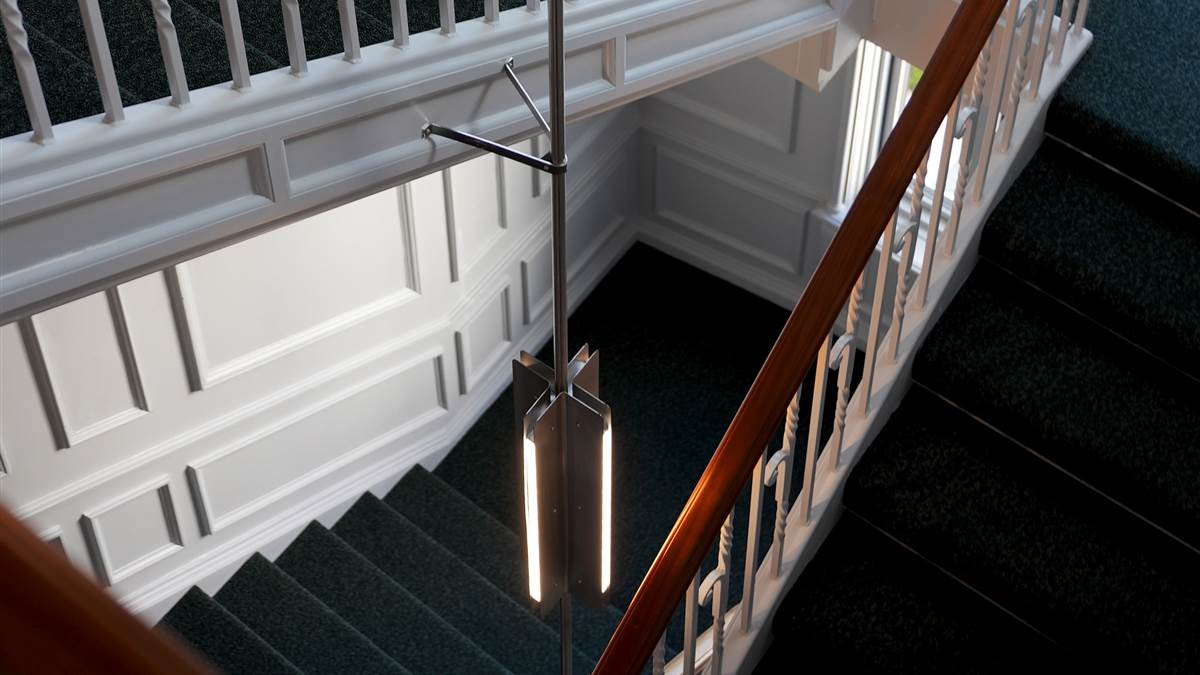
The building itself provides a rather grand shell. Designed by Emil Blichfeldt — the architect also associated with Copenhagen’s Tivoli Gardens — its historic red-brick exterior belongs firmly to an earlier city. Norrøn’s most transformative intervention is at street level, where the long lobby façade has been opened with enormous windows. The inspiration was Edward Hopper’s Nighthawks: interior life presented almost theatrically to the city outside. Inside, bespoke metal lighting references Nørrebro street lamps. Grey terrazzo runs underfoot. A glossy black lacquered-oak conversation bench, leather booths, walnut chairs and a bright yellow Carl Hansen sofa create different places to sit without dividing the lobby into conventional hotel zones. Outside, bicycles, pedestrians and headlights constantly move past the glass. Copenhagen provides the light installation.
Hans Is in the Details
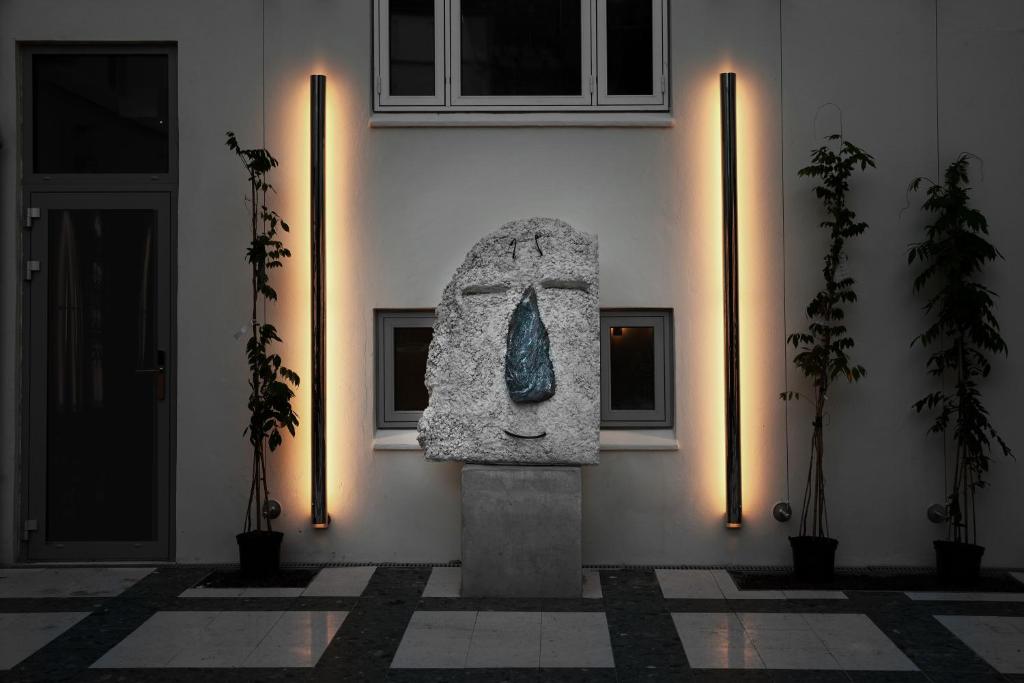
The name isn’t an attempt to manufacture a fictional Danish innkeeper. Hans was the patriarch of the Brøchner family, who co-founded the family hotel business in the 1980s. His presence has been woven into the interiors without turning the place into a shrine. Granddaughter and third-generation hotelier Laura Brøchner created graphic neon portraits of Hans for the windows, while Danish artists Pettersen & Hein produced sculptures from materials discovered in his former workshop. These personal details matter. Hotel Hans could easily have become another very accomplished contemporary Copenhagen hotel. Instead, there is a family story hiding underneath all that terrazzo.
91 Rooms, Darker Than Denmark
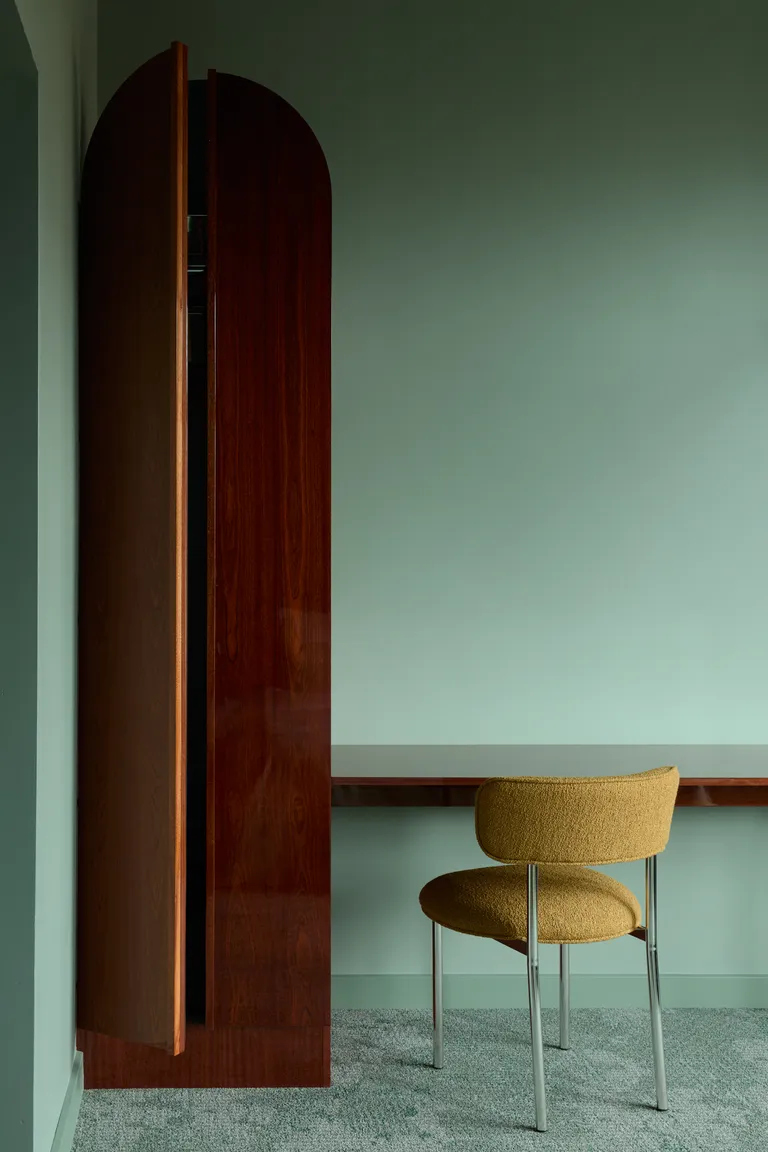
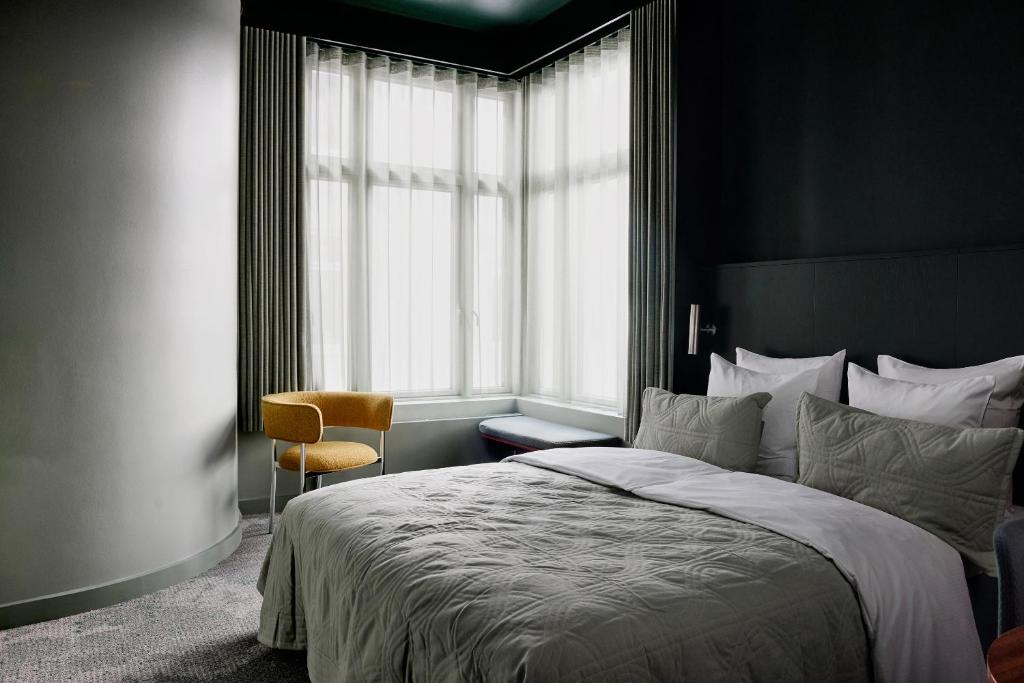
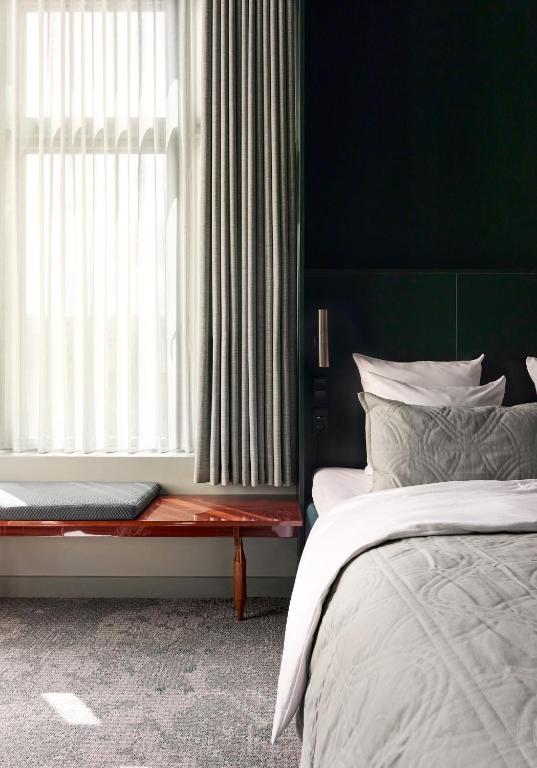
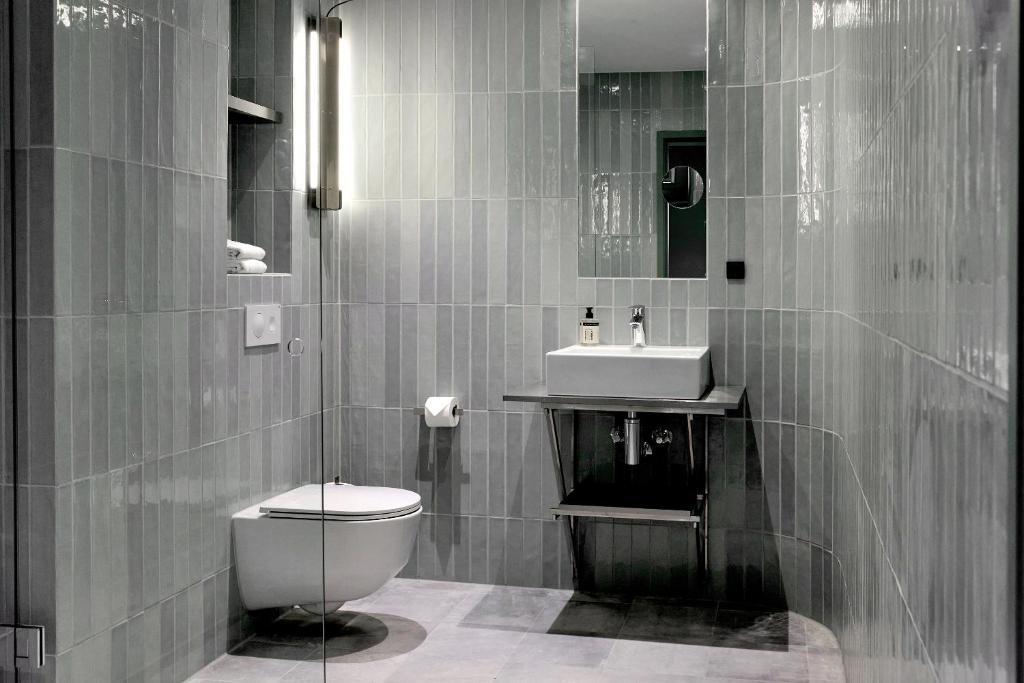
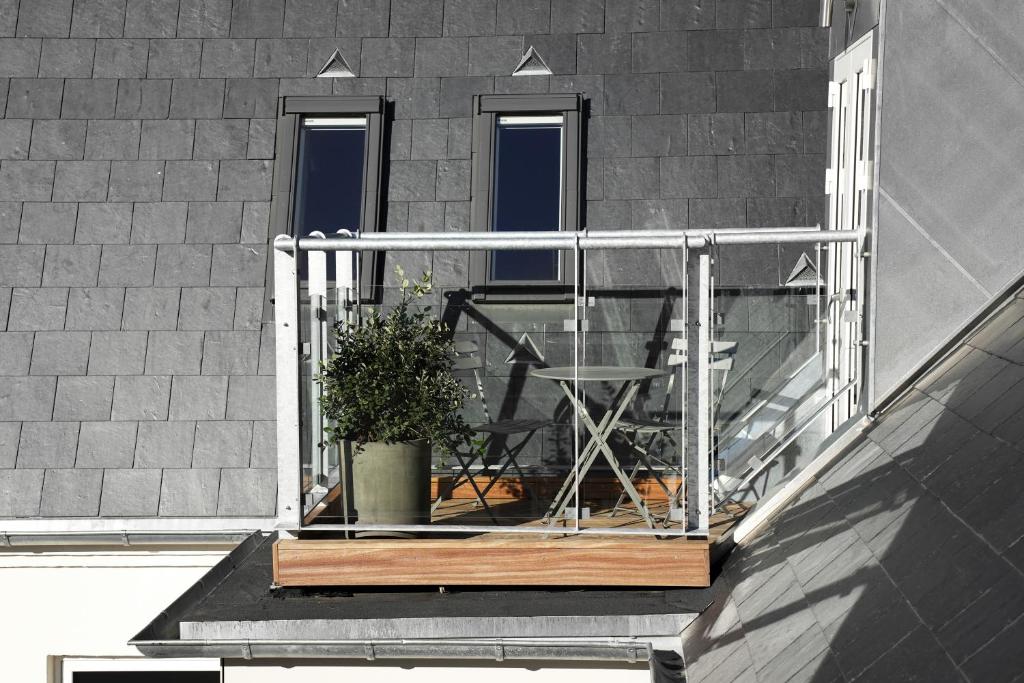
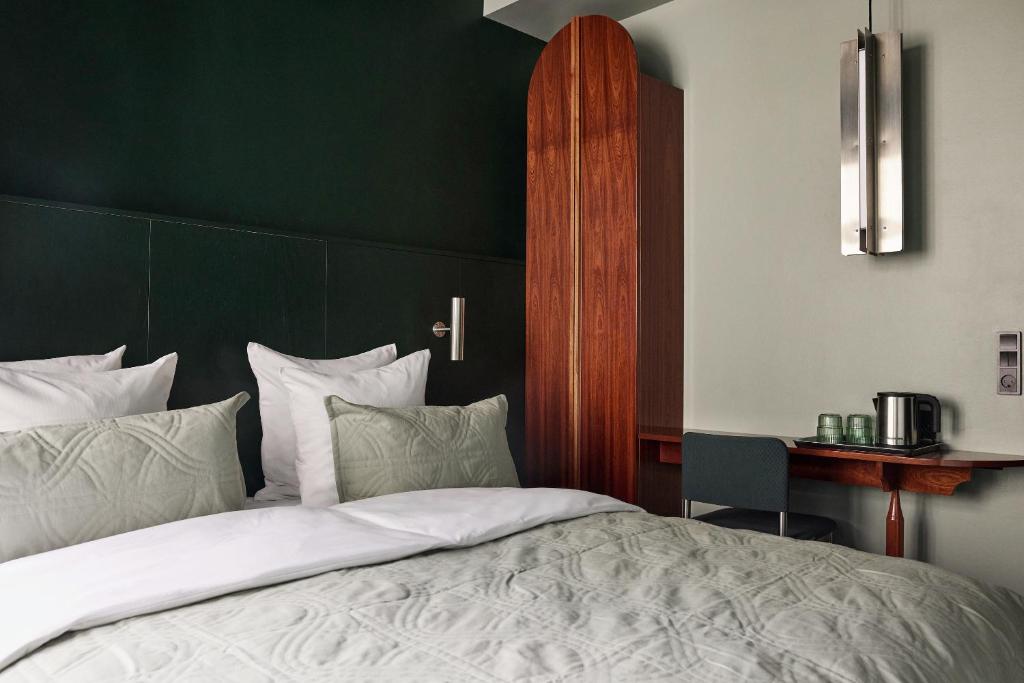
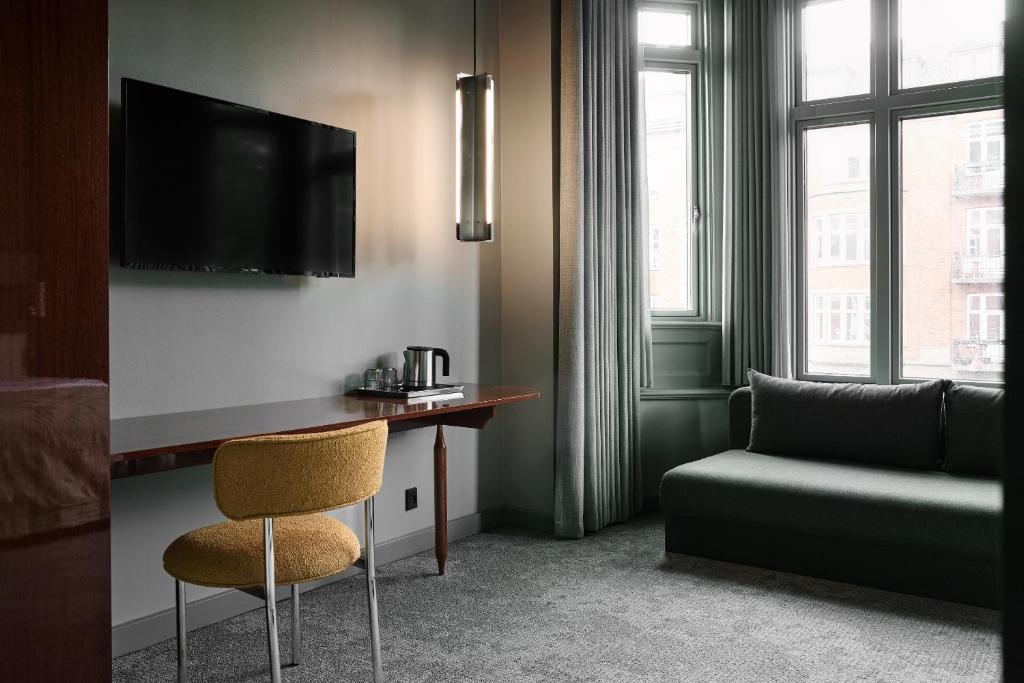
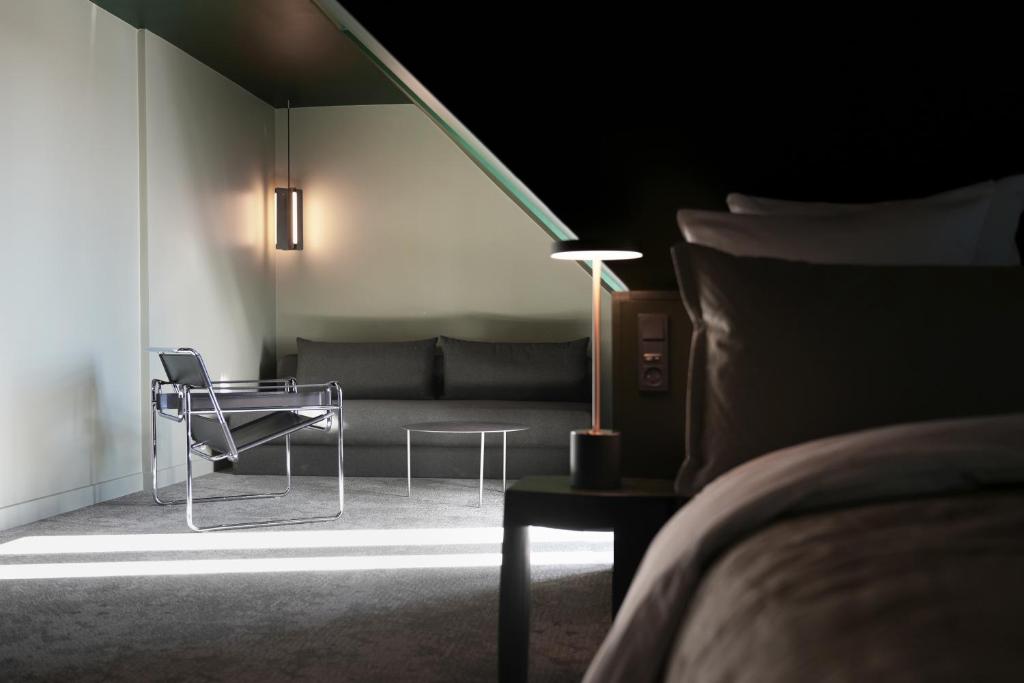
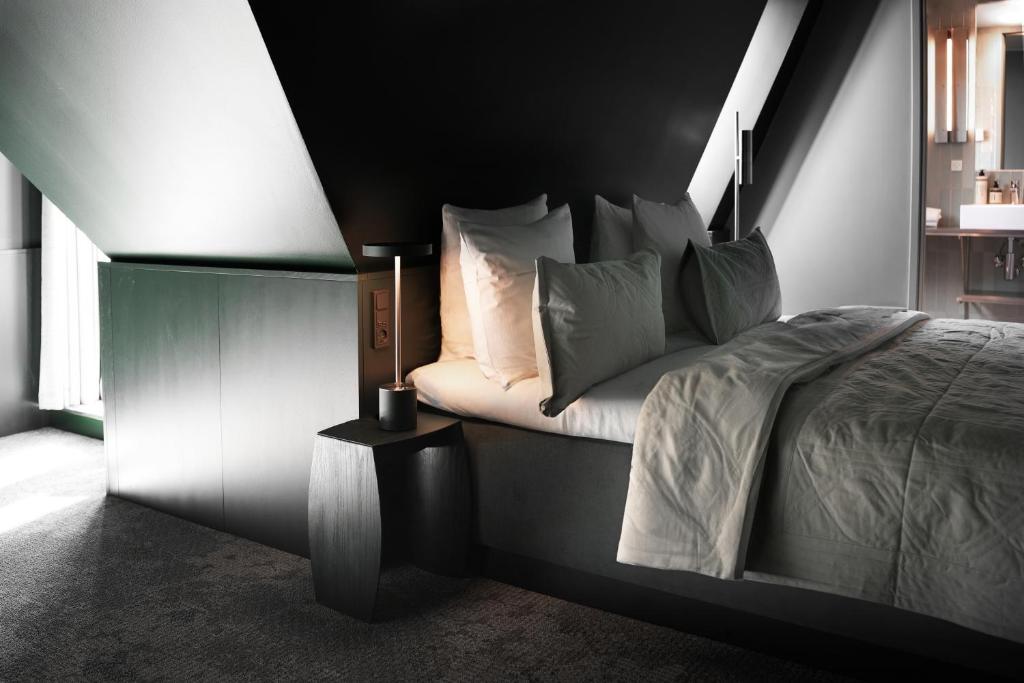
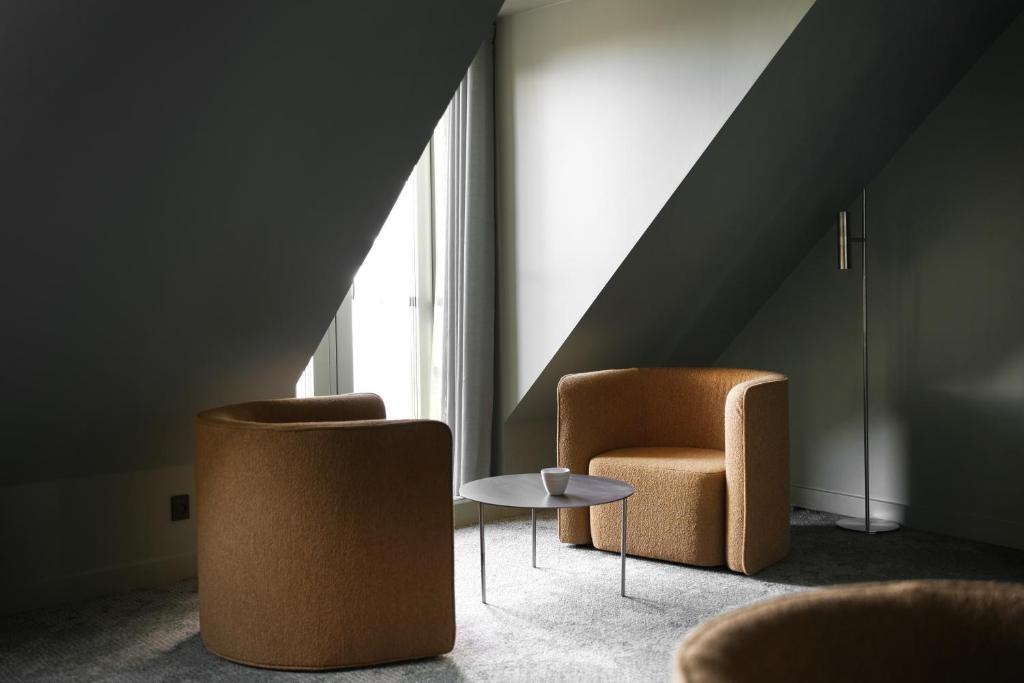
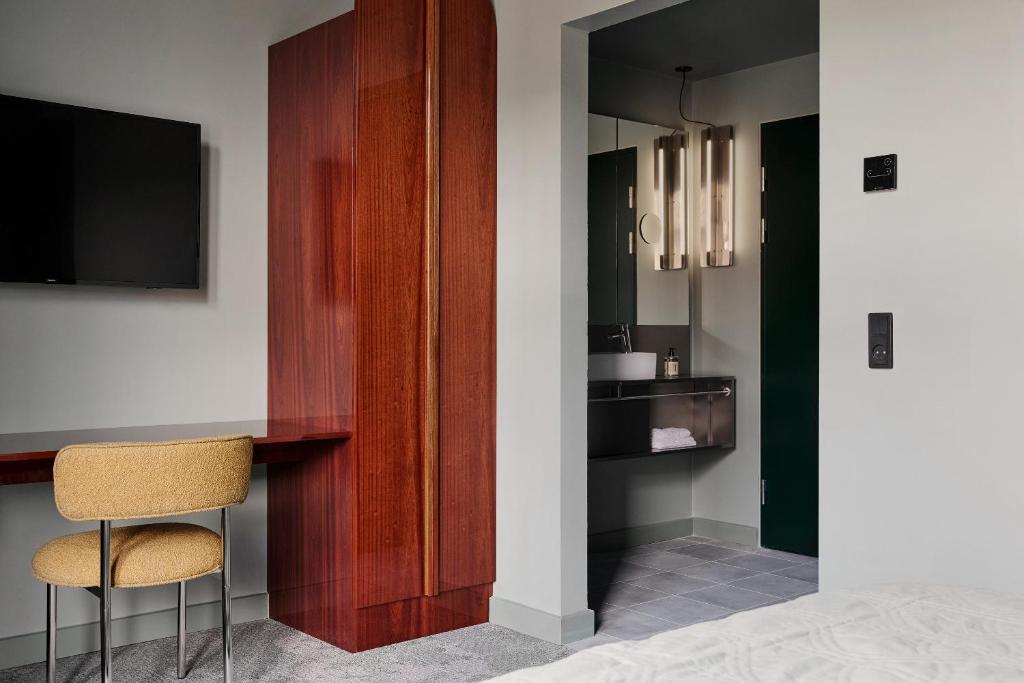
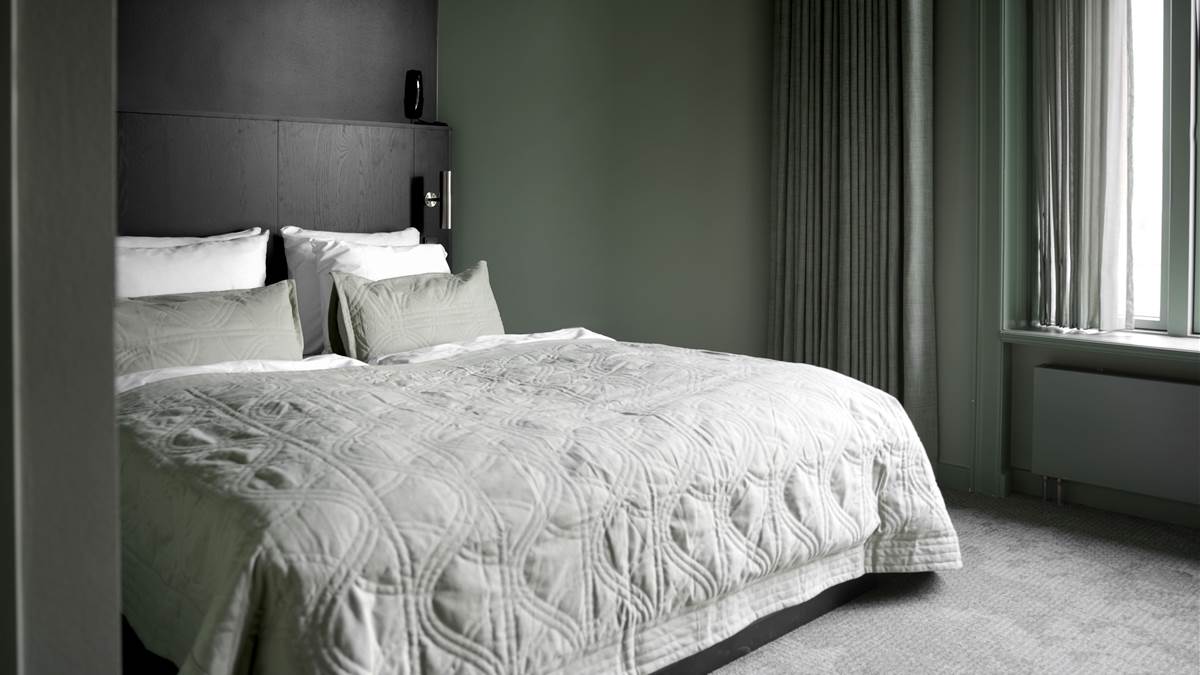
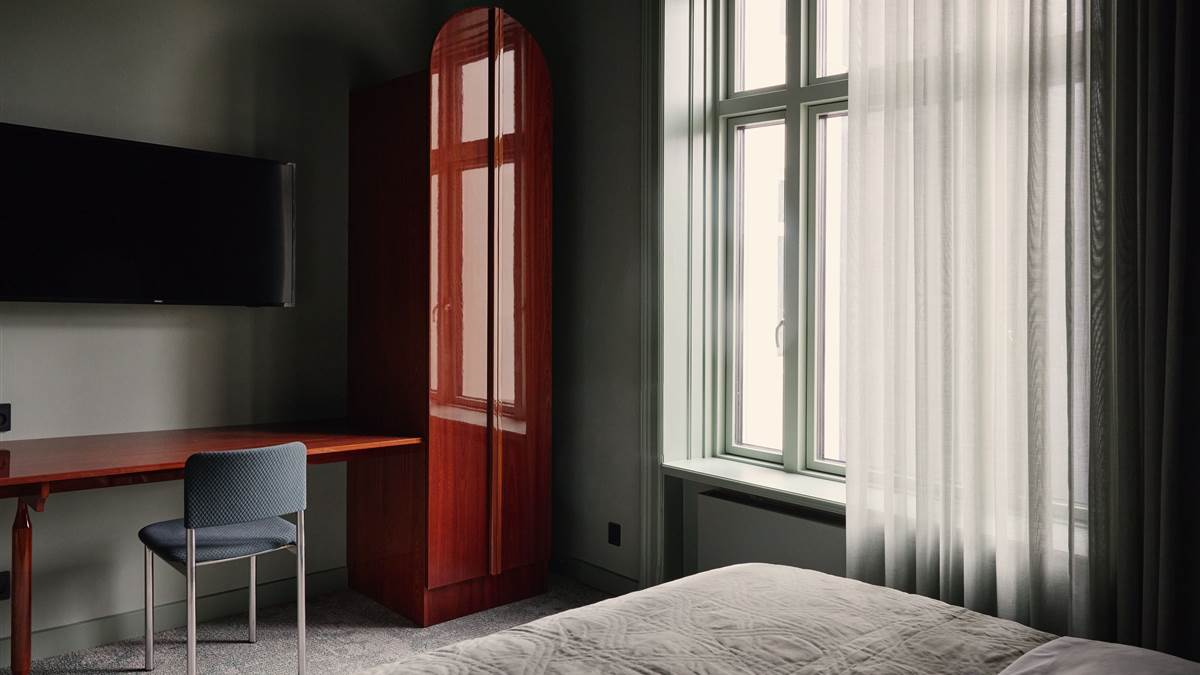
The 91 rooms and suites soften the public spaces without abandoning their darker palette. Norrøn looked towards vintage Copenhagen apartments, using sage-green walls, dark green ceilings, lacquered cabinetry and organically patterned carpets. Dark timber appears in desks and built-in furniture, with occasional mustard-yellow pieces breaking through the greys and greens. The atmosphere is deliberately more cocooning than stereotypically Scandinavian. Norrøn co-founder Poul Høilund has described it as “Negroni-inducing”, which may be one of the more useful interior-design descriptions we’ve encountered. Five rooms have balconies, while two suites extend onto private rooftop terraces. One unfolds across two levels, giving the experience more of an urban apartment than a conventional hotel suite.
The Lobby Does the Heavy Lifting
Hotel Hans keeps its in-room offering relatively straightforward and puts much of its energy downstairs. That makes sense here. The transparent lobby is designed as a social room rather than somewhere to pass through between reception and lift. Furniture forms small islands for coffee, drinks, chess, conversation or simply watching Copenhagen go by. There is Nordic design pedigree from names including Fredericia Furniture and Møbel Copenhagen, but pieces have been assembled for atmosphere rather than as a showroom of Danish greatest hits. The hotel also establishes daily rituals to pull guests back downstairs, including an early-evening glass of wine followed later by a complimentary cocktail. Very civilised crowd control.
Vermouth Before Bed
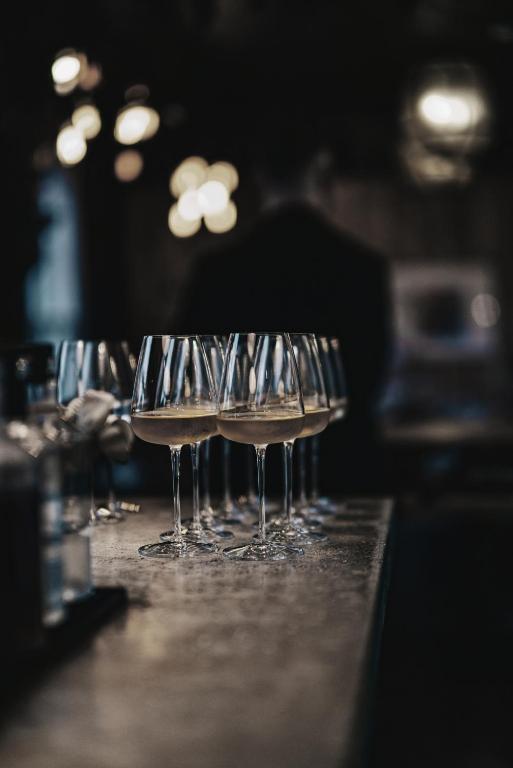
The bar gives Hotel Hans another small point of difference: vermouth takes centre stage, with a curated collection served both traditionally and through cocktails, alongside wine and local craft beer. It suits the interiors surprisingly well. As evening arrives, reflections from the street move across aluminium surfaces and the ground floor becomes darker, shinier and considerably more cocktail-friendly. Breakfast returns things to Nordic normality with an organic buffet, barista coffee and, should Copenhagen have been particularly entertaining the previous evening, green smoothies. The rhythm is intentional. Coffee in the morning, city during the day, vermouth when you return.
Copenhagen Beyond Hygge
The most interesting thing about Hotel Hans is not that it rejects Scandinavian design. It clearly doesn’t. Instead, Norrøn Architects widens the vocabulary. The red-brick architecture remains. Danish furniture and craftsmanship are present. But so are polished marble, reflective metal, concrete, black lacquer, deep greens and a certain metropolitan darkness. Nørrebro supplies some of the rawness; Frederiksberg some of the refinement. Hotel Hans sits comfortably between them. And in a city where hygge has been exported, packaged and sold back to visitors countless times, there is something refreshing about a Copenhagen hotel that doesn’t feel obliged to light another candle.
Information
At a glance
Architecture
Norrøn Architects
Opened / Renovated
2004, renovated 2025 (previously Hotel Avenue)
Size matters
91 rooms & suites (13-35m2) (140-377 sq ft)
Interior design
Norrøn Architects
Featured in
Don't take our word for it



Handpicked worldwide
A carefully curated collection of exceptional boutique and design hotels across the globe.
Design with soul
Architecture, atmosphere and craftsmanship come together in stays with a clear identity.
Hidden, not hyped
Independent boutique hotels you rarely find on mainstream booking platforms.
Travel guidance
Personal recommendations and thoughtful support from people who actually know the places.