


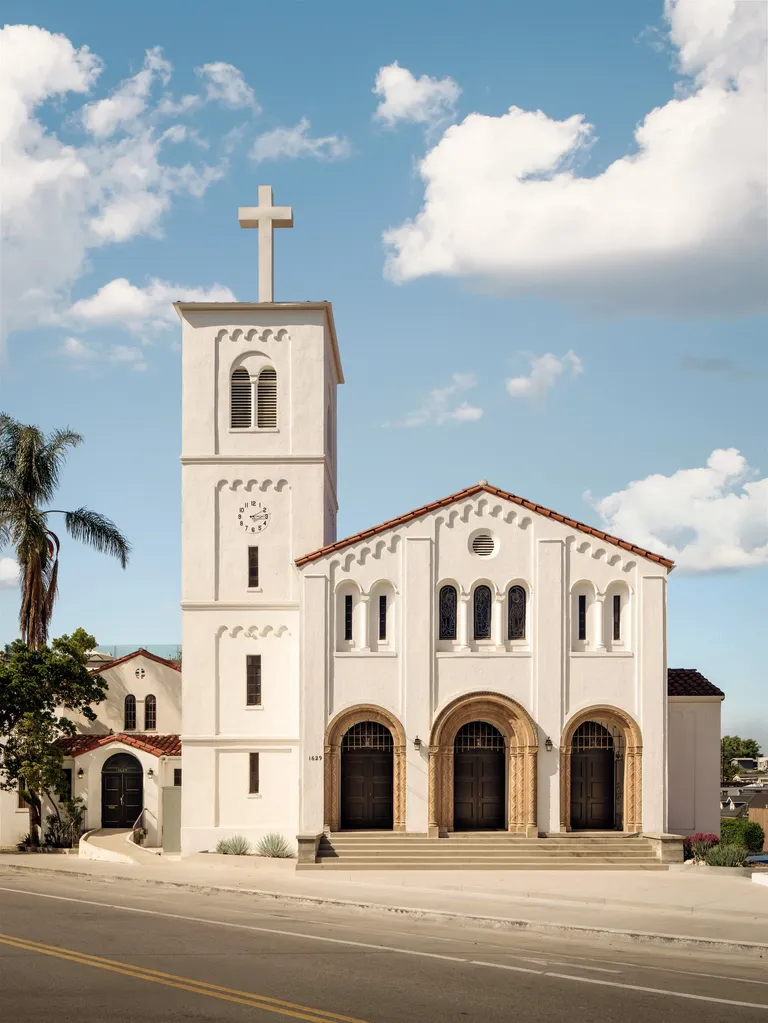
A Church at Sunset Junction
A 1931 Romanesque Revival church transformed by Electric Bowery into a 25-room hotel, with preserved stained glass, vaulted timber ceilings and a restaurant occupying the former nave.

Why DNA Hotels loves it
Electric Bowery has treated the former Bethany Presbyterian church as an adaptive-reuse project rather than a backdrop, preserving its timber beams, stained glass and vaulted volume while inserting a restrained contemporary hotel programme.
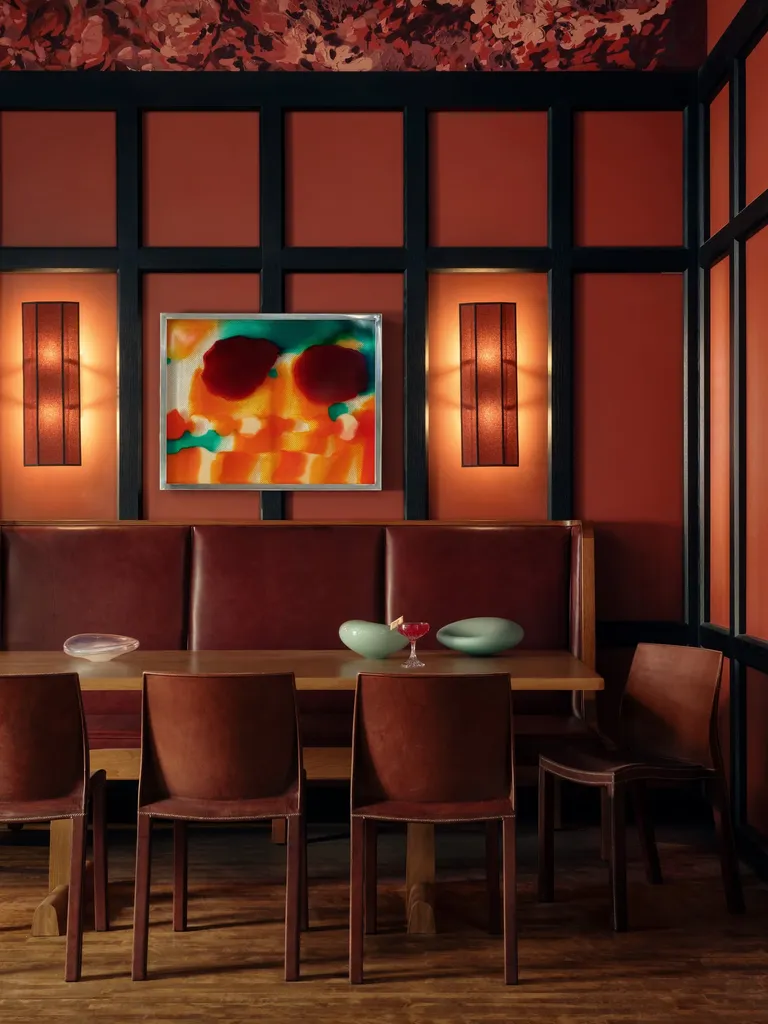
Art remains central to the building’s new life, from monumental murals by Erin Lynn Welsh in the former sanctuary to original works by Los Angeles artists throughout the guestrooms.
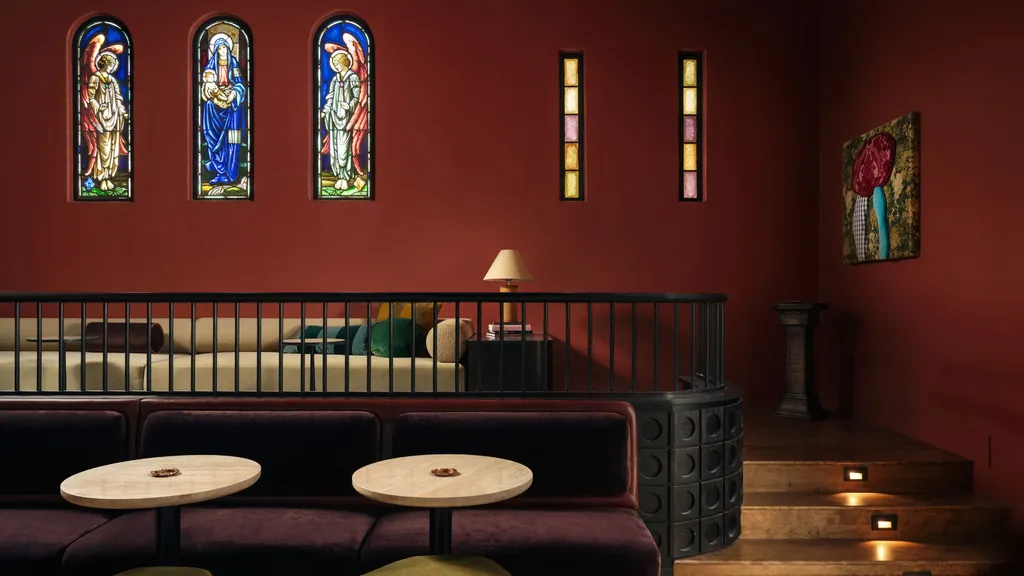
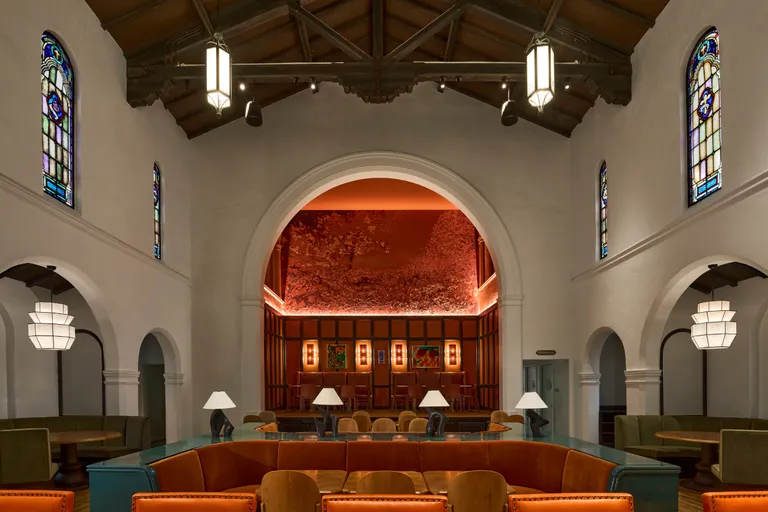
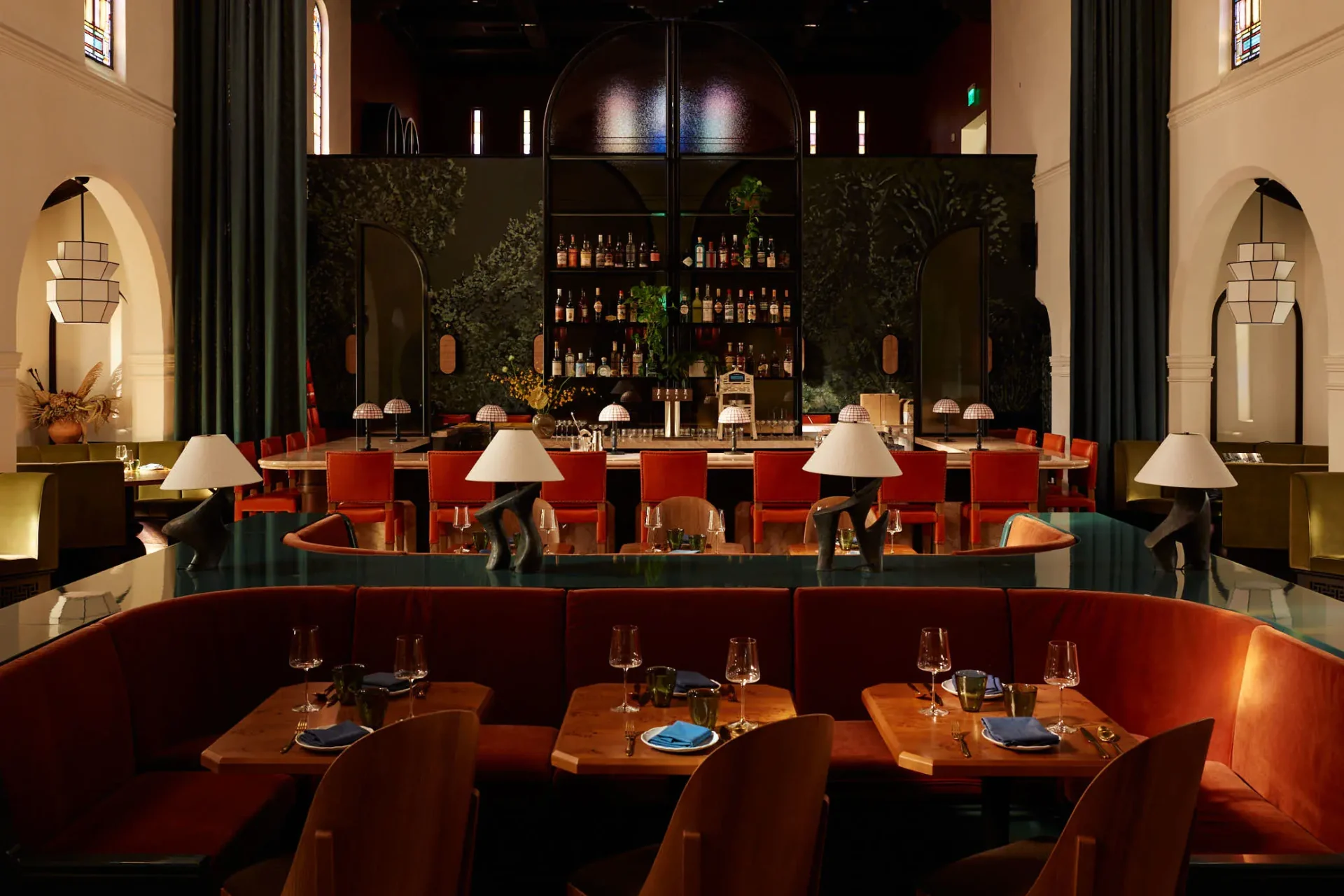
Sous Sous turns the nave into the social heart of the hotel, pairing the architecture’s near-sacred scale with a restaurant that draws simultaneously from Southern France and the American South.
The Stay
Hotel Lucile transforms a 1931 Silver Lake church into an art-filled retreat where historic architecture, contemporary design and ambitious food come together.
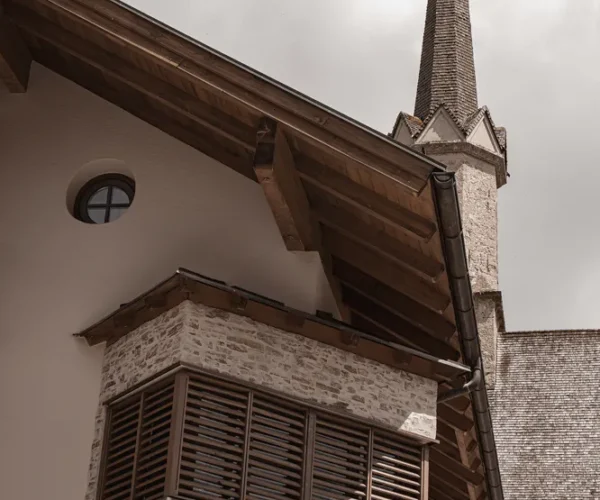
The building on Lucile Avenue has been part of Silver Lake since 1931, when it opened as Bethany Presbyterian Church. Designed in a Romanesque Revival language by architect Scott Quintin, it later passed through several other uses before sitting largely vacant for much of the past decade. Casetta, the California hotel group known for reworking architecturally significant properties, brought it back into public life as Hotel Lucile. Its location near Sunset Junction places it squarely within the creative heart of east Los Angeles, close to the reservoir, Griffith Park, Barnsdall Art Park and Frank Lloyd Wright’s Hollyhock House. The building no longer functions as a church, but its original spatial hierarchy remains immediately legible.
The Nave Becomes a Restaurant
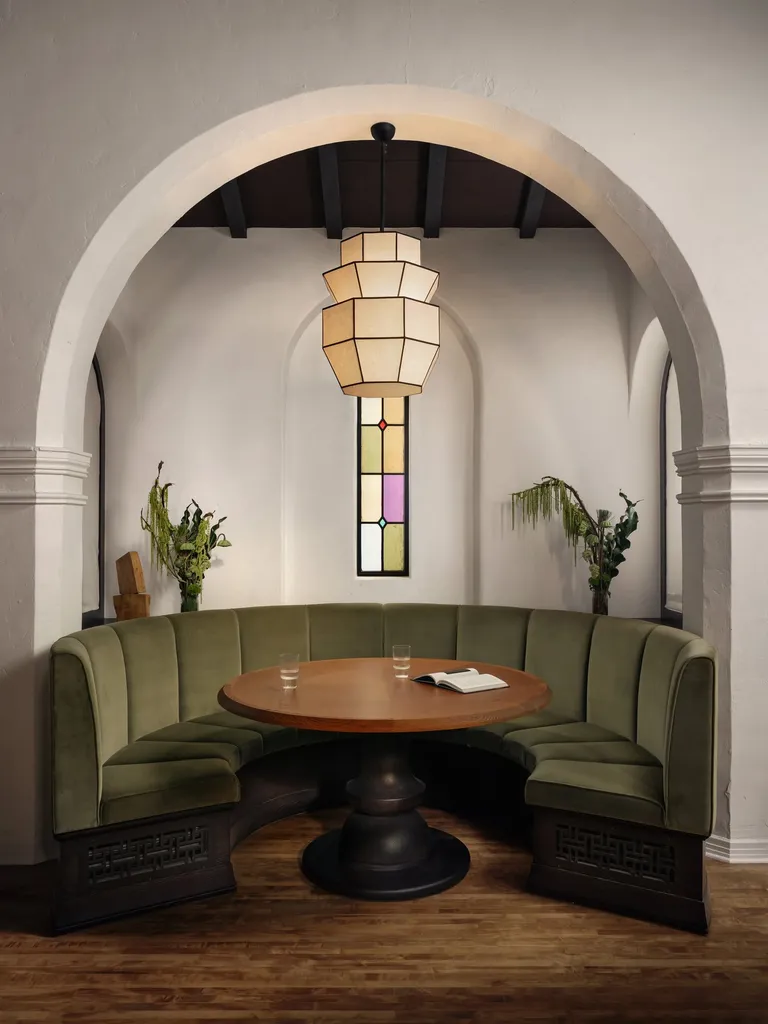
Electric Bowery, led by Lucia Bartholomew and Cayley Lambur, oversaw the architectural and interior transformation with an emphasis on preserving the church’s European sensibility. Original stained-glass windows remain in place, alongside timber beams and the high vaulted ceiling. The former nave now holds Sous Sous, allowing the most dramatic volume in the building to remain communal rather than being subdivided into hotel rooms. The restaurant itself was designed by Heather Tierney, who uses the scale of the old sanctuary rather than competing with it. The result is a dining room that still feels unmistakably ecclesiastical without becoming theatrical.
Murals for a New Congregation
Two large-scale paintings by Los Angeles artist Erin Lynn Welsh anchor opposite ends of the former church interior. One, rendered in deep red above the former chancel, responds to Eaton Canyon in Altadena and the destruction caused there by the 2025 wildfires. At the other end, a green landscape takes its cues from the native vegetation of Elysian Park. The murals extend Hotel Lucile’s broader commitment to Los Angeles artists, creating a direct relationship between the historic architecture and the contemporary city around it.
Twenty-Five Rooms, Six Ways to Stay
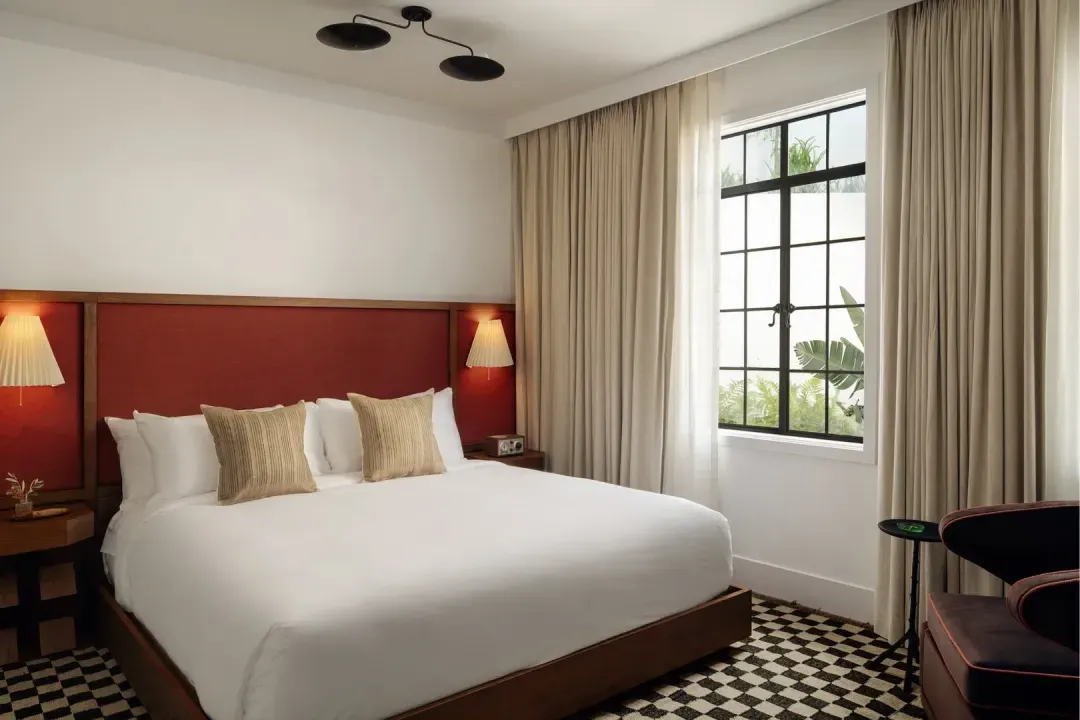
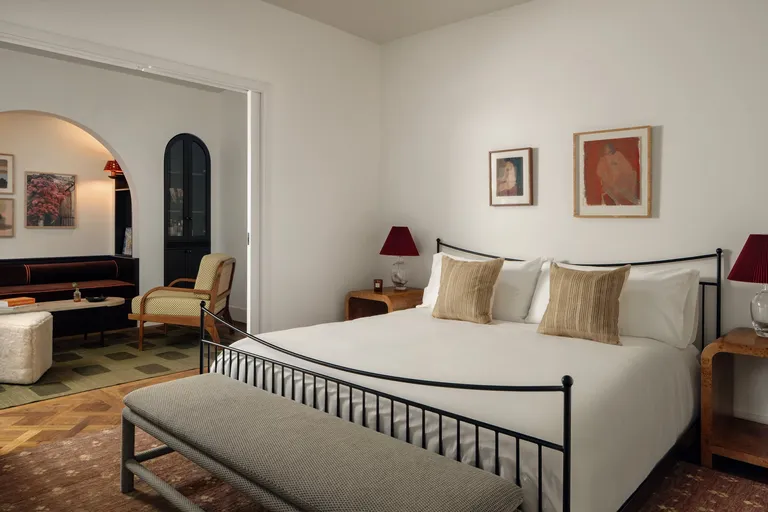
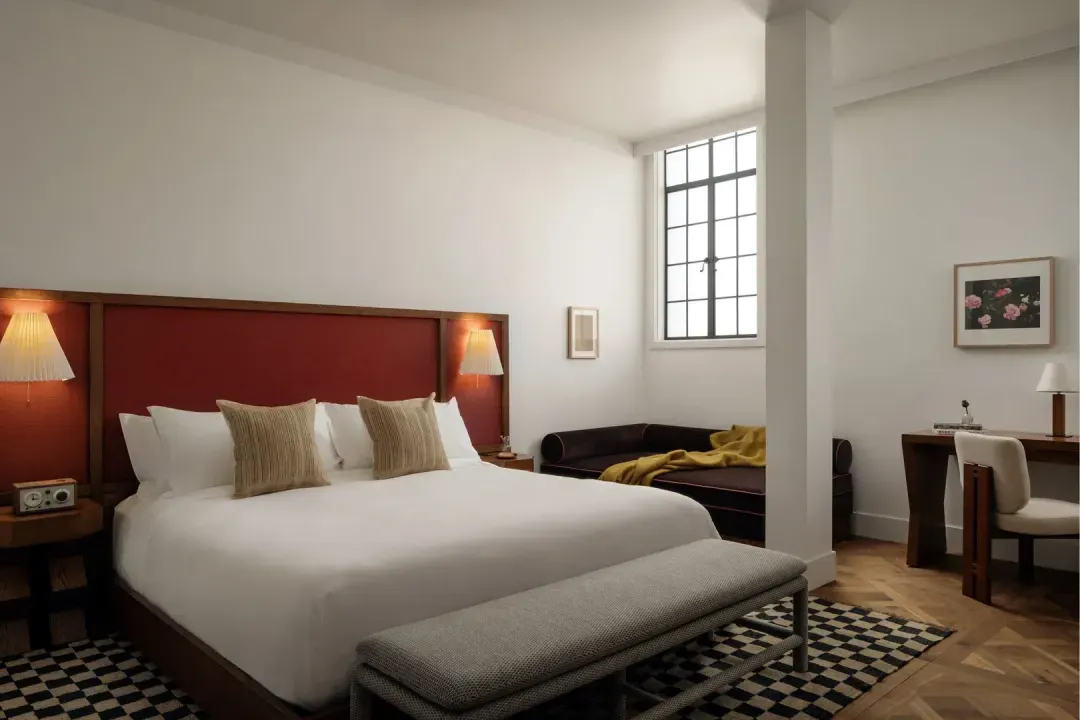
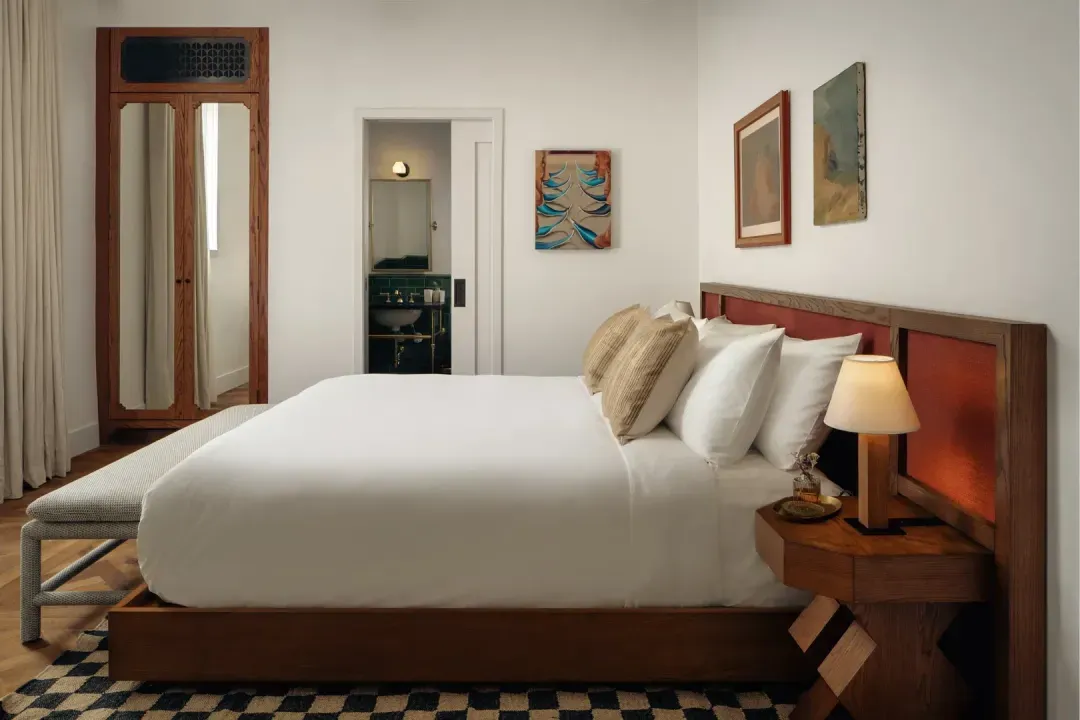
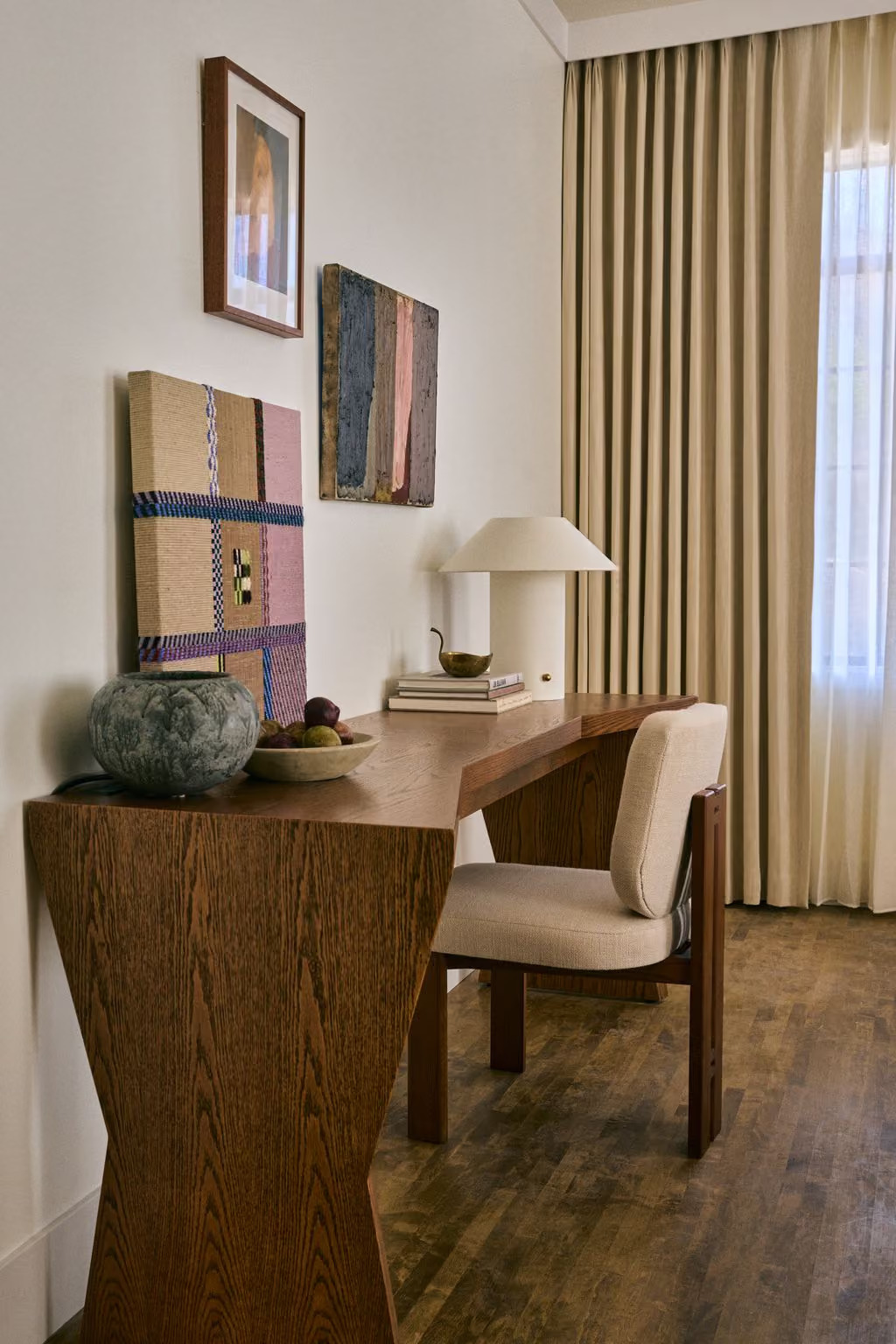
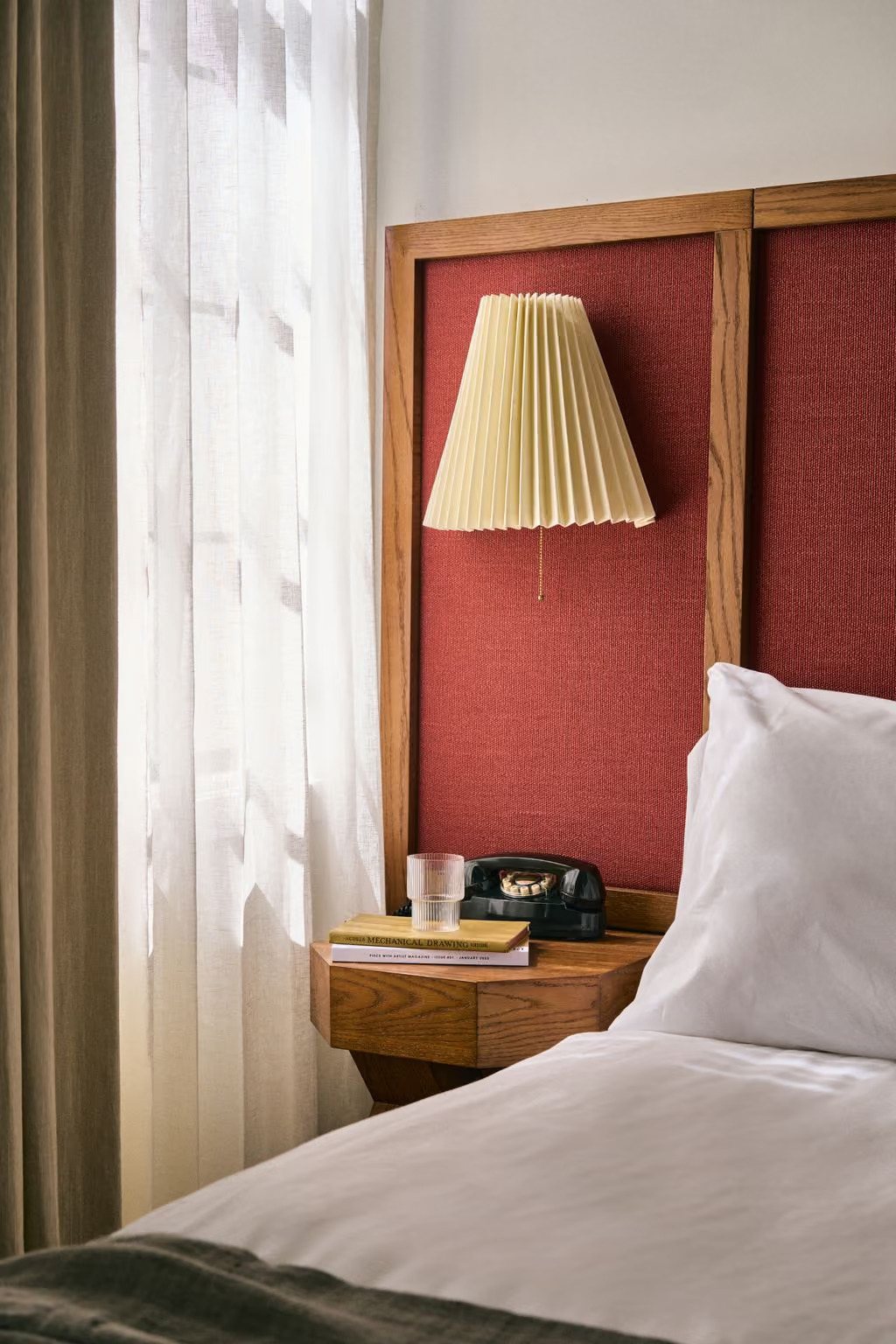
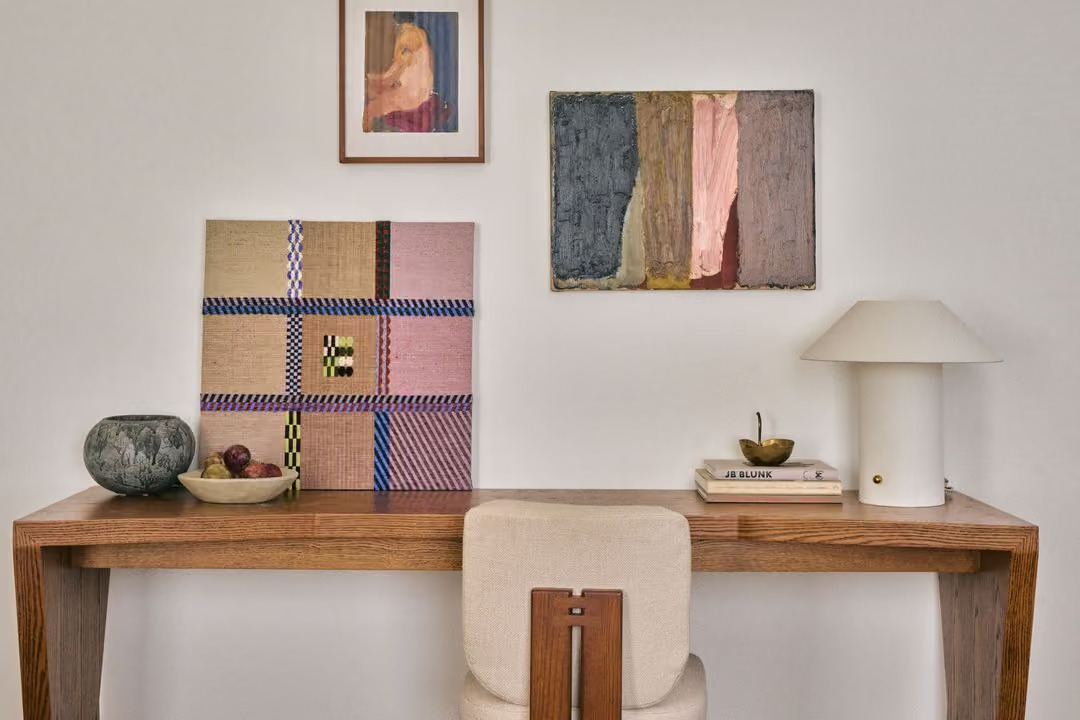
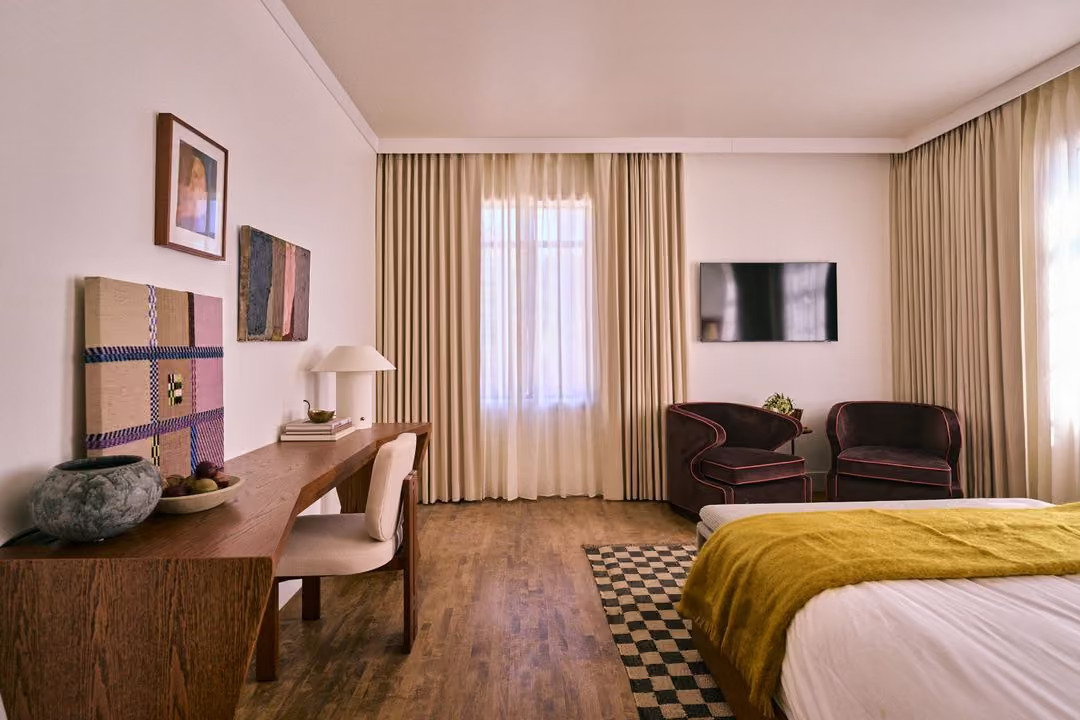
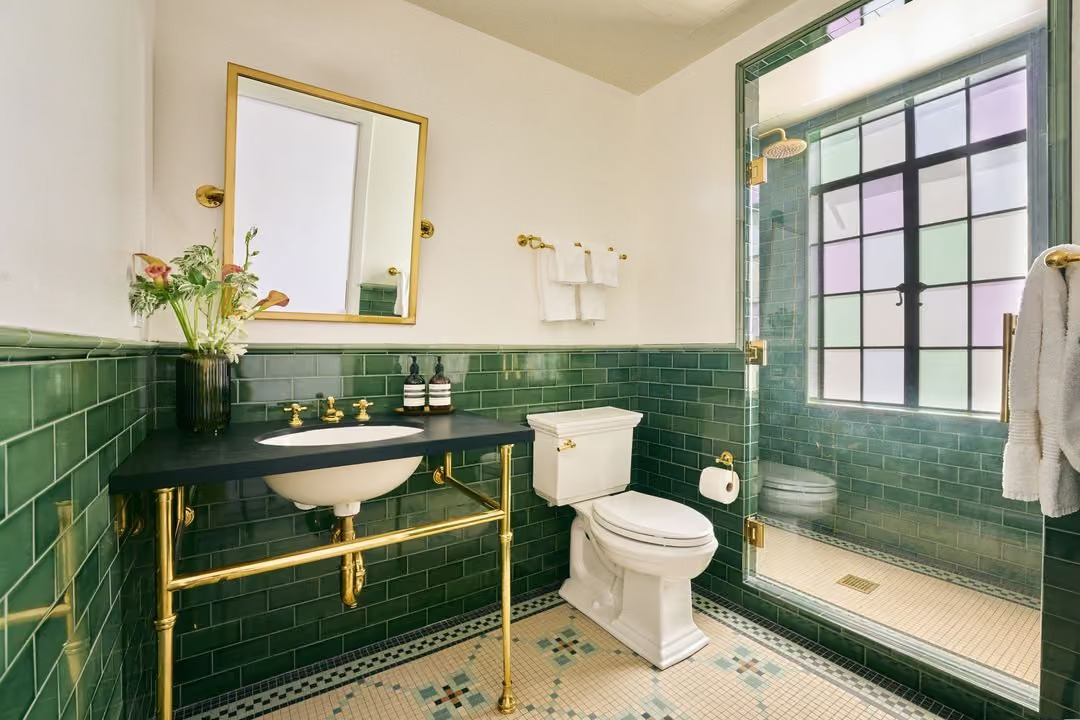
The guestrooms are considerably quieter than the public spaces. Twenty-five rooms and suites are arranged in six categories, ranging from compact king rooms to the Lucile Suite with its own living room and private courtyard. Interiors are refined and minimal, allowing the building’s historic character and the art to remain visible. Original works curated by Rhett Baruch Gallery appear throughout, while natural tones and clean detailing give the rooms a deliberately residential calm. It is a different rhythm from the nave below: less monument, more retreat.
The South Meets the South of France
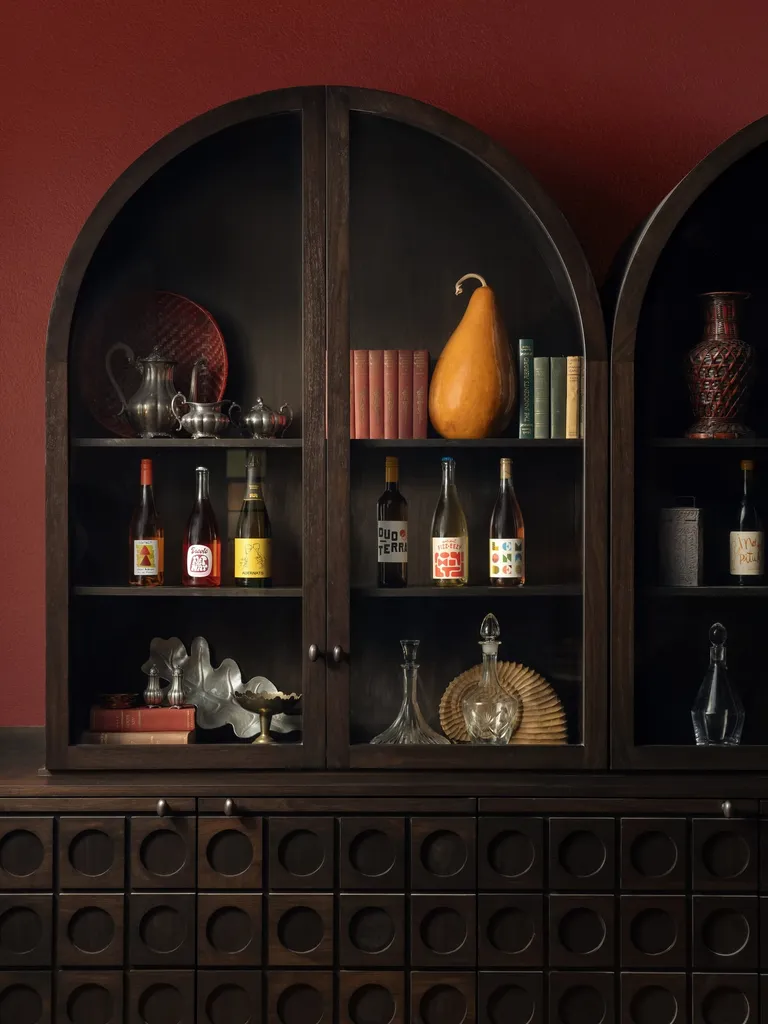
Sous Sous takes an unusual culinary premise and makes it coherent. Chef Patrick Costa brings together Southern Californian ingredients, recipes and techniques associated with the South of France, and flavours from the American South. Marseille, Nice, Charleston and New Orleans become points on the same coastal map — places shaped by ports, seafood, spice and long growing seasons. The wine list follows the same lighter coastal logic, while cocktails reinterpret familiar classics with unexpected Southern references. The concept is distinctive enough to give the restaurant its own identity rather than leaving it dependent on the architecture.
A Landmark Returned to Public Life
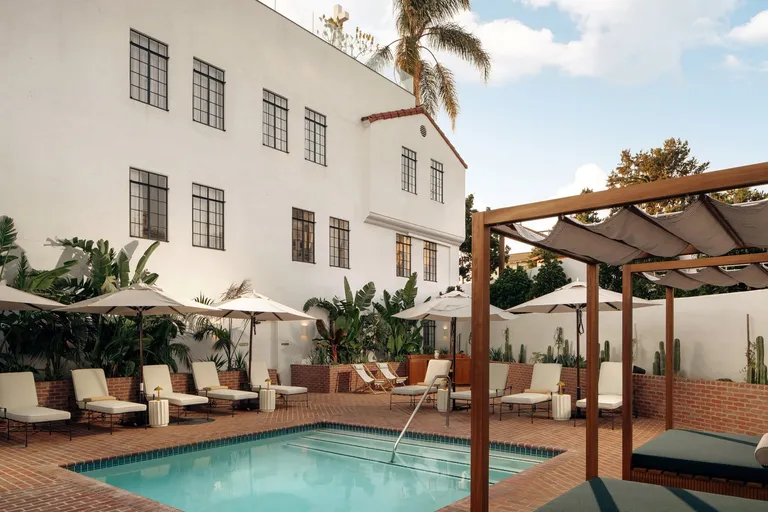
Hotel Lucile is most convincing as a piece of neighbourhood repair. The church’s strongest architectural elements remain intact, but the building has been reopened to Silver Lake through food, art and hospitality rather than preserved as an isolated landmark. Guest-only spaces — including the rooftop terrace and small grotto pool — sit alongside a restaurant clearly intended to attract locals as much as travellers. For a neighbourhood defined by continual reinvention, the project feels particularly apt: a church becomes a hotel without losing the scale, atmosphere or cultural presence that made the building important in the first place.
Information
At a glance
Opened / Renovated
2026
Size matters
25 rooms & suites (20-50m2) (218-536 sq ft)
Interior design
Electric Bowery
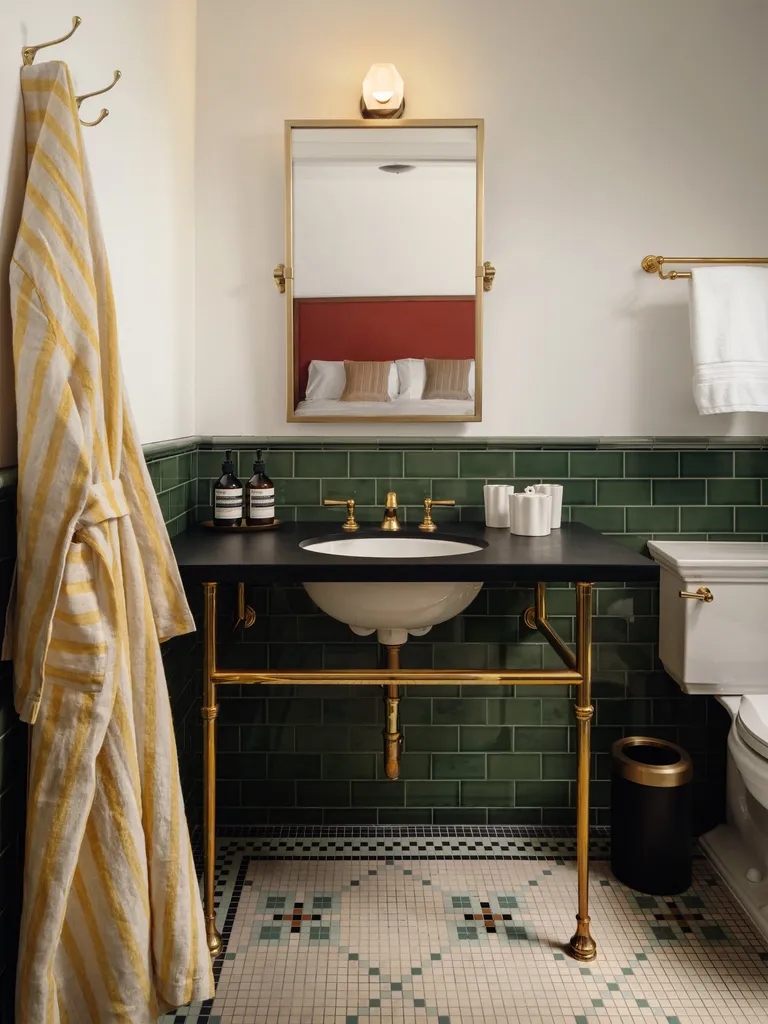
Bathroom Amenities
Aesop
Featured in
Don't take our word for it

Handpicked worldwide
A carefully curated collection of exceptional boutique and design hotels across the globe.
Design with soul
Architecture, atmosphere and craftsmanship come together in stays with a clear identity.
Hidden, not hyped
Independent boutique hotels you rarely find on mainstream booking platforms.
Travel guidance
Personal recommendations and thoughtful support from people who actually know the places.