


A 1907 Pioneer Square landmark reborn as a carbon-positive hotel rooted in the landscapes of the Pacific Northwest
Populus Seattle transforms a 1907 Pioneer Square landmark through adaptive reuse, Pacific Northwest design, local art and ambitious carbon-positive hospitality.

Why DNA Hotels loves it
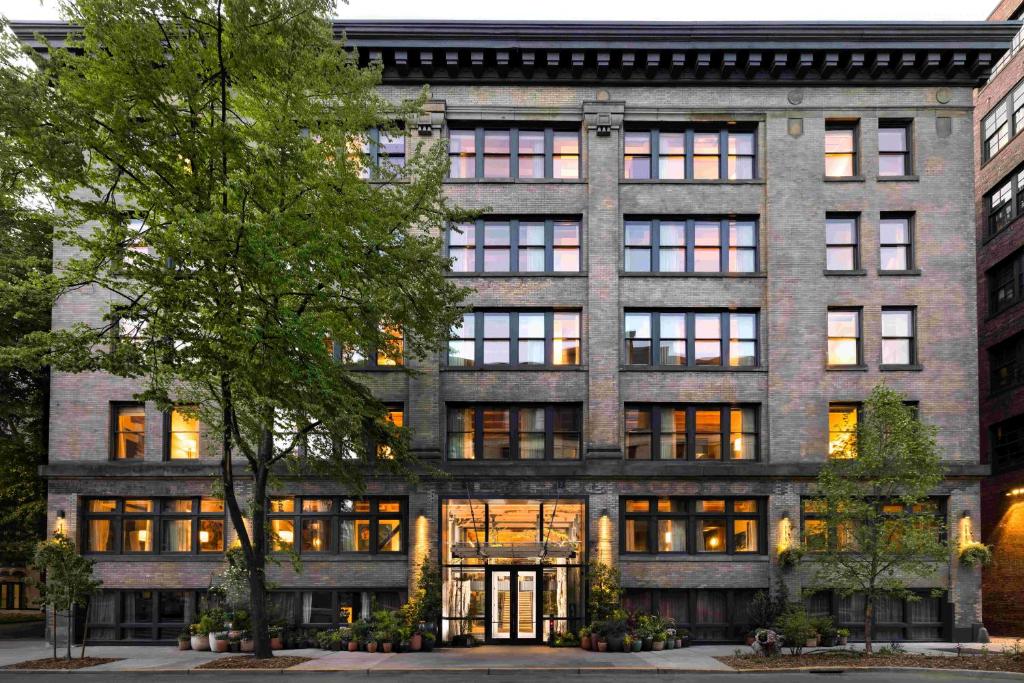
The historic Westland Building has been sensitively transformed by The Miller Hull Partnership, preserving Douglas fir beams, exposed brick and century-old structure rather than replacing it with another new-build hotel.
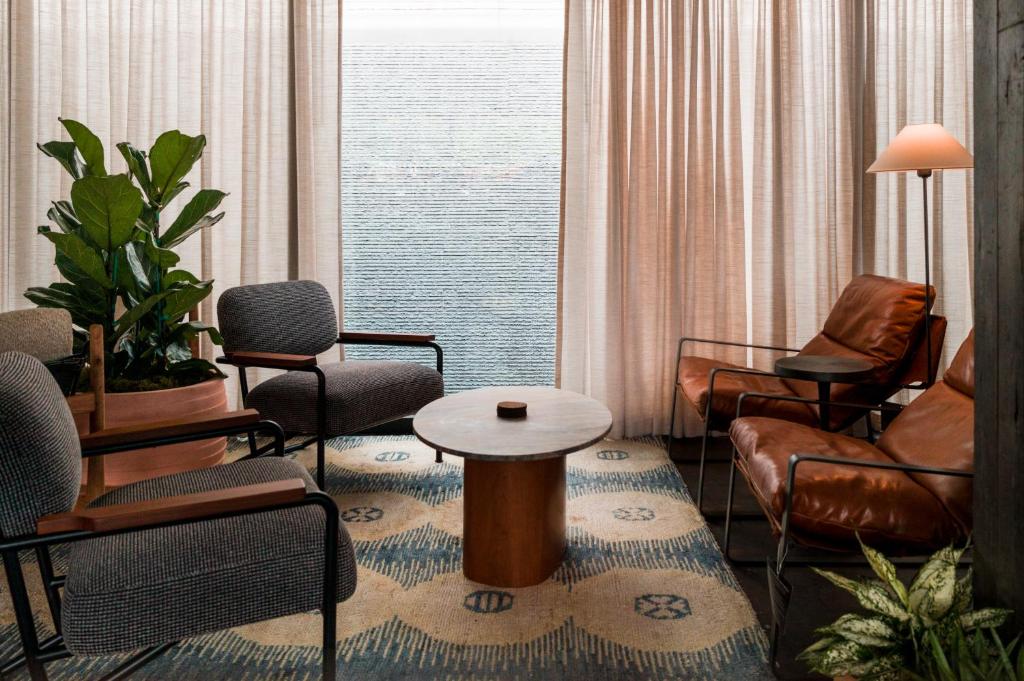
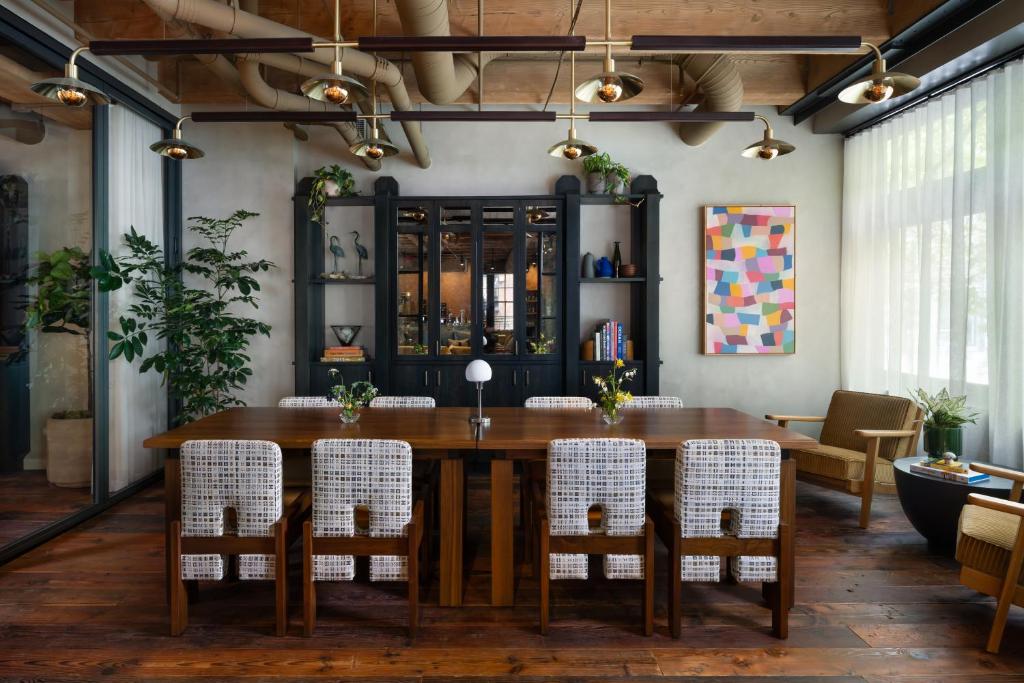
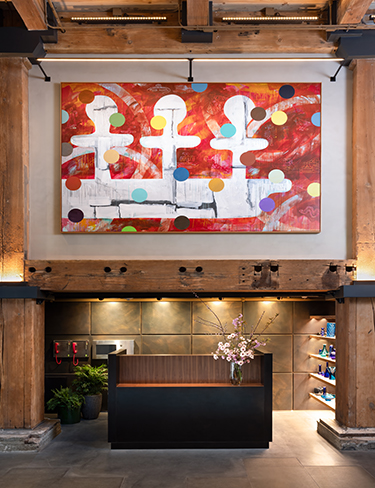
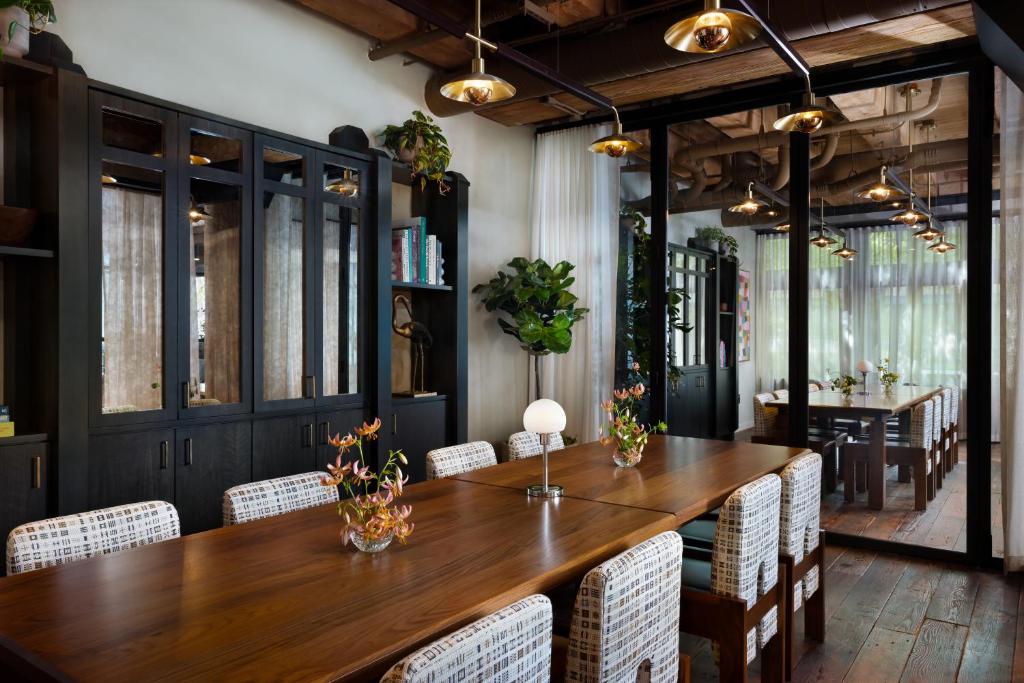
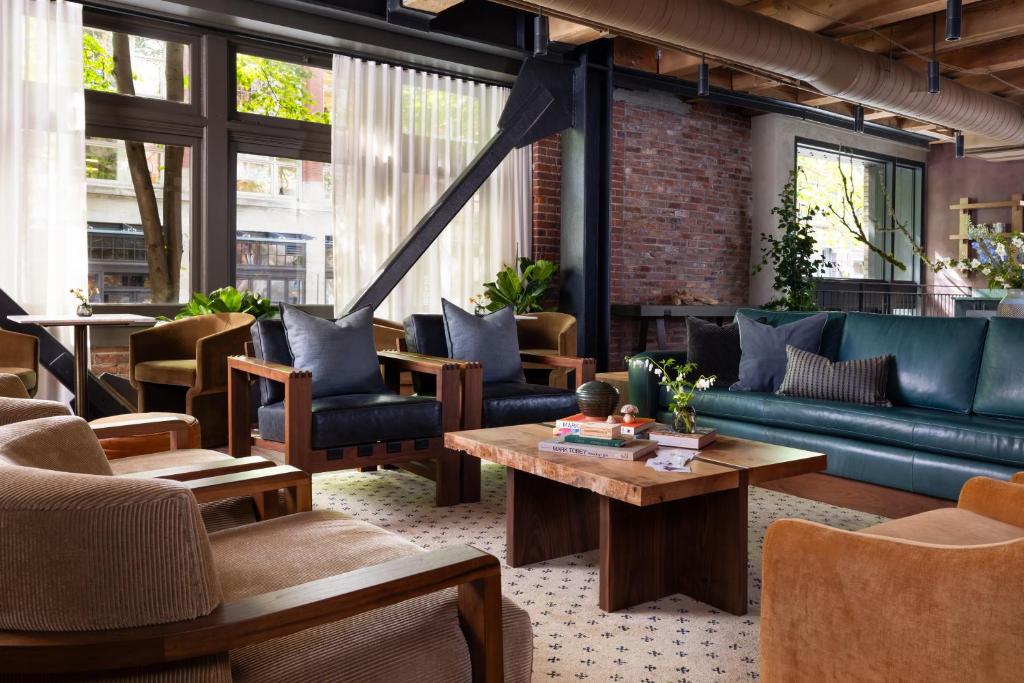
Curioso’s interiors turn the Pacific Northwest landscape into a journey through the building, combining raw timber, forged steel, vegetation and more than 300 artworks by 35 local, regional and international artists.
Sustainability is embedded in the architecture rather than added as marketing: adaptive reuse cut embodied carbon by 36 percent, the hotel uses 100 percent renewable electricity and plants a tree for every night stayed.
The Stay
The Second Life of the Westland
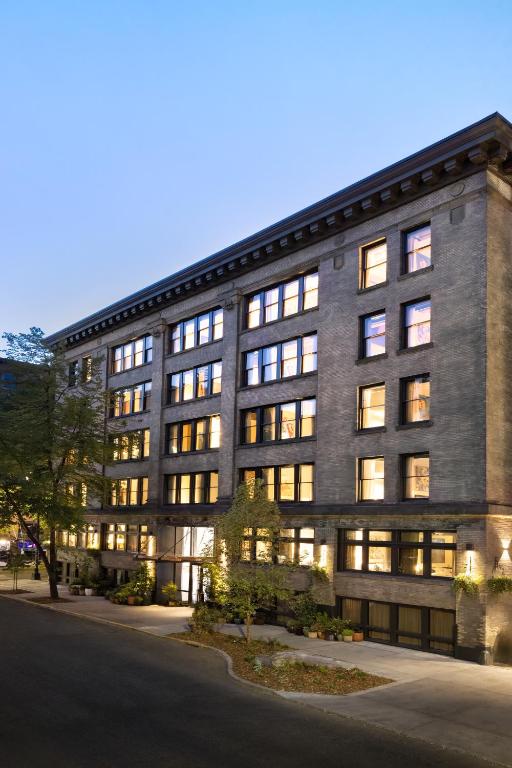
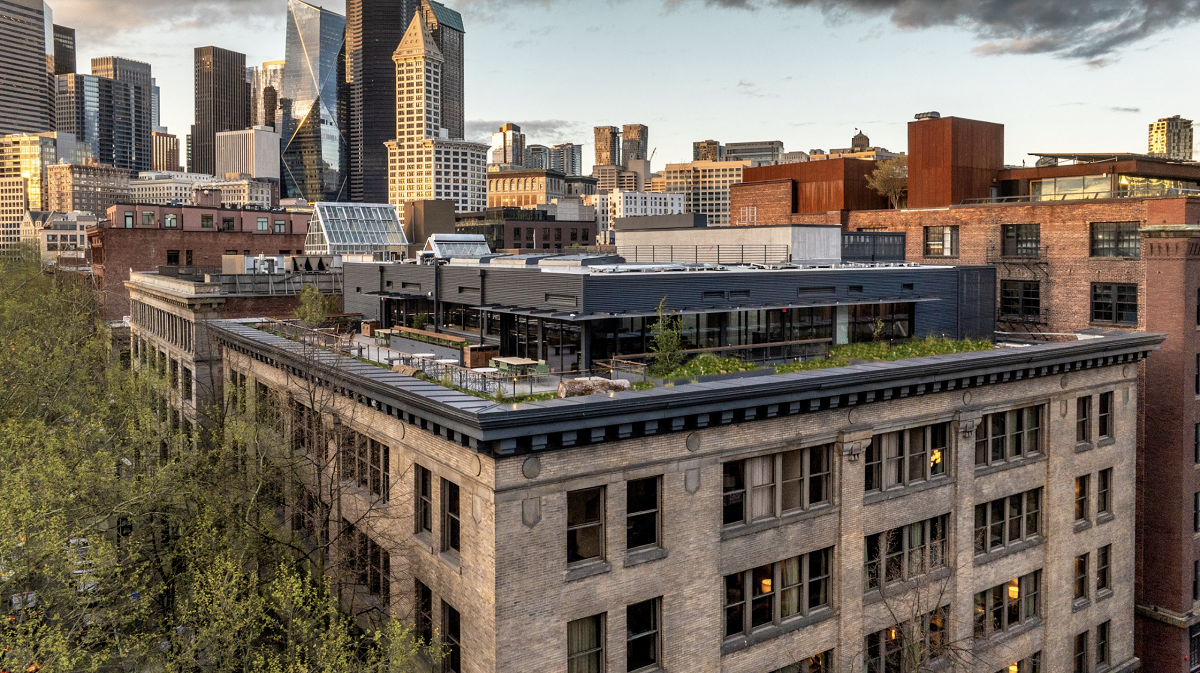
Pioneer Square is where Seattle began, and Populus Seattle makes unusually good use of that history. Its six-storey brick home was built in 1907 as the Westland Building and spent more than a century adapting to the working city around it. Instead of demolishing that accumulated history, developer Urban Villages and operator Aparium Hotel Group chose to work with it. Local architects The Miller Hull Partnership took the building itself as their starting point. Layers of later alterations were stripped away. Original brick was exposed. Douglas fir beams and old car decking were retained and repurposed. Elevators installed during the 1970s were relocated, allowing a long-covered skylight to reopen and send daylight from the roof deep into the building. The imperfections were not designed out. They became the design.
Old Seattle, New Architecture
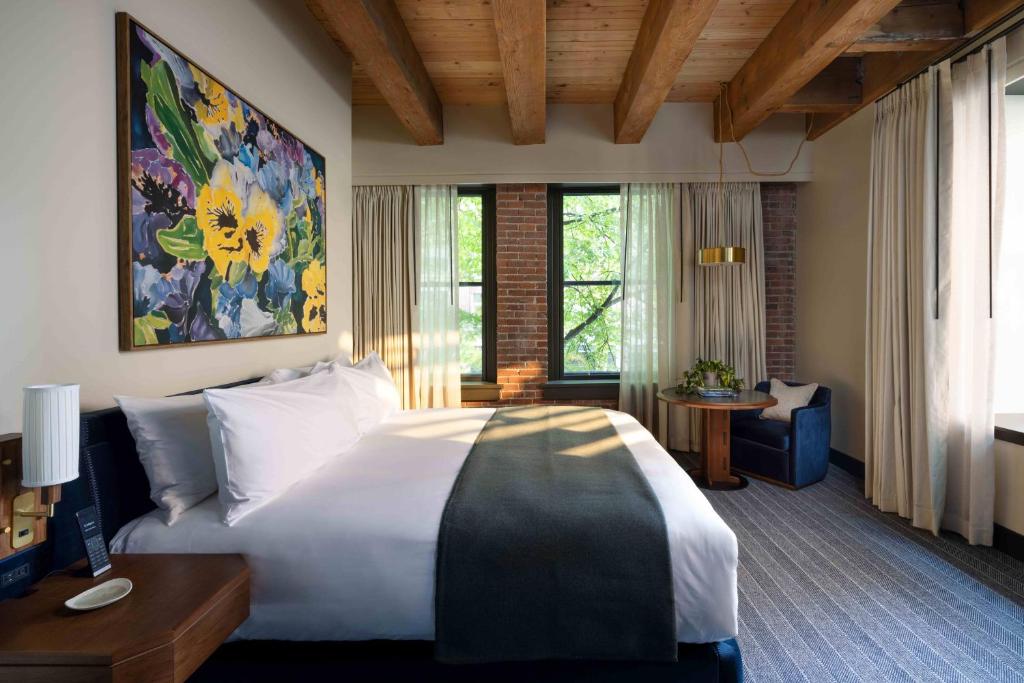
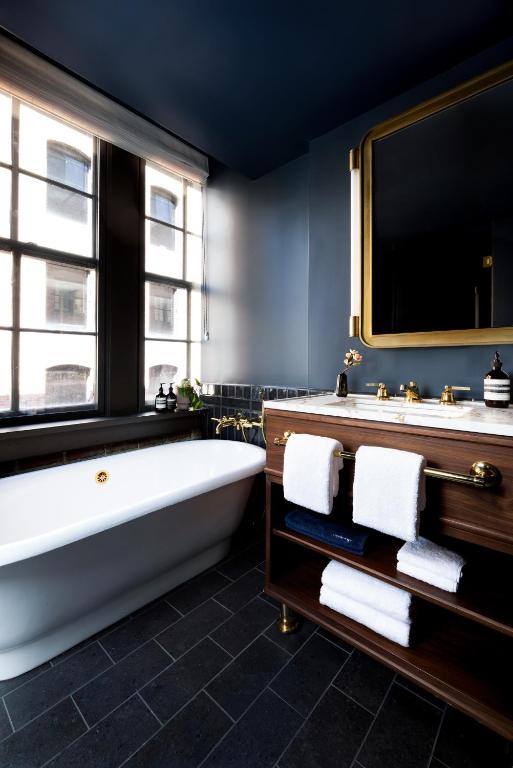
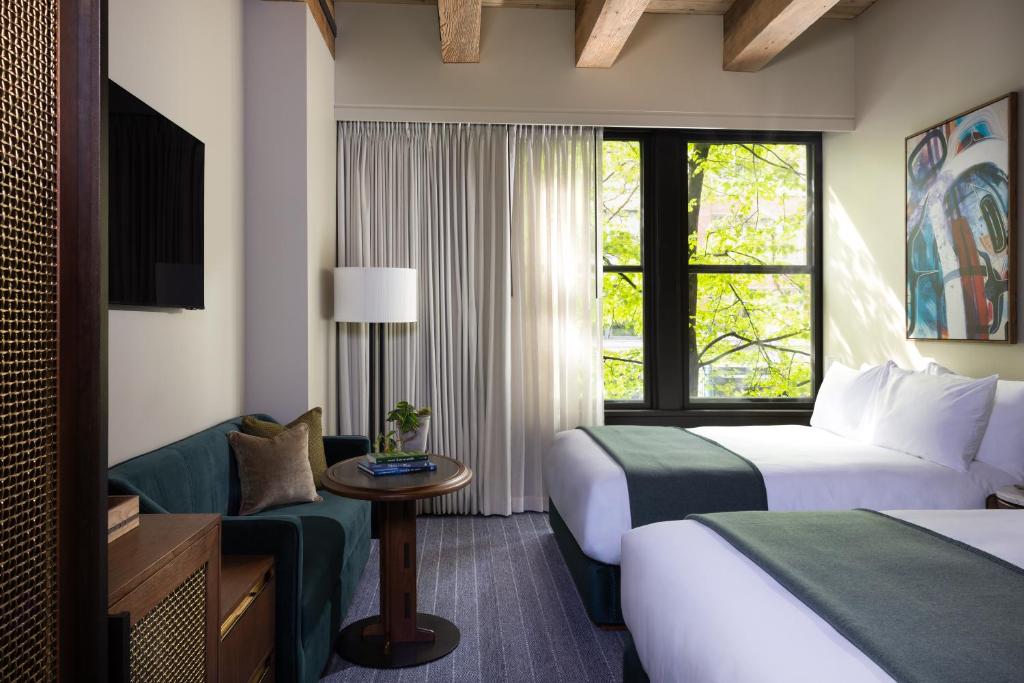
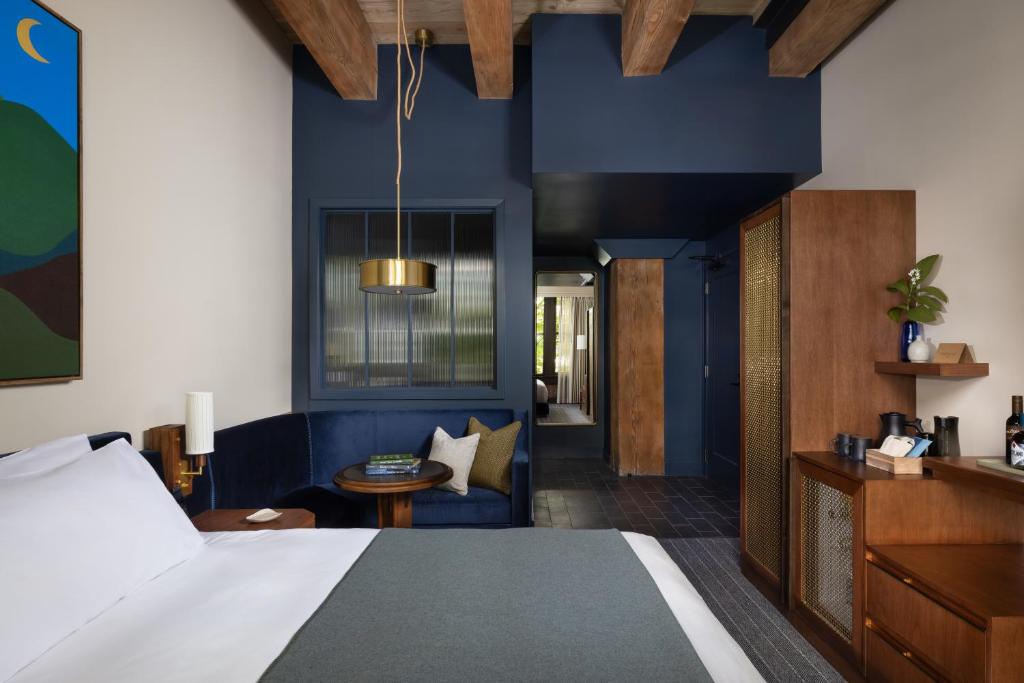
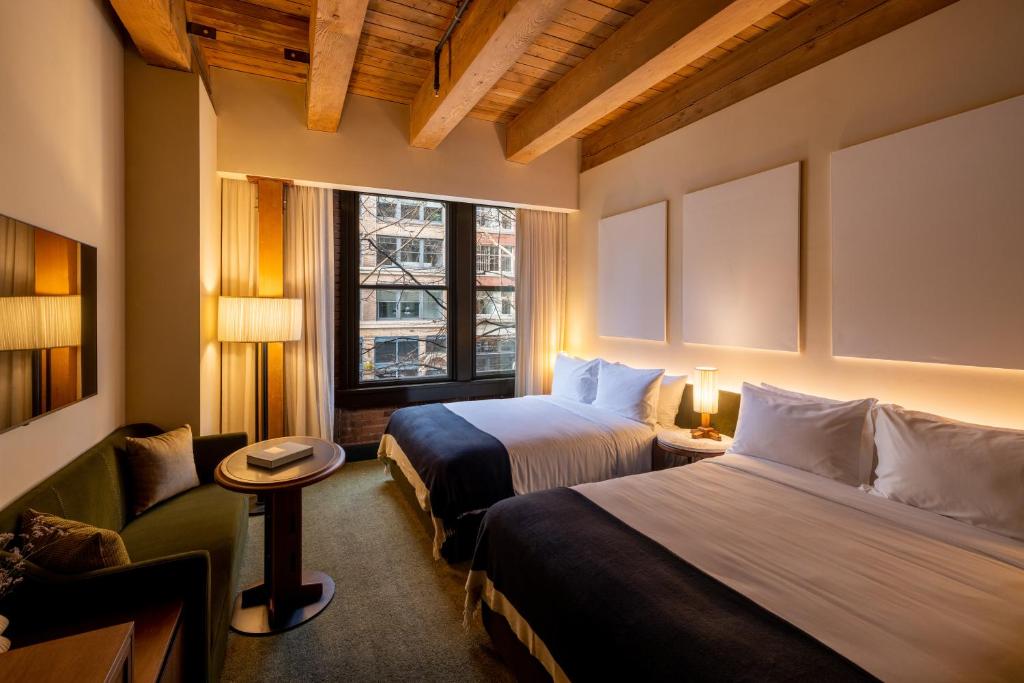
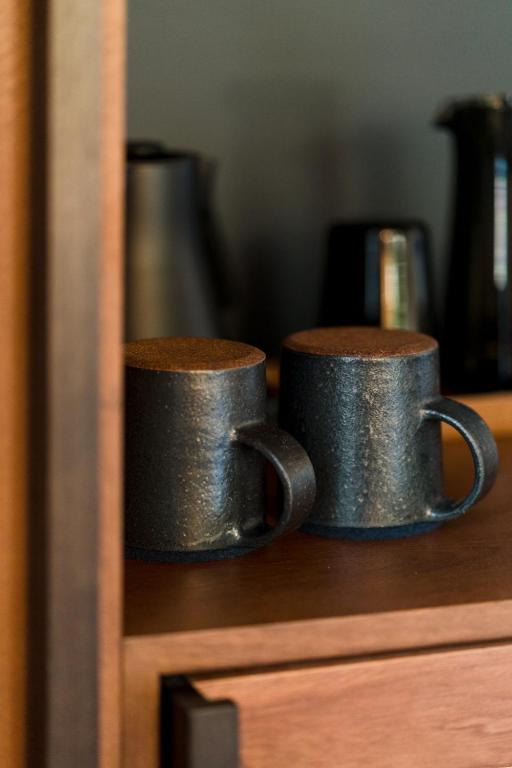
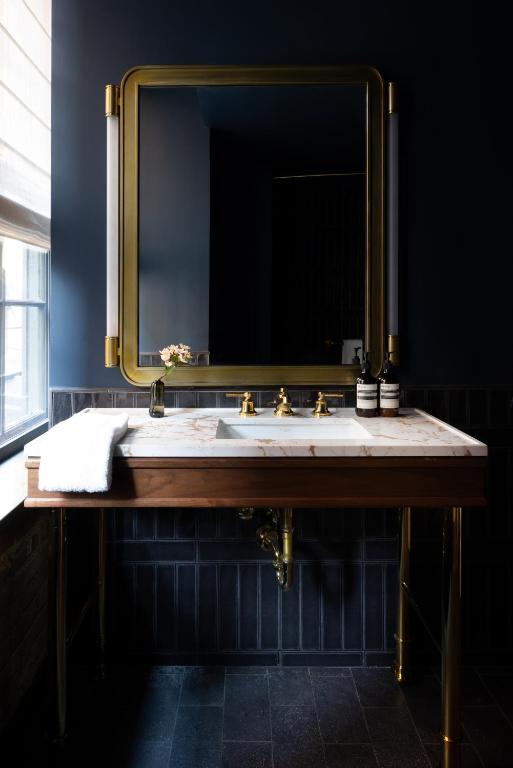
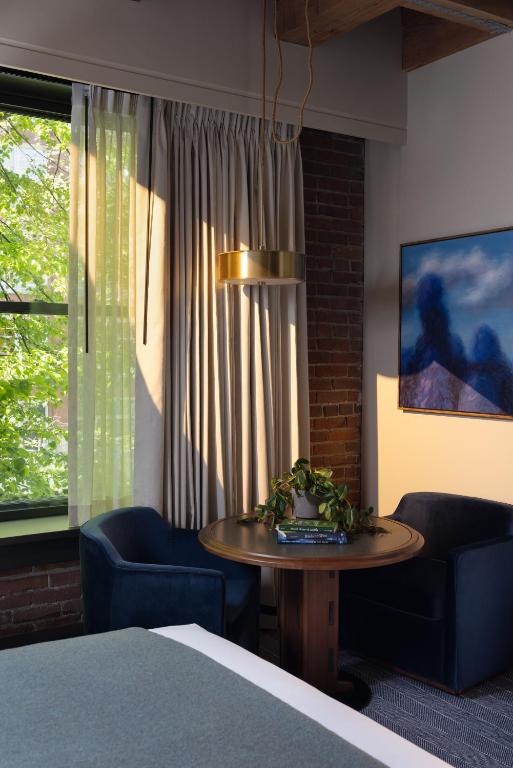
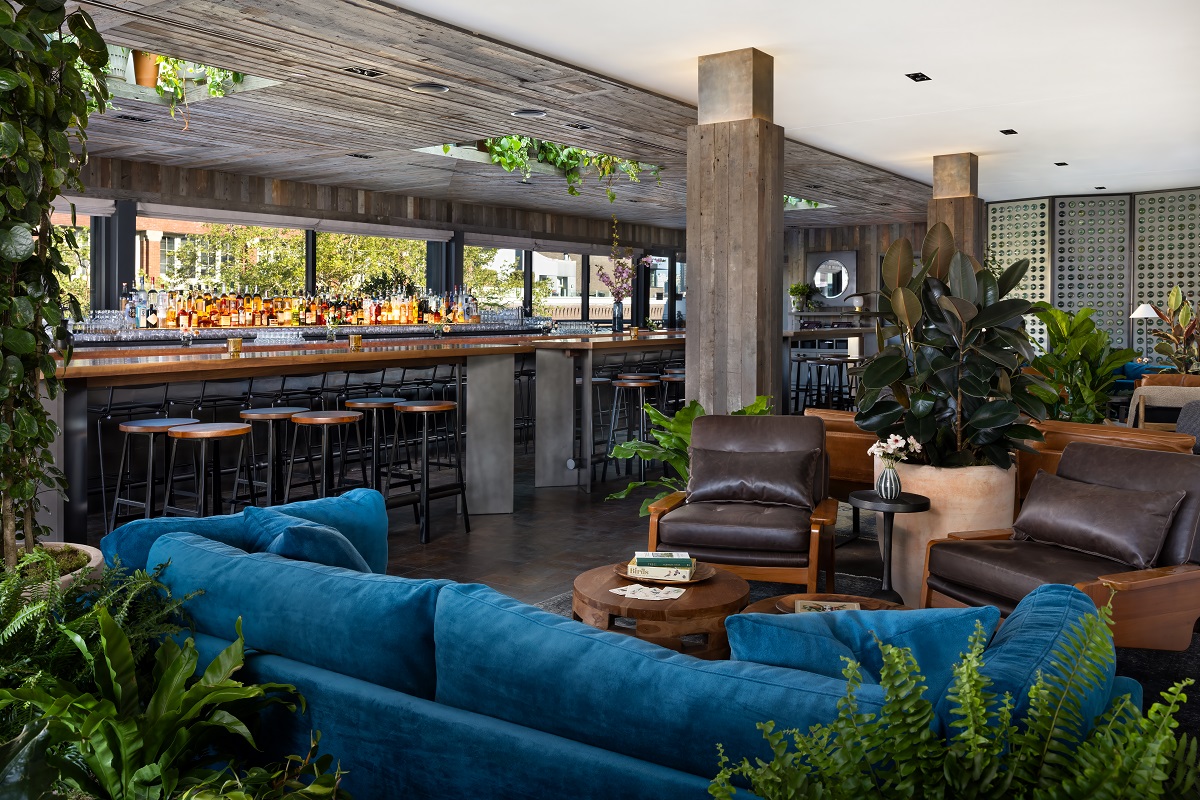
That restraint matters because Populus could easily have become another historic shell containing an entirely unrelated luxury hotel. Instead, the architecture remains legible. Massive timber joists recall the forests that built Seattle. Brick walls retain their scars. Forged steel and raw wood introduced by interior studio Curioso continue the industrial vocabulary without attempting to imitate the past. Even the 120 guestrooms respond to the existing structure rather than forcing it into absolute uniformity. Exposed brick, large windows, bespoke timber cabinetry and original artworks create warm, contemporary rooms, but architectural irregularities are allowed to remain. Larger categories add lounge areas and soaking tubs, while the top-floor Summit Suite opens onto its own terrace overlooking the city. This is adaptive reuse as character rather than compromise.
Bring the Forest Inside
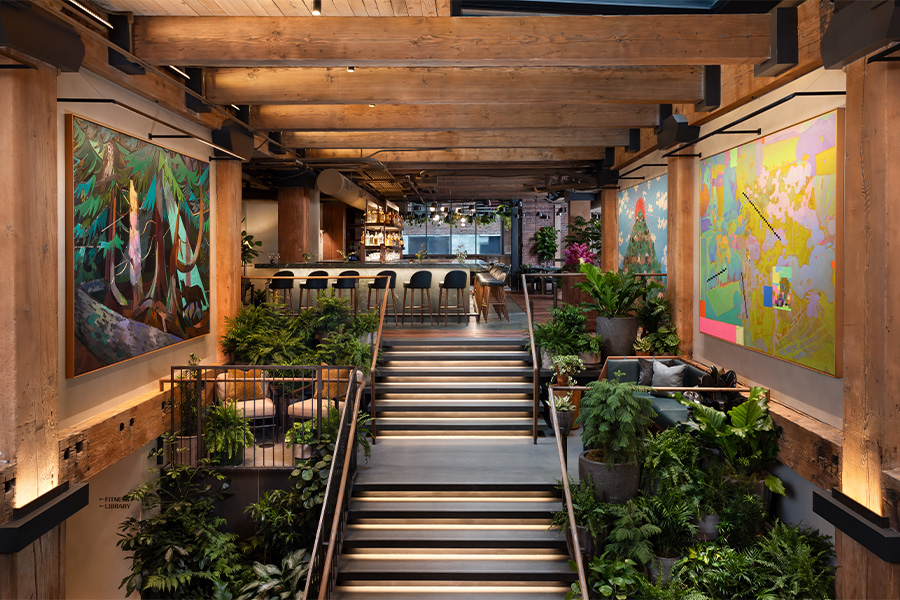
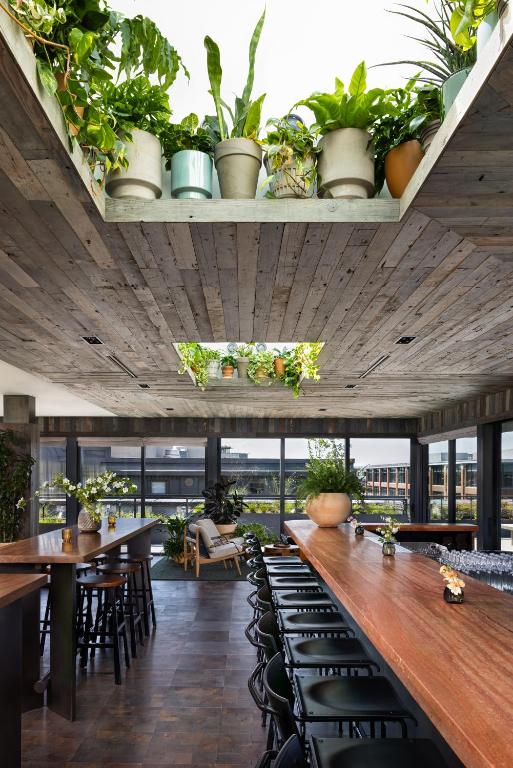
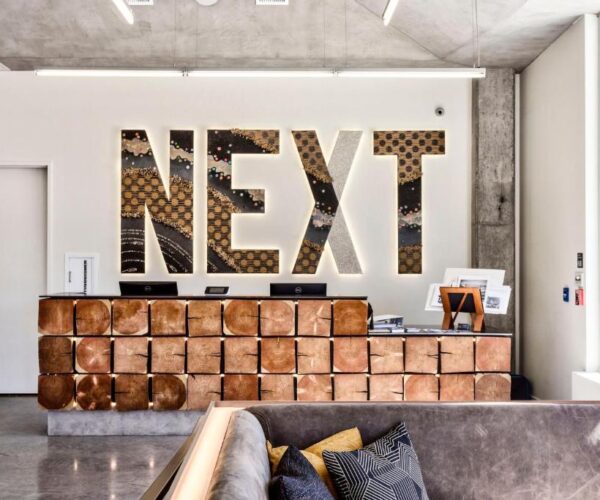
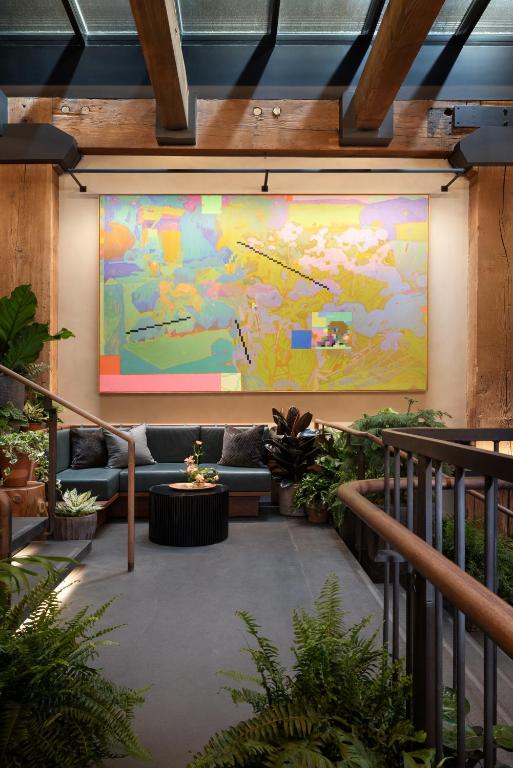
Seattle’s relationship with nature is translated much more literally at ground level. Guests arrive beneath a glass-and-steel canopy into a lobby populated not simply by houseplants, but by fragments of the landscape itself. The extraordinary G(host) Forest installation by Isvald Klingels suspends fallen trees, snags, branches and living vegetation through the entrance space. Native Western redcedar and yew—some up to 500 years old—reference Pioneer Square’s history as a logging centre without reducing that history to rustic decoration. Elsewhere, tropical planting climbs alongside the grand staircase, greenery hangs throughout Salt Harvest’s glass-wrapped Solarium and a multi-storey moss wall is designed to develop naturally over time. On the roof, Site Workshop turns towards Washington’s native prairie ecology, creating habitat intended to attract butterflies, hummingbirds and bumblebees back into the city. It feels less like conventional biophilic hotel design than nature slowly reclaiming the architecture.
An Art Collection Rooted in the Northwest
The landscape continues through art. Populus worked with ARTXIV on a collection of more than 300 pieces involving 35 local, regional and international artists, with many works created specifically for the property. Large-scale pieces by artists including Sean Barton, Przemysław Blejzyk, Andrea Heimer, Joe Feddersen and Kimberly Trowbridge turn the public spaces into something closer to an evolving cultural landscape than a conventionally decorated hotel. Importantly, the collection isn’t there simply to fill walls. Its focus on Pacific Northwest landscapes, cultural histories and contemporary creativity reinforces the same sense of place running through the architecture and planting.
Salt, Fire and the Pacific Northwest
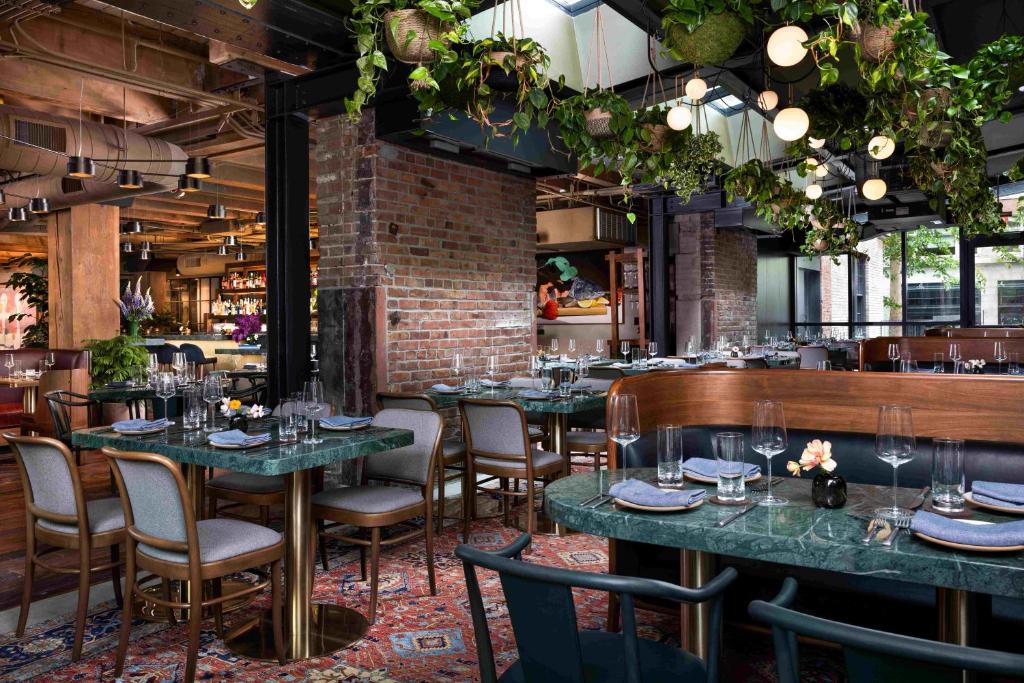
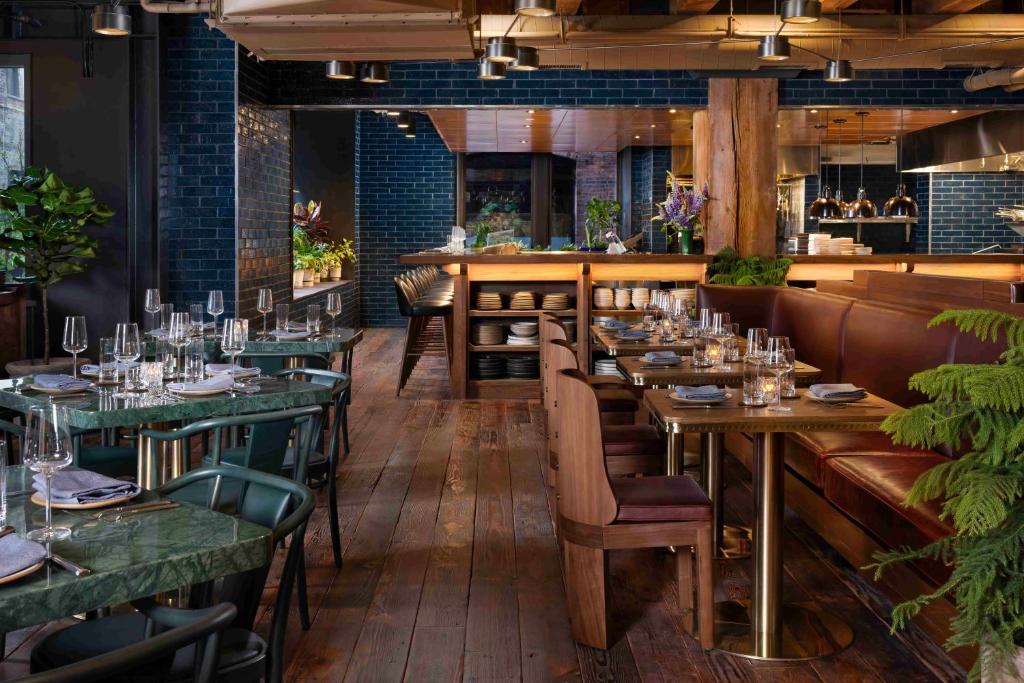
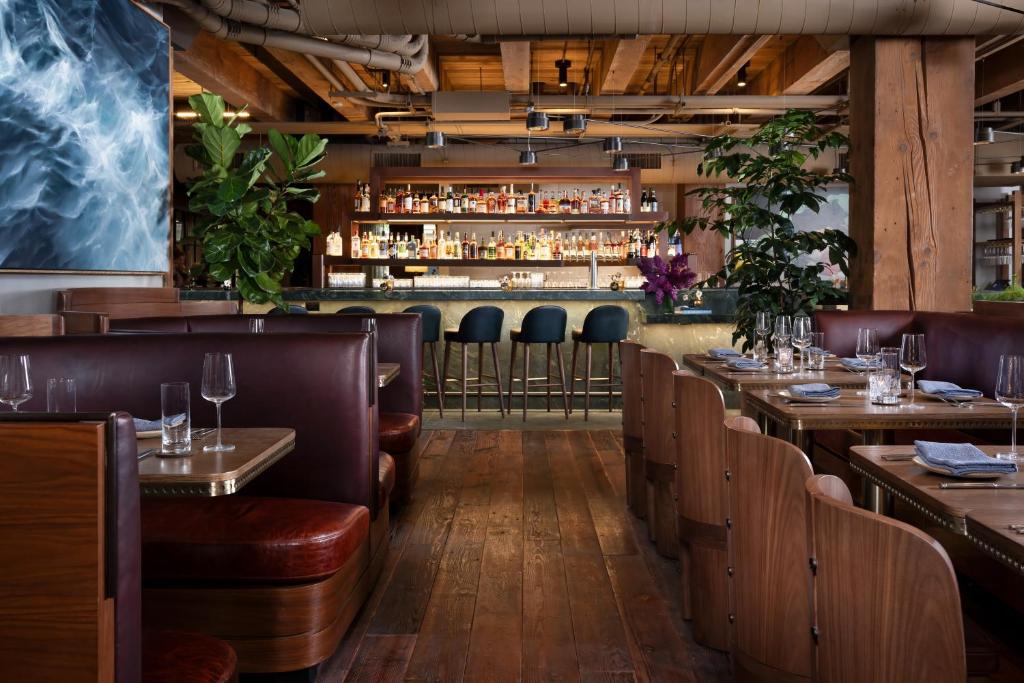
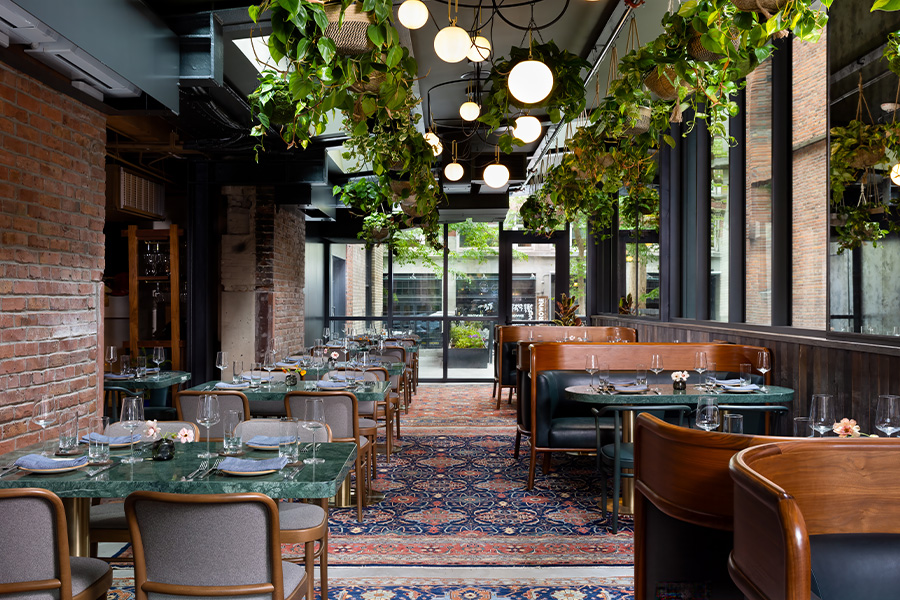
Food follows the same philosophy. Upstairs, Salt Harvest is conceived around fire, seasonality and ingredients from the Pacific Northwest. Jade-like greens, timber, leather and abundant planting create an earthy dining room, while the glass-wrapped Solarium pushes the restaurant further into rainforest territory. Executive Chef Conny Andersson and Chef de Cuisine Jonathan De Paz bring serious culinary credentials, but the emphasis remains firmly regional rather than international-for-the-sake-of-it. A café attached to Salt Harvest has its own entrance from the alley, deliberately making the hotel useful to the neighbourhood rather than exclusively to overnight guests. And then there is the roof.
Firn Above Pioneer Square
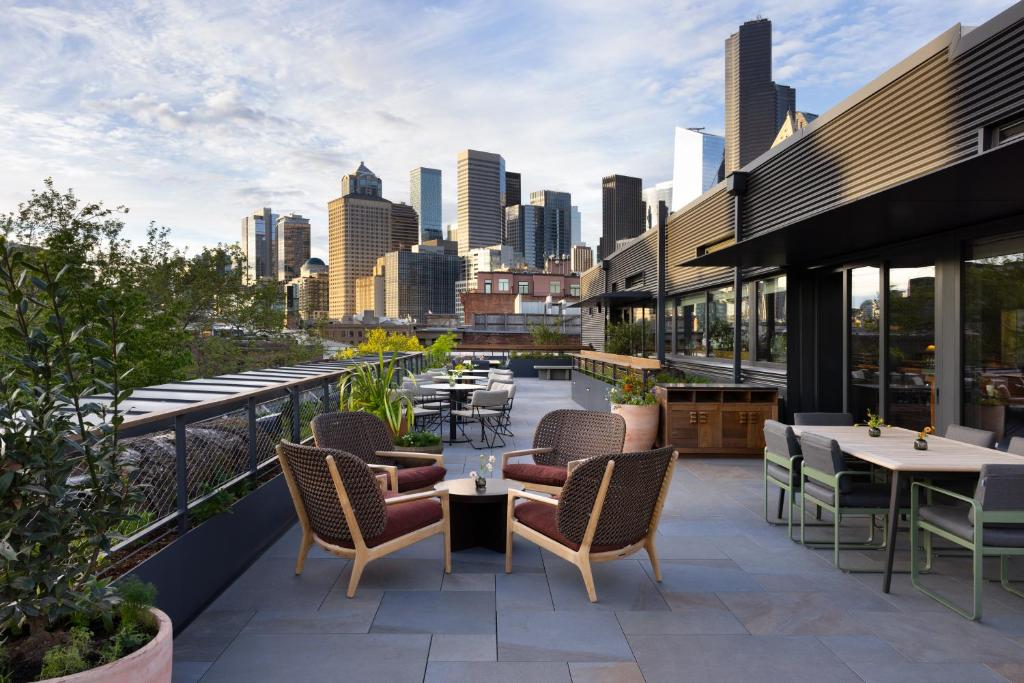
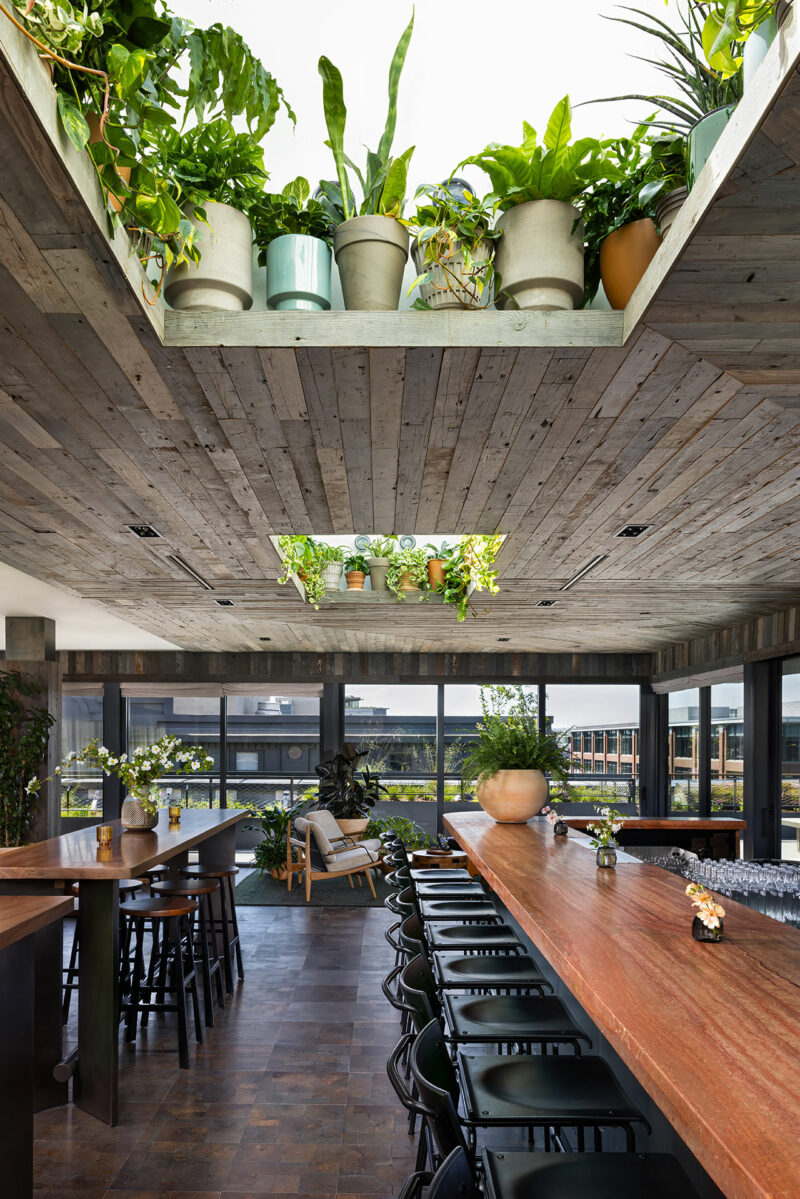
Firn is Pioneer Square’s first rooftop bar. Its name comes from the compacted snow found on glaciers, and even the cocktail menu is organised around ice—another subtle connection between the hotel and the landscapes surrounding Seattle. The mood changes as you rise through the building. Lower floors take their cues from forest greens, earth and timber; higher up, the palette warms towards the rusty reds and oranges of a Pacific Northwest sunset. From Firn, those colours finally meet the real thing, with views across Seattle’s skyline and redeveloped waterfront. It gives a century-old industrial building something it never previously possessed: a social life in the sky.
Carbon Positive, Not Just Less Bad
Populus makes a substantial claim: the hotel is designed to sequester more carbon in biomass and soil than it emits through embodied and operational activities over its lifecycle. The most intelligent decision was also the most fundamental—reuse what was already standing. Retaining the Westland Building rather than replacing it reduced embodied carbon by a reported 36 percent. There is no newly constructed parking garage, electricity is sourced from 100 percent renewable sources, food waste is composted and remaining embodied emissions have been addressed through forest-carbon projects. Its One Night, One Tree programme then plants a tree for every night a guest stays. The sustainability story therefore begins with architecture rather than bamboo toothbrushes. That is an important distinction.
Why It Works
Populus Seattle demonstrates what an environmentally ambitious city hotel can become when sustainability, history and design are treated as the same problem rather than three separate marketing stories. The 1907 building supplies the memory. Curioso and Miller Hull supply the contemporary layer. Art, food and landscape reconnect it to the Pacific Northwest. And adaptive reuse provides the foundation for its environmental ambitions. The result feels particularly right for Seattle: industrial and green, historic and progressive, urban yet perpetually conscious of the extraordinary landscape beyond the city. Populus doesn’t erase the Westland Building’s first century. It gives it a reason to survive the next one.
Information
At a glance
Architecture
Opened / Renovated
2025
Size matters
120 rooms & suites (28-465m2) (298-5,000 sq ft)
Interior design
Bathroom Amenities
Aesop
Featured in
Don't take our word for it





Handpicked worldwide
A carefully curated collection of exceptional boutique and design hotels across the globe.
Design with soul
Architecture, atmosphere and craftsmanship come together in stays with a clear identity.
Hidden, not hyped
Independent boutique hotels you rarely find on mainstream booking platforms.
Travel guidance
Personal recommendations and thoughtful support from people who actually know the places.