Where Architecture Meets Altitude
There are hotels you choose for the hotel. And then there are hotels where the landscape has already done most of the interior designer’s work. Mountain hotels belong firmly in the second category. A window framing a snow-covered peak is difficult to compete with. So is breakfast above the clouds, swimming while looking down into a valley, or drinking something irresponsibly strong beside a fire after spending the day outdoors. The Alps are the obvious starting point. But mountain culture stretches much further: across the Pyrenees and Rocky Mountains, through the Andes and Himalayas, into the Caucasus, the Catskills and Charlevoix. Even Greece has a mountainous side that tends to be forgotten once somebody mentions an island. And altitude isn’t everything. The Jura proves that you don’t need a 4,000-metre peak outside the window to understand the appeal. What connects the best mountain hotels isn’t snow, skiing or even geography. It is what happens when architecture has to negotiate with landscape.
The Alps invented the look. Then reinvented it.
Ask someone to draw a mountain hotel and chances are you will get a chalet. Timber balconies. Pitched roof. Stone base. Shutters. Fireplaces. Possibly a decorative cow somewhere that nobody particularly asked for. There is good reason for this. Traditional Alpine architecture developed in response to climate, available materials and the realities of living at altitude. Deep roofs shed snow, timber provided warmth, stone anchored buildings into steep terrain and compact forms helped retain heat. Over time, necessity became aesthetic. The chalet became so successful that it eventually escaped the Alps altogether. Today you can find versions of Alpine lodge style from Colorado to Hokkaido — sometimes convincing, sometimes looking suspiciously as though an interior designer has ordered the complete Mountain Collection. The more interesting Alpine hotels tend to go back to the architecture rather than the clichés. And nowhere is that clearer than Vorarlberg.
Light wood, clean lines and absolutely no antlers required
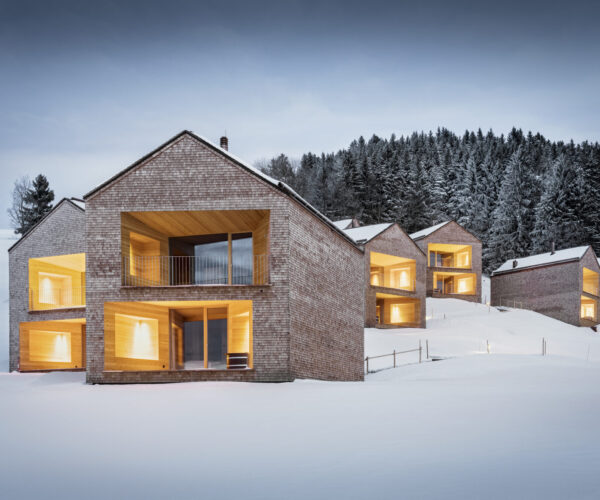
Austria’s westernmost region has become one of Europe’s most fascinating architectural laboratories. The contemporary Vorarlberg school takes many of the principles of traditional Alpine building — local timber, craftsmanship, compact structures, sensitivity to climate — and strips away the decoration. The result is mountain architecture that can feel almost impossibly simple. Pale wood replaces dark panelling. Large windows frame the landscape. Concrete meets spruce and larch. Rooms are warm without being rustic. Buildings sit quietly in villages rather than announcing that an architect has recently arrived. It is minimalism with very cold feet. This newer Alpine language has spread far beyond Vorarlberg. Across Switzerland, Austria, northern Italy and the French Alps, a generation of architects and hoteliers has realised that mountain hotels don’t have to choose between chalet nostalgia and anonymous international luxury. Wood can still be wood without pretending it is 1850.
But sometimes more is definitely more
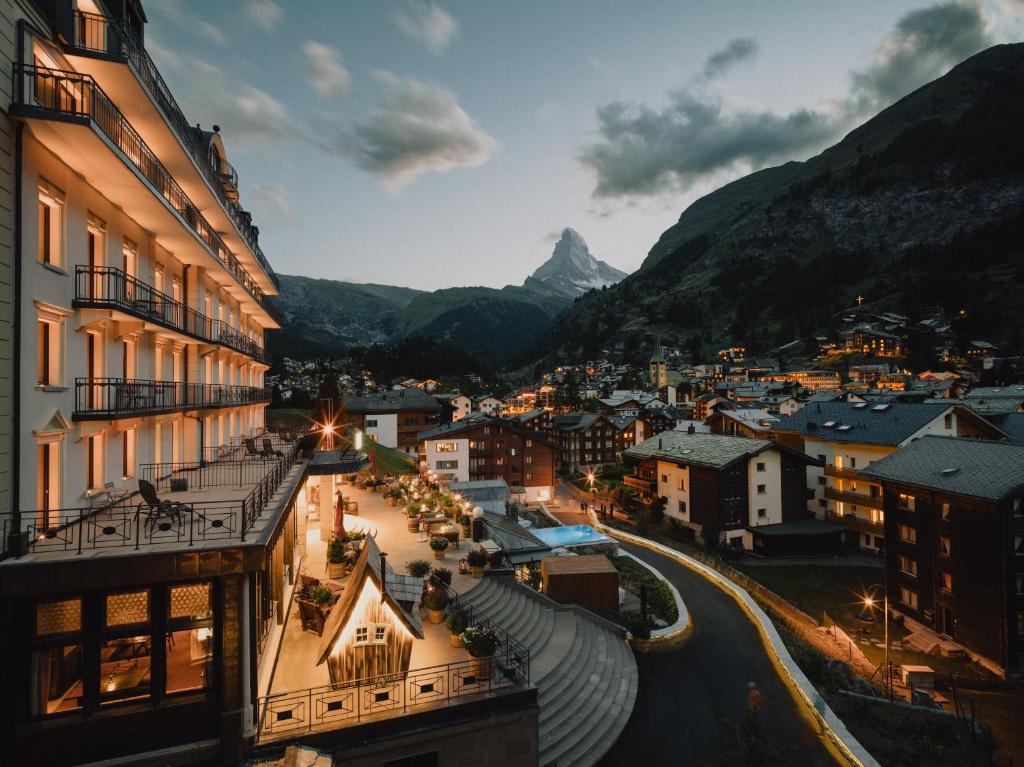
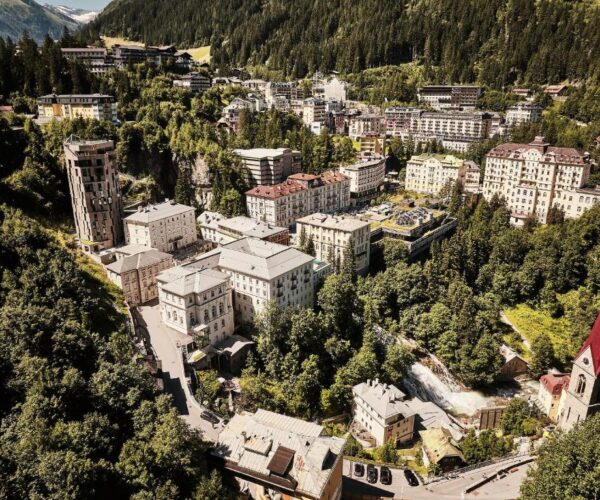
Minimalism hasn’t killed the old mountain hotel. Thankfully. At the opposite end of the spectrum are carved balconies, painted façades, chandeliers, hunting trophies, patterned carpets and enough timber panelling to make a forest nervous. Call it Alpine Baroque. Bauernbarock. Rustic maximalism. Whatever the terminology, there is something wonderfully theatrical about mountain hospitality when it embraces excess. Then there are the Grand Hotels. The arrival of railways turned mountain towns into glamorous European resorts during the late 19th and early 20th centuries. Palatial hotels appeared in places that had previously been remote settlements. Ballrooms, grand staircases and formal dining rooms were transported to extraordinary altitudes. Nowhere is the surreal result more visible than Bad Gastein. The Austrian spa town rises dramatically along the sides of a narrow valley, its Belle Époque hotels stacked around a waterfall. For decades it attracted emperors, aristocrats and international society before changing travel habits sent many of its grand buildings into decline. Its density and verticality earned it one of hospitality’s better nicknames: Manhattan of the Alps. Today Bad Gastein is alive again. Historic buildings are being restored, new hotels have arrived and the town’s faded grandeur has become an asset rather than an embarrassment. Perfect restoration would almost spoil it.
When Modernism climbed the mountain
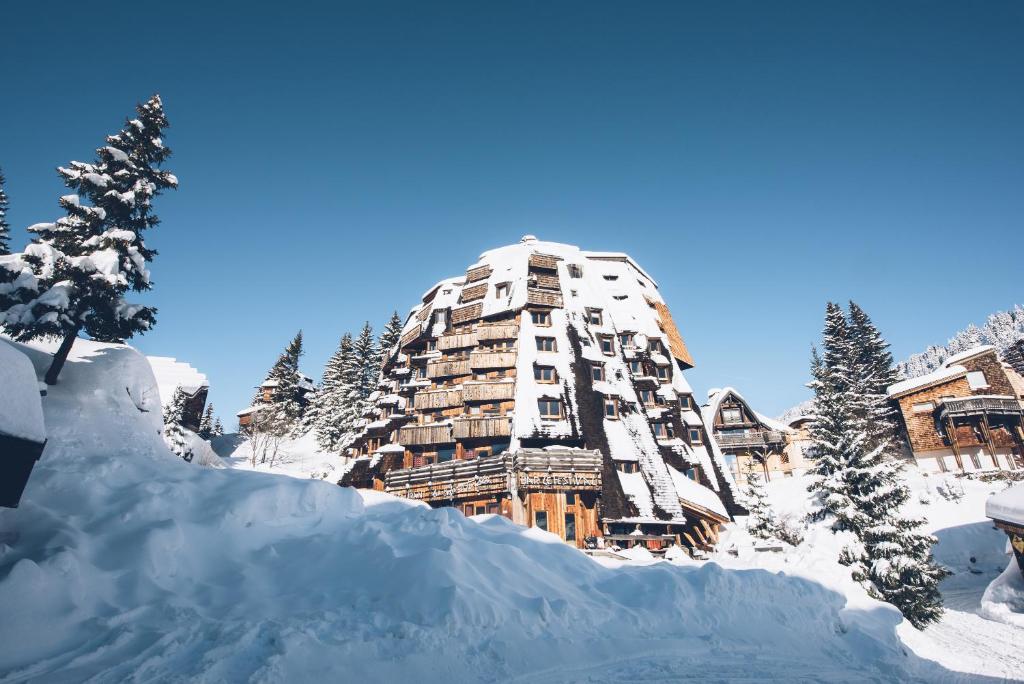
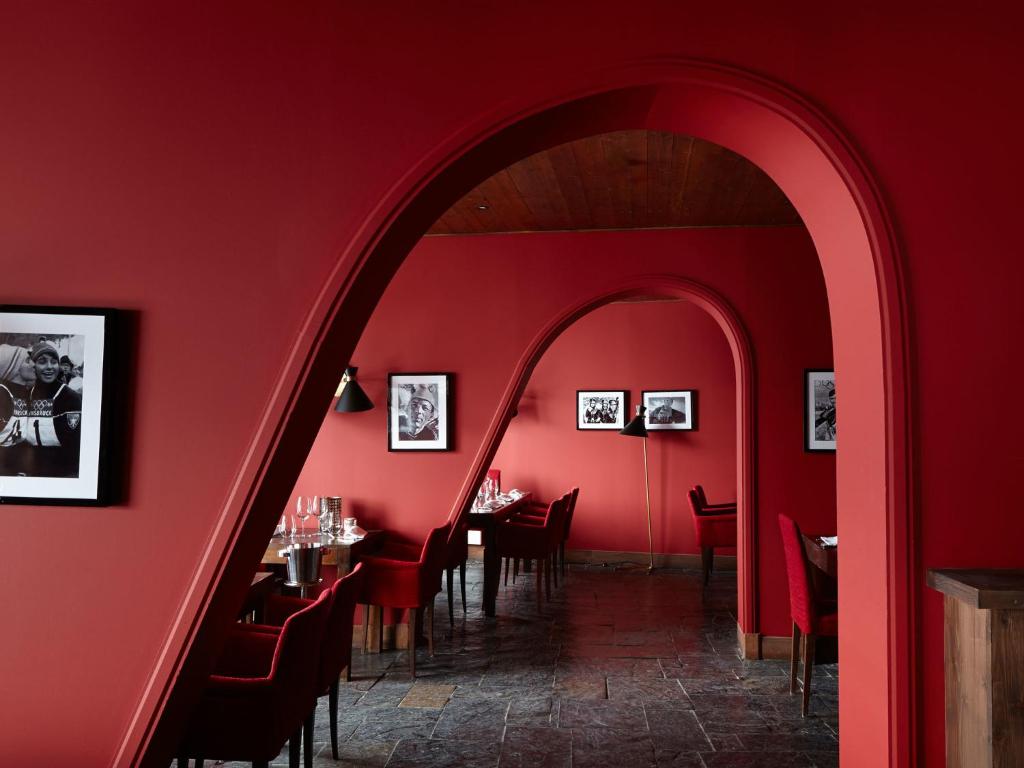
Not every architect thought a mountain required a chalet. The 20th century brought concrete, flat roofs, geometric forms and increasingly ambitious ski resorts into landscapes previously dominated by vernacular architecture. Some of the results remain wonderfully strange. Avoriaz in the French Alps is perhaps the ultimate example. Developed from the 1960s onwards, the resort rejected the traditional chalet in favour of dramatic angular buildings designed to follow the contours of the mountains. Timber-clad façades weathered into the landscape while interiors embraced the colours, curves and optimism of the period. At its heart, Hôtel des Dromonts still channels that original 1960s and 70s vision. This is the other Alpine aesthetic DNA Hotels loves: less Heidi, more après-ski with a soundtrack. Elsewhere in the French Alps, Brutalism introduced raw concrete into spectacular high-altitude settings. Former mountaineering stations, sanatoriums and utilitarian structures have increasingly found new lives as hotels and refuges. Buildings once designed simply to survive the mountain suddenly become desirable precisely because they don’t look like hotels. Which brings us to a ski lift.
The hotel that used to be part of the ski infrastructure
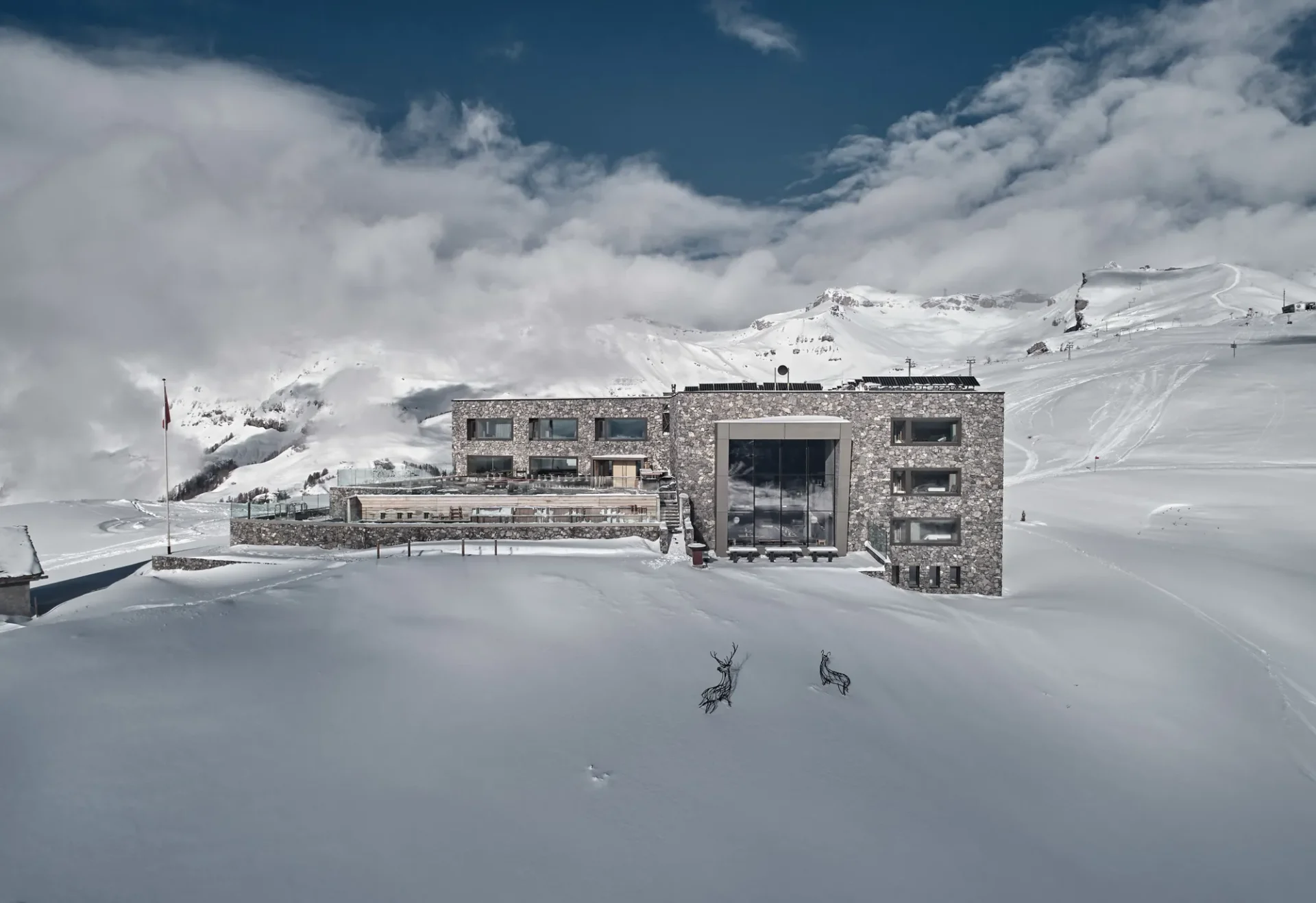
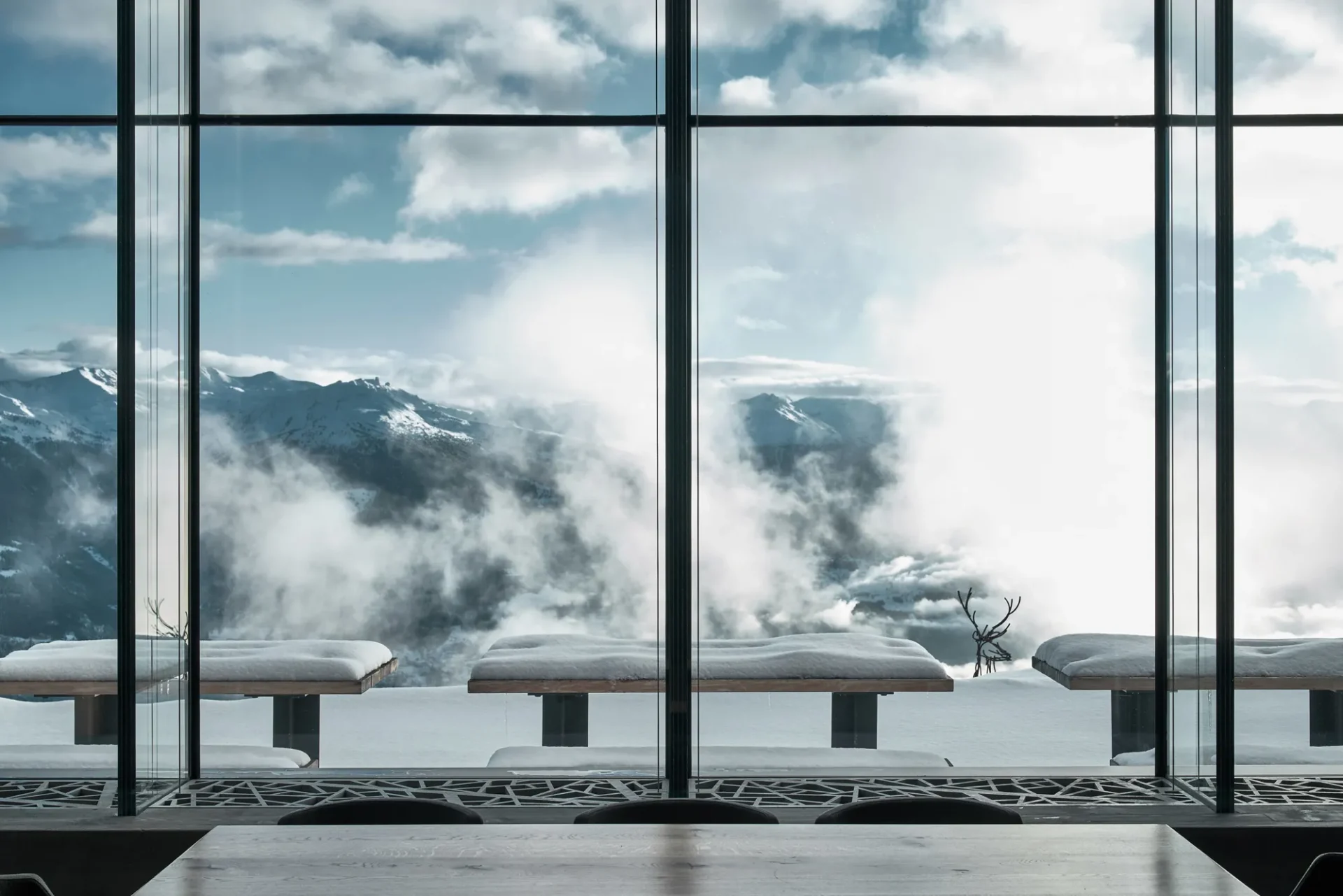
At 2,112 metres above Crans-Montana, Chetzeron occupies a former cable-car station. It is difficult to imagine a better mountain-hotel origin story. The abandoned concrete structure was transformed rather than demolished, its industrial shell incorporated into a contemporary hotel surrounded by peaks. Getting there is deliberately part of the experience: this isn’t a hotel that happens to have a mountain view. It is physically embedded in the ski landscape. That distinction runs through many of the best mountain hotels. Old refuges become minimalist retreats. Farmhouses become design hotels. Cable-car stations become bedrooms. Concrete relics become architectural landmarks. Adaptive reuse makes particular sense in fragile mountain environments. The most sustainable building material is often the building already standing there. Especially when somebody has already dragged it 2,000 metres up a mountain.
Beyond the Alps
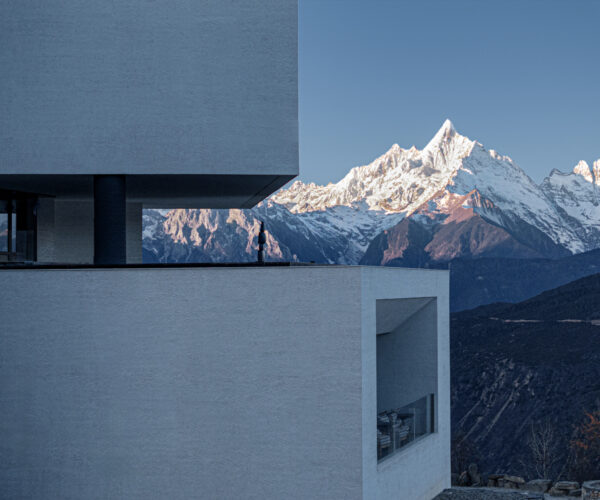
Europe doesn’t have a monopoly on mountain hotels. The Rocky Mountains developed their own architectural vocabulary: grand railway hotels, timber lodges, ranch influences and, more recently, polished contemporary retreats from Colorado to Alberta. Canada adds another fascinating mountain landscape in Charlevoix, where the Laurentian Mountains descend towards the St Lawrence River. Here the drama comes not simply from altitude but from the collision of mountains, forests and water. The Pyrenees offer something quieter and less polished than many Alpine resorts, moving between France, Spain and Andorra with stone villages, thermal traditions and powerful regional identities. Cross the Atlantic and the Andes change the scale completely. Hotels in Chile, Argentina and Peru can sit among landscapes so vast that conventional ideas about cosy mountain hospitality suddenly feel rather small. And then there are the Himalayas, where architecture has to contend not only with some of the world’s most extreme landscapes but with distinctive building traditions, materials and cultures. The mountains may be universal. Mountain culture certainly isn’t.
Less altitude, same effect
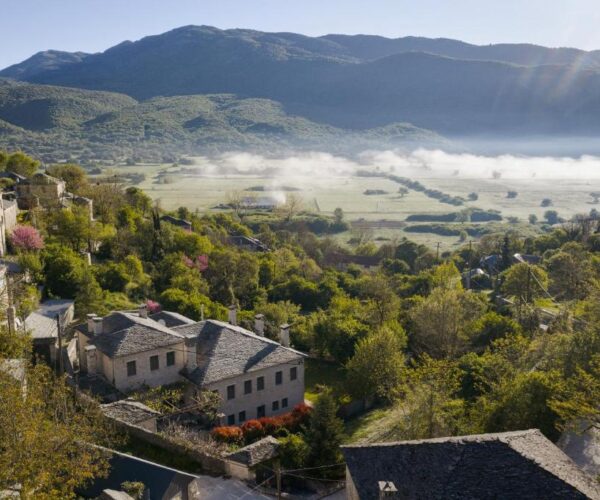
Not every mountain escape requires oxygen calculations. The Catskills have spent generations providing New Yorkers with a nearby version of the wilderness. Their hotel history runs from grand resorts and the famous Borscht Belt to cabins, inns and a new wave of design-conscious retreats. The Jura, straddling France and Switzerland, is gentler than the Alps but no less atmospheric: forests, lakes, snow, cheese, isolated villages and architecture that tends to whisper rather than shout. Lake Tahoe combines mountains with one of North America’s great alpine lakes, producing an appealing collision of ski culture, cabins, mid-century California and contemporary resort design. And then there is Greece. Yes, Greece. Leave the Cyclades behind and the country becomes remarkably mountainous. Stone villages, forests and dramatic peaks replace whitewashed houses and beach clubs. In regions such as Zagori, traditional architecture has produced some of the country’s most atmospheric small hotels. Apparently Greece contains weather other than 29°C and sunny.
East, towards the Caucasus
For one of Europe’s — or Asia’s, depending on where you draw the line — most exciting mountain-hotel regions, keep going east. Georgia’s Caucasus combines genuinely enormous landscapes with medieval villages, Soviet architectural remnants and a rapidly developing contemporary hospitality scene. It is exactly the kind of place where mountain-hotel design becomes interesting: strong vernacular traditions meeting the remains of another architectural era, with contemporary designers adding a third layer. Further west, Czechia offers another less obvious mountain culture. Its ski areas may lack Alpine altitude, but they compensate with forests, Modernist buildings, socialist-era resorts and a growing number of smart reinterpretations of the mountain lodge. The interesting mountain hotel is not necessarily at the highest altitude. It is usually where the layers are thickest.
Après-ski is an architectural programme
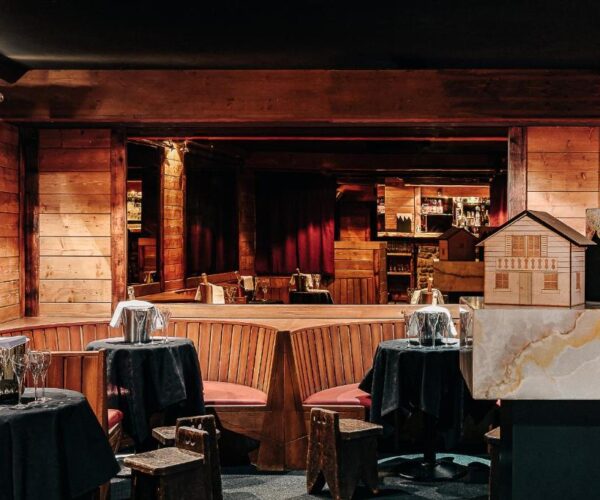
Skiing is optional. Après-ski is not. Mountain hotels understood the importance of social space long before lifestyle hotels discovered the lobby. After a day outdoors, people naturally gather around fireplaces, terraces, restaurants and bars. Which means mountain hospitality and one of DNA Hotels’ other obsessions — bar culture — are natural companions. The classic formula involved schnapps, beer and questionable dancing in ski boots. We are not opposed. But today’s best mountain hotels have expanded the repertoire. Cocktail bars, wine cellars, listening rooms and lounges have turned après-ski into something that works perfectly well for guests who have spent the entire afternoon reading beside the fire. The 1970s understood this particularly well. Sunken seating, shaggy textures, curved furniture, fireplaces and amber lighting seem almost genetically engineered for mountain hotels. Add snow outside and suddenly brown becomes an excellent colour again.
The mountains have a cuisine of their own
Mountain food deserves considerably more respect than the phrase ski food suggests. Historically, these were cuisines shaped by isolation, preservation and winter. Cheese, cured meat, potatoes, grains, pickles, bread and preserved fruit weren’t rustic styling; they were survival. Fondue and raclette may have become international shorthand for Alpine eating, but travel through mountain regions and the differences quickly become obvious. The French Alps don’t eat like South Tyrol. Vorarlberg doesn’t eat like the Pyrenees. Georgia certainly doesn’t eat like Switzerland. The Andes bring entirely different ingredients, techniques and traditions. Increasingly, ambitious mountain hotels are rediscovering what has always been around them: small farms, local cheeses, wild herbs, mushrooms, game, freshwater fish and regional wines. Farm-to-table sounds considerably less like a marketing concept when you can actually see the farm from your table.
Green isn't just a nice colour up here
Mountain tourism comes with an uncomfortable contradiction. We travel to these places because their landscapes feel pristine, then require roads, lifts, heated swimming pools, artificial snow and increasingly elaborate resorts in order to enjoy them. Climate change makes that contradiction impossible to ignore. The more thoughtful mountain hotels are responding through adaptive reuse, local construction materials, renewable energy, better insulation, reduced water consumption and closer relationships with local producers. Contemporary timber architecture can dramatically reduce the footprint of construction, while renovating existing buildings avoids starting again from scratch. But sustainability in the mountains is bigger than a hotel receiving a green badge. It is about whether tourism helps maintain communities that can otherwise become seasonal playgrounds. Whether local crafts survive. Whether food still comes from the region. Whether architecture belongs to its landscape rather than simply occupying it. Because the best mountain hotel shouldn’t make the mountain better. That would be ambitious. It should make you notice it.