There was a time when Puerto Escondido was mainly discussed among surfers. They already knew. On Mexico’s Pacific coast, backed by the Sierra Madre del Sur and facing an ocean that can be anything from beautifully calm to frankly terrifying, Puerto Escondido grew around fishing, beaches and waves. Playa Zicatela became internationally famous for the Mexican Pipeline, one of the world’s great surf breaks. But something else has happened here. Puerto Escondido has quietly become one of the most interesting concentrations of contemporary architecture and small-scale hospitality in Mexico. Concrete, brick, palapa, timber and clay have replaced marble lobbies and air-conditioned glass boxes. Some hotels have eight rooms. Some disappear into the vegetation. Others look as though a particularly sophisticated Mayan civilisation has just returned from the future. And DNA Hotels has nine of them. Not because Puerto Escondido needs nine hotels on the site. Because we kept finding hotels we couldn’t leave out.
First came the surfers
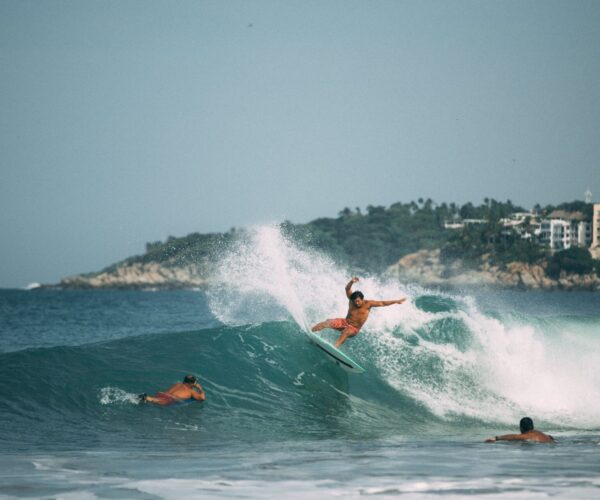
Puerto Escondido isn’t Cancún. An important distinction. There are beaches, palm trees and reliably photogenic sunsets, but Puerto developed with a different rhythm. It was a fishing town before tourism arrived, and surfing helped put it on the international map without completely replacing what was already there. Zicatela is the famous name. The beach faces the Pacific with almost nothing to soften the swell arriving from thousands of kilometres away. When conditions align, the waves become enormous. Serious surfers come for exactly that reason. The rest of us are perfectly entitled to watch them from a bar. Further south, La Punta offers a more relaxed version of surf culture: sandy streets, cafés, restaurants, small hotels and boards everywhere. The transformation has been rapid, but Puerto still feels looser and less manufactured than Mexico’s more established resort destinations. That informality matters. Because it created exactly the conditions in which interesting architecture could happen.
How did a surf town become an architecture destination?
Part of the answer lies a little way outside town. In 2014, Mexican artist Bosco Sodi established Casa Wabi on the Oaxacan coast, with a masterplan by Japanese architect Tadao Ando. Its monumental concrete wall runs through the landscape towards the Pacific, surrounded by studios, pavilions and gardens created for an artist residency programme. Casa Wabi became an architectural destination in its own right and helped focus international attention on a stretch of coast where architects could work very differently from the way they might in Mexico City, New York or London. The climate encourages buildings to open up. The landscape discourages unnecessary decoration. Local construction traditions provide brick, timber, thatch and clay. And the ocean provides the air conditioning. Or at least that is the romantic version. It can get very hot.
Alberto Kalach goes to the beach
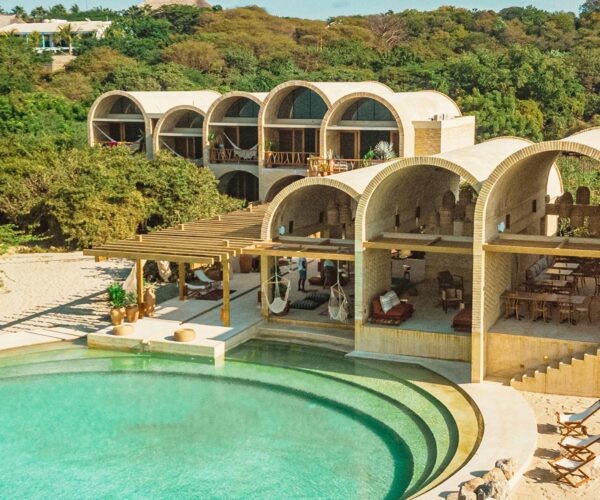
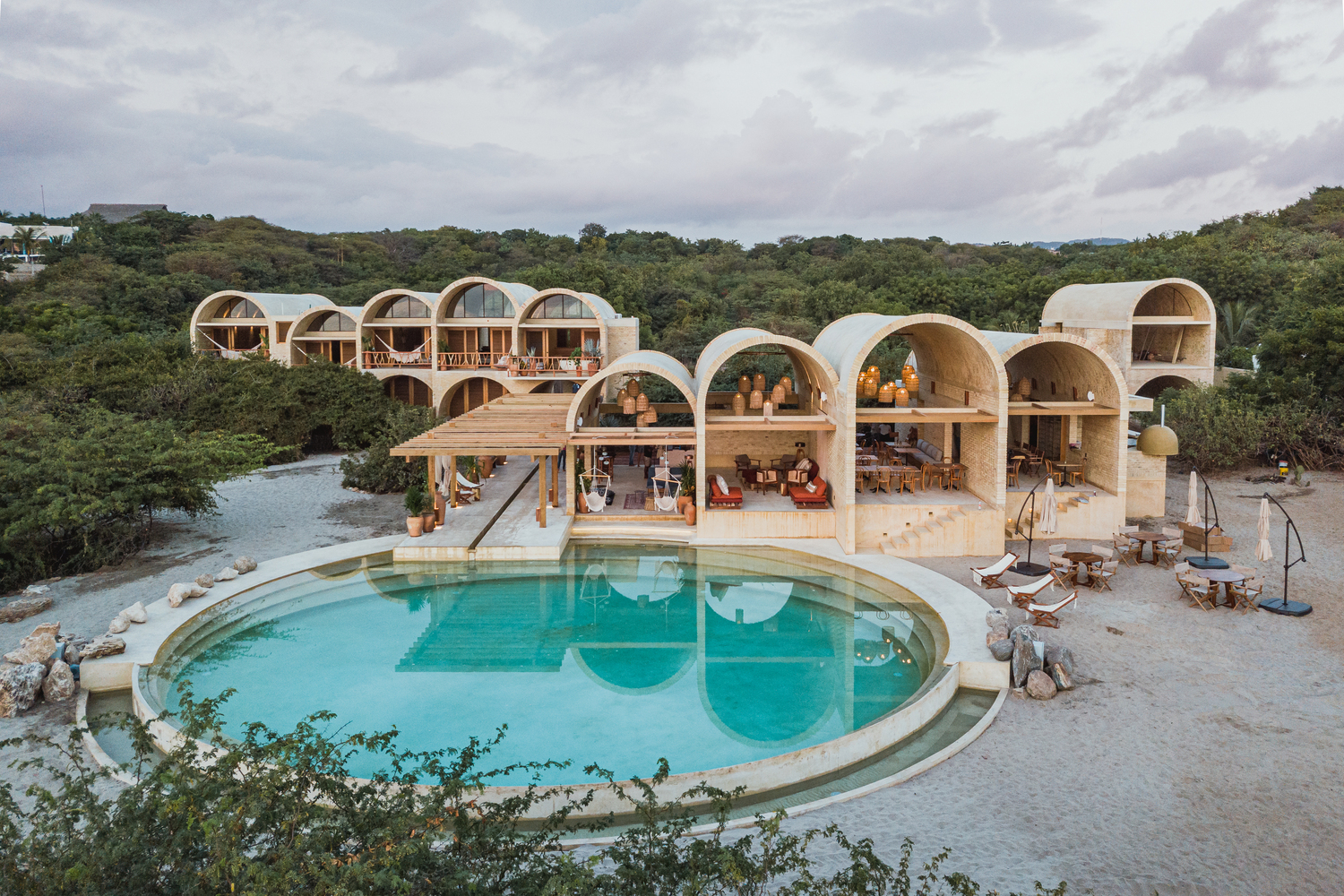
If there is one architect whose name keeps appearing around Puerto Escondido, it is Alberto Kalach. The Mexican architect and his Taller de Arquitectura X have played an extraordinary role in shaping the area’s contemporary architectural identity. At Casona Sforza, Kalach created a sequence of huge brick barrel vaults facing the Pacific. The building began life as a private house before its owner Ezequiel Ayarza Sforza decided it deserved to be shared and turned it into an 11-suite hotel. Local woods, ceramics and other elements connect the architecture back to Oaxacan craft and community projects. The photographs are almost suspiciously perfect: repeated arches, circular pools, sand and ocean. But Casona Sforza demonstrates something important about the new Puerto Escondido. Contemporary architecture here doesn’t necessarily mean importing an international aesthetic. The most interesting projects take traditional materials, passive cooling, local craftsmanship and ancient forms and push them somewhere new. Kalach went further with Terrestre.
Luxury without the air conditioning
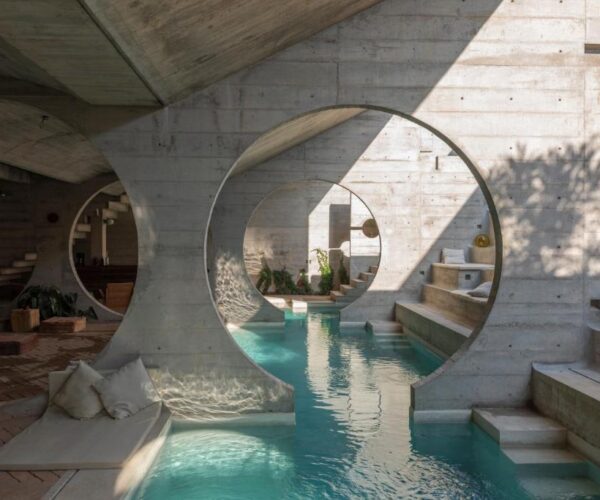
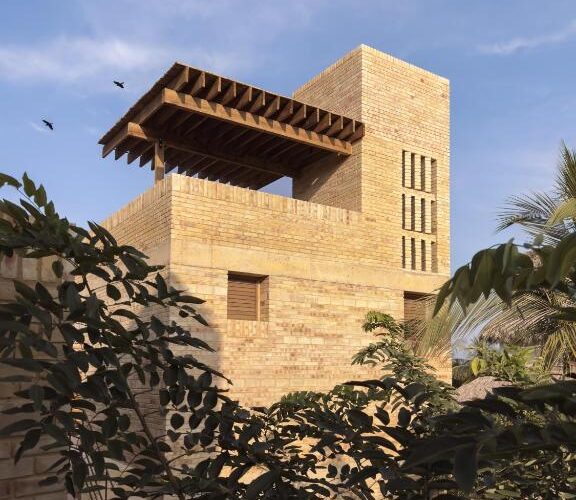
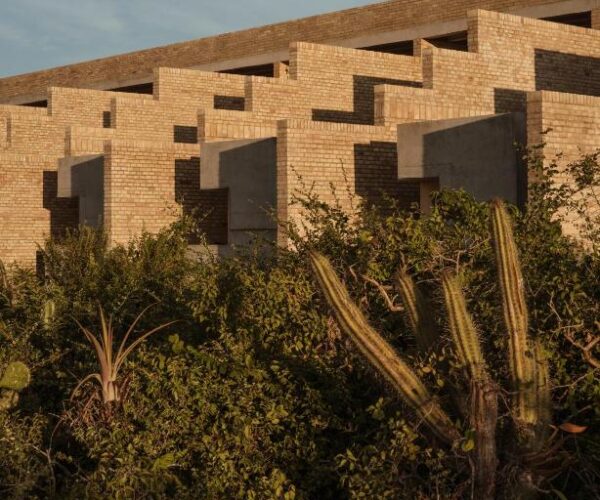
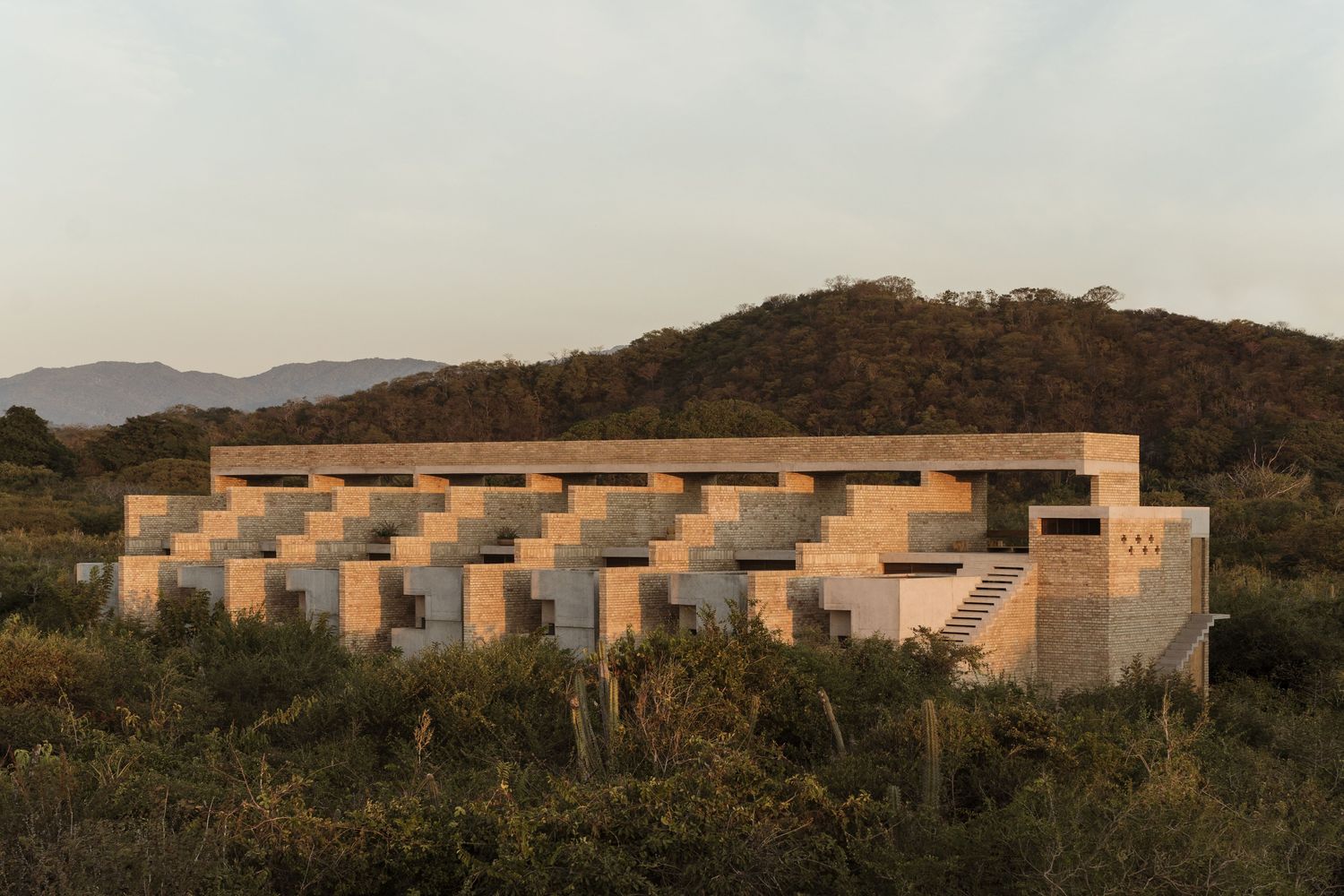
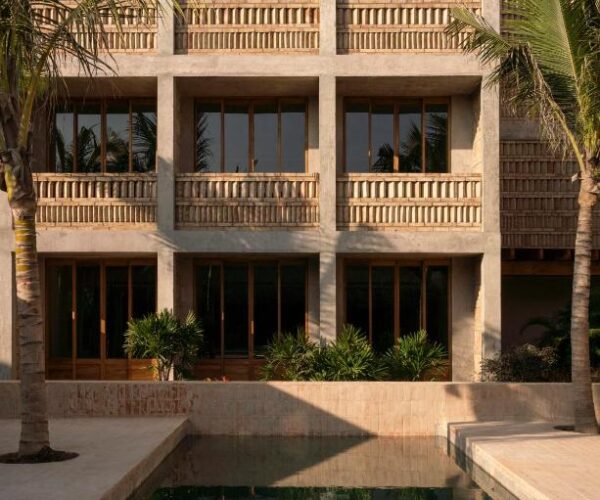
Terrestre (main picture) is one of those hotels that makes the word luxury rather complicated. There are private pools. There is no air conditioning. Designed by Kalach for Grupo Habita, the hotel uses brick, concrete and timber to create a series of almost Brutalist structures that remain open to the climate. Materials were largely sourced or produced extremely close to the site, rooms rely on natural ventilation and the property was conceived to operate entirely on solar power. Instead of sealing guests away from Oaxaca, the architecture exposes them to it. Sunlight moves across brick walls. Wooden shutters regulate shade and air. Breezes pass through the rooms. Vegetation grows around heavy geometric structures. The swimming pool helps. This is environmental design that you can actually see and feel, rather than discovering on page 37 of the hotel’s sustainability report. And it looks spectacular.
Before Terrestre, there was Escondido
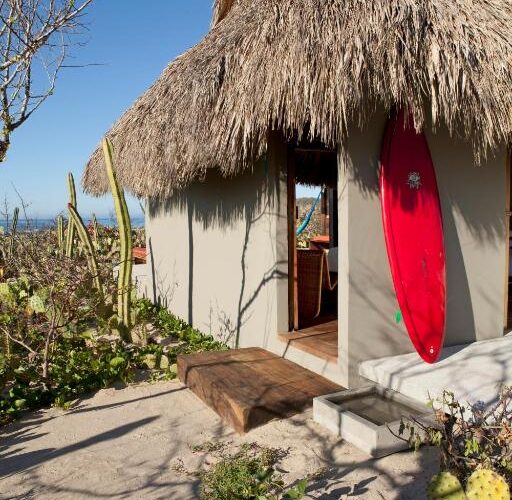
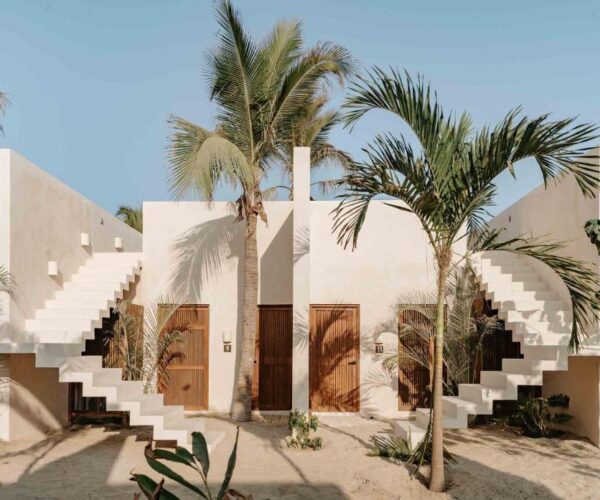
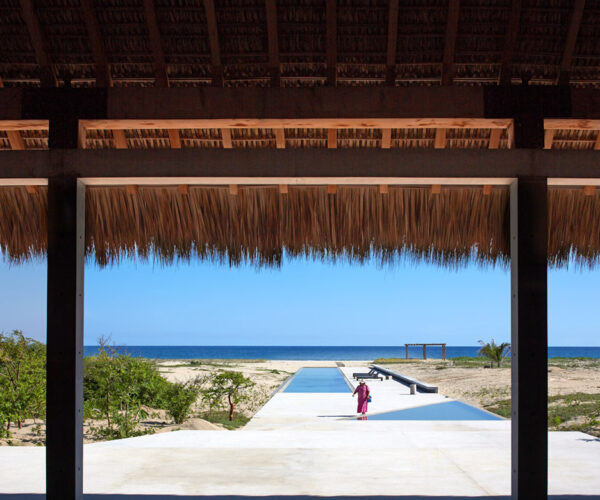
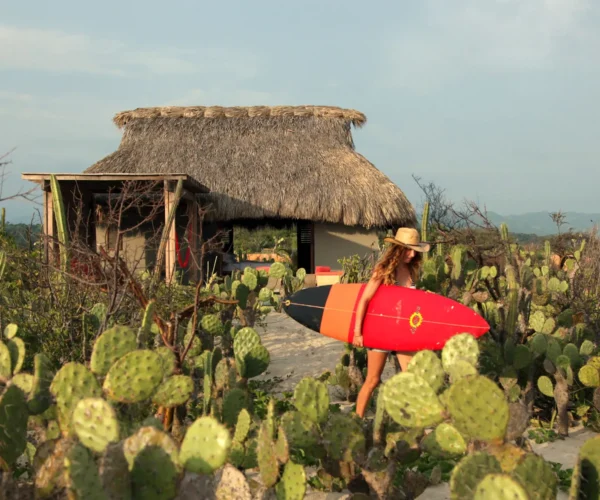
Grupo Habita had already understood the potential of this coast. Hotel Escondido takes a much more familiar Oaxacan form — the palapa-roofed beach hut — and turns it into a contemporary hotel. Individual bungalows face the Pacific, each with its own terrace and plunge pool, while timber, stucco, polished concrete and thatch keep the architecture simple and tactile. It is an important part of the Puerto Escondido story because it shows that good design here doesn’t need to be monumental. A roof. A hammock. A pool. The Pacific. Architects occasionally know when to stop.
Concrete has never looked so tropical
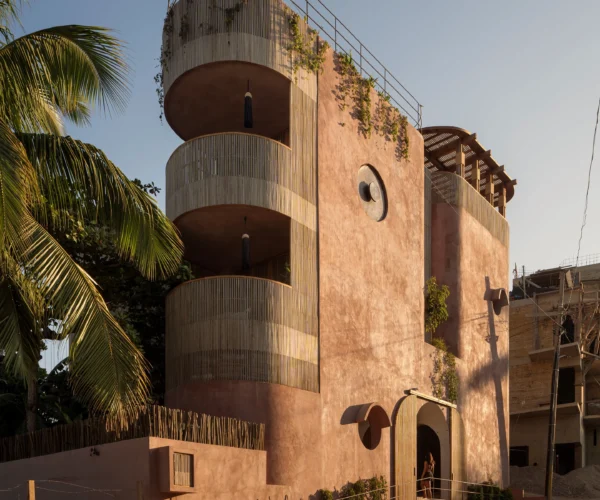
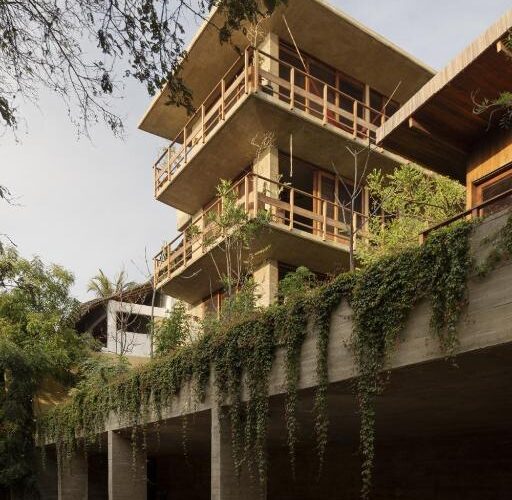
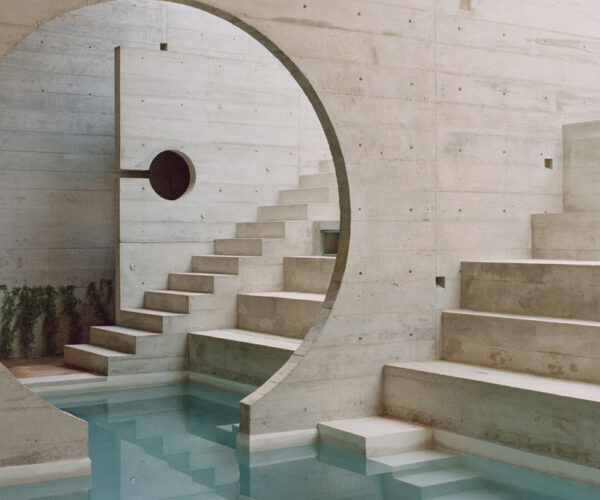
Puerto Escondido has also become particularly good at something that sounds contradictory: Tropical Brutalism. Concrete is everywhere, but rarely in the heavy urban sense associated with post-war European architecture. Here it meets water, palms, shadows, open courtyards and ocean air. At Casa TO, near La Punta, architect Ludwig Godefroy created a building of monumental arches, vaulted spaces and raw concrete inspired partly by ancient structures and water reservoirs. It feels somewhere between a temple, a cistern and a particularly fabulous Bond villain’s weekend house. Then there is Xiqué, designed by local practice Estudio Carroll. Its pink chukum surfaces, arches and curves create a softer kind of monumentality, while natural ventilation and an ecological wetland system are integrated into the architecture itself. This is what makes Puerto fascinating. There is clearly an architectural conversation taking place, but nobody appears particularly interested in making all the buildings look the same.
Architecture made for weather
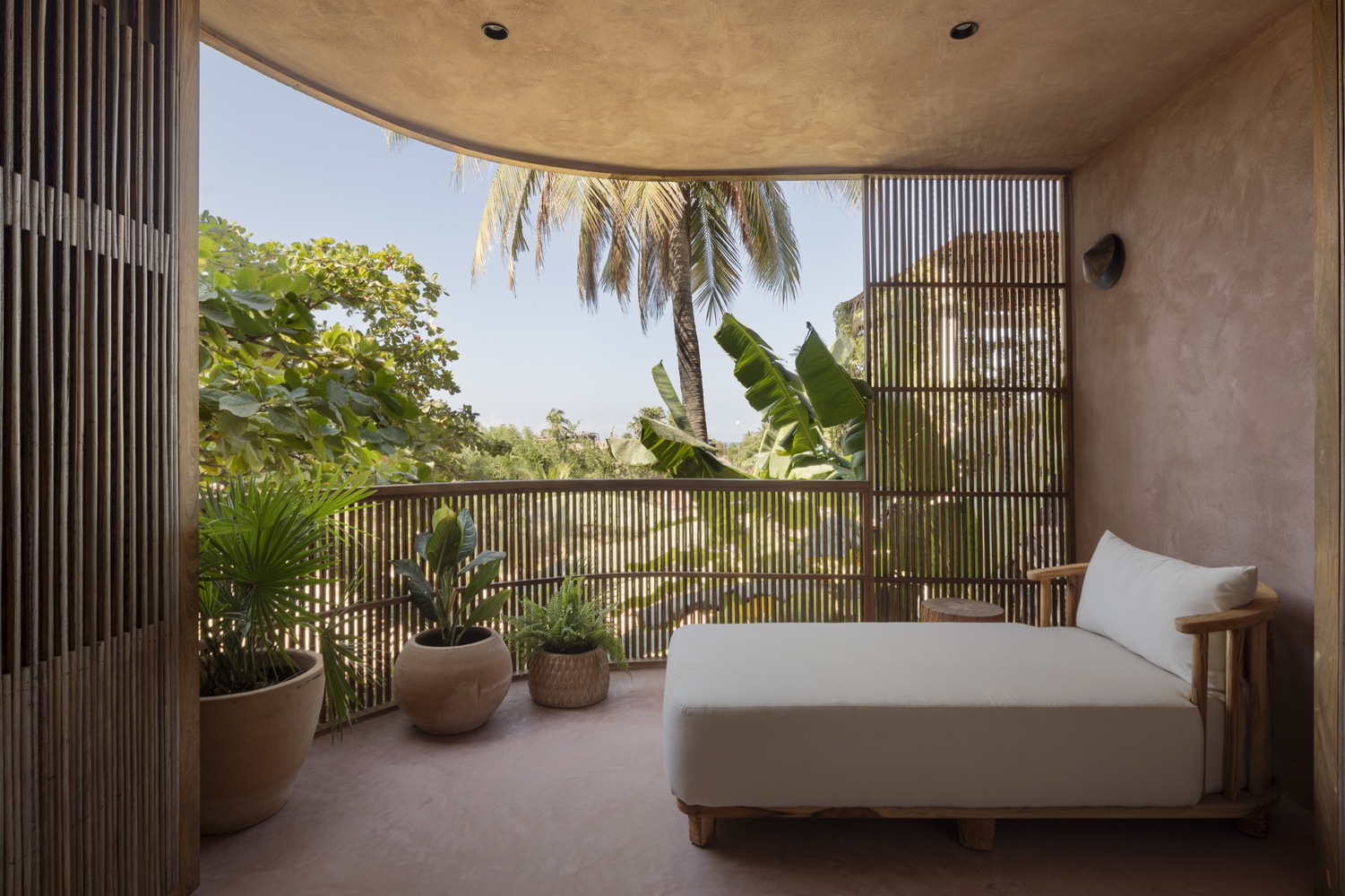
Look closely at Puerto Escondido’s best hotels and one idea keeps returning. The boundary between indoors and outdoors is barely there. Corridors are open. Bathrooms become courtyards. Bedrooms have enormous shutters instead of conventional windows. Roofs provide shade rather than simply completing the building. Pools become part of the architecture. Gardens wander into restaurants. This isn’t indoor-outdoor living invented by a lifestyle magazine. It is climate. Long before bioclimatic architecture became a phrase worth putting into a press release, buildings in hot climates used orientation, shade, courtyards, cross-ventilation and local materials to make life bearable. Puerto’s contemporary architects are rediscovering those principles and making them part of the aesthetic. Air conditioning is very useful. Architecture that means you need less of it is more interesting.
And then everybody got hungry
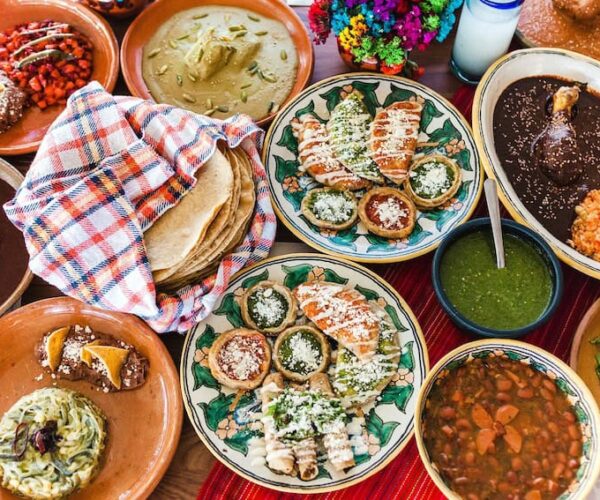
Architecture isn’t the only reason Puerto Escondido has changed. The food scene has become remarkably ambitious. Oaxaca already possesses one of Mexico’s richest culinary traditions, but on the coast it encounters the Pacific: fish, shellfish, tropical fruit and ingredients arriving from nearby farms and villages. Traditional Oaxacan cooking now sits alongside contemporary restaurants, casual ceviche places and increasingly sophisticated hotel kitchens. The result suits Puerto perfectly. This isn’t really a place for stiff white-tablecloth dining. A long lunch under a palapa, something caught that morning, a mezcal and nowhere particularly urgent to be feels considerably more appropriate. Some of the newer hotels have made food central to the experience rather than treating the restaurant as somewhere guests reluctantly visit when they can’t get a taxi. And that matters to DNA Hotels. A beautiful hotel with a forgettable bar and restaurant is, after all, only partly finished.
Surf culture without the surf cliché
There is another reason the new hotels work. They haven’t sanitised surfing. At newer properties such as Hotel Humano in La Punta, surf culture becomes part of the social identity of the hotel rather than a decorative collection of boards attached to the wall. Gardens, communal areas, rooftop drinks and relaxed dining acknowledge that Puerto is a social destination as much as an architectural one. That creates an interesting spectrum of hotels. Some are deeply private architectural retreats where disappearing for three days seems entirely reasonable. Others put you straight into the life of La Punta. Some are barefoot. Some are Brutalist. Several manage both.
Oaxaca without the folklore
Perhaps the strongest thread connecting Puerto Escondido’s new generation of hotels is their relationship with Oaxaca. Not an Instagram version of Oaxaca assembled from patterned cushions and strategically positioned cacti. The real influence is deeper. It appears in construction techniques, locally made brick, clay and timber; in woven textiles and ceramics; in food and mezcal; in passive architecture adapted to the climate; and increasingly in relationships between hotels, artisans and surrounding communities. That makes Puerto part of a much broader architectural movement happening across Mexico. Contemporary Mexican architecture is extraordinarily confident precisely because it doesn’t seem embarrassed by primitive materials. Concrete can remain concrete. Brick can remain brick. A palapa doesn’t need to become a polished approximation of a palapa. Luxury comes from space, proportion, craft, landscape and thought. Marble is allowed the occasional day off.
Nine hotels. One small corner of Mexico.
Where to Stay